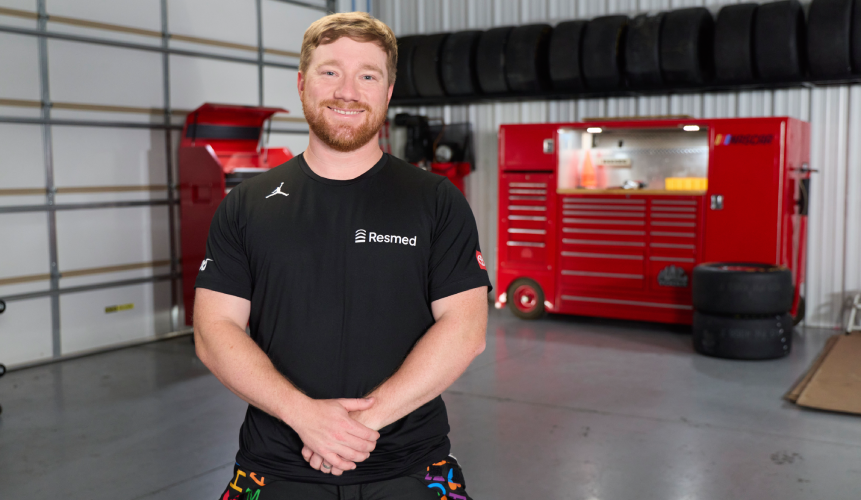
NASCAR champion Tyler Reddick teams up with Resmed to raise sleep apnea awareness
Tyler Reddick has always pushed for every advantage on the track. Now the 2026 Daytona 500 champion is sharing a different kind of win: treating his obstructive sleep apnea (OSA). It happened off the track and changed how he prepares, recovers and performs every single day.
Resmed (NYSE: RMD, ASX: RMD) is a leading global health technology company focused on sleep, breathing and care delivered in the home. In August 2026, the company announced a new collaboration with 23XI Racing and their NASCAR Cup Series driver Tyler Reddick. Together, they want to encourage more people to recognize the signs of sleep apnea and seek diagnosis and treatment as needed.
A champion’s hidden struggle
For years, Reddick dismissed many of his sleep apnea symptoms as normal. These included loud snoring, morning headaches, low energy and waking up feeling unrested. He is a 13-time NASCAR Cup Series winner and a 2026 Daytona 500 champion. He didn’t think sleep apnea was something that could affect him.
“I had heard of sleep apnea and looking back, I had symptoms for a long time, but I didn’t think it could affect a fit 30-year-old competing at the highest level of motorsports,” Reddick said.
Conversations with his bed partner, team physician and others encouraged him to get tested. In early 2026, he was diagnosed with obstructive sleep apnea (OSA), the most common form of sleep apnea. He started continuous positive airway pressure (CPAP) therapy shortly after. He says he noticed a difference after his very first night of treatment.
“I noticed a difference after night one of using my Resmed CPAP therapy, and it completely changed the way I approach recovery, preparation and performance. I’ve realized that a competitive edge is built through the habits you commit to every day and prioritizing my sleep has become one of the most important.”
Reddick’s experience mirrors what millions of people go through. Many live with symptoms for years and go undiagnosed, assuming that feeling tired is just part of getting older or working hard. The reality is that these signs can point to sleep apnea, a treatable condition. Recognizing symptoms earlier and getting diagnosed and treated can make a real difference in how you feel and function each day.
From diagnosis to history-making wins
In early 2026, Tyler was diagnosed with sleep apnea and began CPAP therapy. That same year, he became the first driver in NASCAR Cup Series history to open a season with three consecutive wins, including the Daytona 500. Tyler credits his on-track success to many factors. Prioritizing his sleep has become one of the personal habits he commits to each day.
Reddick joined 23XI Racing in 2023. In 2024, he won the Regular Season Championship and raced to a spot in the Championship 4, a first for both the team and Reddick. His 2026 season opening is one for the record books.
His story challenges the misconception that sleep apnea only affects certain people. It can affect anyone, including healthy, active individuals and elite athletes. Like many people, Reddick lived with symptoms for years before realizing they were signs of sleep apnea.
Why sleep matters on and off the track
In NASCAR, success depends on focus, endurance, mental sharpness and preparation. Competing at the highest level of motorsports requires sustained concentration, physical endurance and quick decision-making across a demanding race schedule. Research shows that even one night of restricted sleep can impair attention and increase reaction time.1
Sleep is a key pillar of health, right alongside nutrition and exercise.2 It plays an important role in focus, recovery and readiness. For Tyler, how he sleeps each night has a direct impact on how he feels and performs the next day.
“By treating my OSA with a CPAP, I am able to perform better. My energy is better, my mood is improved and I am able to stay focused longer,” Reddick said. “Treating my OSA and getting good sleep are now part of how I prepare and recover so I can perform my best, on the track and at home.”
Tyler’s experience is something many people can relate to, whether or not they ever sit behind the wheel of a race car. When you sleep poorly night after night, it shows up in your mood, your focus, your patience and your energy. You may find yourself reaching for caffeine more often or feeling foggy at work. For Reddick, those effects showed up on the track. There, fractions of a second and split-second decisions can make the difference between winning and losing.
Understanding sleep apnea
Obstructive sleep apnea (OSA) affects nearly one billion people globally,3 yet more than 80% of cases go undiagnosed and untreated.4 Many people don’t recognize the symptoms or believe the condition could affect them. That is exactly what happened to Reddick.
OSA happens when throat muscles relax and fail to keep the airway open, interrupting breathing.5 This causes the body to wake up many times during the night. These interruptions can lower oxygen levels and disrupt sleep. This may lead to symptoms that build up over time.
Common signs include loud snoring, pauses in breathing during sleep, morning headaches, daytime fatigue and waking without feeling rested.6 These symptoms can be mild or easy to dismiss. Many people don’t realize they have a sleep disorder until someone else notices, like a bed partner who hears the snoring or sees the breathing pauses.
“Tyler’s willingness to share his story helps challenge outdated assumptions about who can have sleep apnea,” said Carlos Nunez, MD, chief medical officer at Resmed. “Sleep apnea affects people of all ages, body types and health profiles, yet many people may not realize their daytime fatigue could be connected to how they breathe at night. By amplifying Tyler’s journey, we hope more people recognize the signs, seek care and experience the potential benefits CPAP treatment may have on their health.”
If left untreated, OSA is linked to serious health conditions. These include high blood pressure, heart disease, diabetes and stroke.7 This is why recognizing the signs and talking to a doctor matters so much. The good news is that OSA is treatable, and many people notice improvements once they begin therapy.
How CPAP therapy helps
CPAP therapy is the gold standard treatment for OSA.8 It delivers pressurized air through a mask to help keep the airway open during sleep.9 Tyler uses a Resmed AirSense 11TM device with an AirFit N30iTM mask to treat his OSA. It has become part of his daily training and recovery routine.
“After the first night using my CPAP, I noticed a positive difference. That’s when I realized how much my poor sleep had been affecting me,” Reddick said.
For many people, starting CPAP therapy can take some getting used to and that’s okay. Tyler is honest about the adjustment, and his authenticity is part of what makes his story so relatable. The results can be worth it, as his experience shows. With regular use, treating obstructive sleep apnea with CPAP therapy can improve sleep quality and boost energy. Treating OSA may also have positive benefits on blood pressure and heart health.
Tyler’s device and mask were prescribed by his healthcare provider as part of his treatment plan. This is the same process anyone would follow to seek care for OSA. His comments reflect his personal experience. He encourages others to talk to their own doctors about what might work for them.
What’s ahead
Throughout the rest of the 2026 NASCAR season, Resmed and Reddick will share sleep education through Tyler’s personal journey with sleep apnea. The goal is to encourage more people to recognize the signs and understand the role sleep plays in recovery and performance.
Fans will see Resmed branding on Tyler’s No. 45 Toyota Camry XSE at three NASCAR Cup Series races:
- Bristol Motor Speedway (September 19)
- Talladega Superspeedway (October 25)
- Homestead-Miami Speedway (November 8)
The collaboration will also bring conversations about sleep to audiences both on and off the track through media, digital content and race-day activations. Content will also be featured on a Resmed landing page.
Taking the next step
Reddick is sharing his experience to help raise awareness of sleep apnea and encourage people experiencing poor sleep to seek care sooner. His message is simple: Don’t ignore the signs.
“What I’d encourage people to do is not ignore the signs and talk to a doctor if something feels off,” Reddick said.
Success for this collaboration means more people recognizing that sleep apnea can affect anyone. It means learning about the signs and taking the next step.
If you’ve been waking up tired, struggling with low energy or noticing other signs of sleep apnea, consider talking to your doctor. You can also take Resmed’s Sleep Assessment to learn more about your sleep and whether you may be at risk.
This is a self-assessment tool that may help you identify common risk factors for sleep disorders, including obstructive sleep apnea. This is not a diagnostic tool and does not constitute medical advice. Your reliance on information from this tool is solely at your own risk. We recommend that you consult your healthcare provider about the results of your Sleep Assessment or if you are concerned about your sleep.
Better sleep is possible. It starts with recognizing the signs and taking that first step.
View the press release for this partnership.
Disclosure: Resmed is paying 23XI Racing for Tyler Reddick’s participation in this collaboration. Tyler’s CPAP therapy, including his device and mask, were prescribed by his healthcare provider as part of his treatment plan. Tyler’s comments reflect his personal experience. The participant received an incentive for this testimonial.
This testimonial is a true account of the participant’s treatment experience. Results may vary, and it doesn’t guarantee similar outcomes for others. Consult your healthcare provider for more information.
References & citations
- Source: Micou MT, et al. (2024). “Impact of one night of sleep restriction on sleepiness and cognitive function: a systematic review and meta-analysis.” Sleep Medicine Reviews, 75:101940. DOI: 10.1016/j.smrv.2024.101940. https://doi.org/10.1016/j.smrv.2024.101940
- Source: Buysse DJ. (2014). “Sleep health: can we define it? Does it matter?” Sleep, 37(1):9-17. DOI: 10.5665/sleep.3298. https://academic.oup.com/sleep/article/37/1/9/2453958
- Source: Boers E, Barrett MA, Benjafield AV, Barnet JH, Ravelo LA, Kaye L, Cistulli PA, Pépin JL, Armitstead J, Sterling KL, Nunez CM, Peppard PE, Malhotra A. Projecting the 30-year burden of obstructive sleep apnoea in the USA: a prospective modelling study. Lancet Respir Med. 2025 Dec;13(12):1078-1086. doi: 10.1016/S2213-2600(25)00243-7. Epub 2025 Aug 26. PMID: 40882656; PMCID: PMC12674968.
- Source: Young T, et al. (1997). “Estimation of the clinically diagnosed proportion of sleep apnea syndrome in middle-aged men and women.” Sleep, 20(9):705-706. DOI: 10.1093/sleep/20.9.705. https://pubmed.ncbi.nlm.nih.gov/9406321/
- Source: National Heart, Lung, and Blood Institute. (2025). “Sleep apnea: what is sleep apnea?” NHLBI, NIH. https://www.nhlbi.nih.gov/health/sleep-apnea
- Source: Slowik JM, et al. (2025). “Obstructive sleep apnea.” StatPearls, StatPearls Publishing. https://www.ncbi.nlm.nih.gov/books/NBK459252/
- Source: Knauert M, et al. (2015). “Clinical consequences and economic costs of untreated obstructive sleep apnea syndrome.” World Journal of Otorhinolaryngology – Head and Neck Surgery, 1(1):17-27. DOI: 10.1016/j.wjorl.2015.08.001. https://doi.org/10.1016/j.wjorl.2015.08.001
- Source: Patil SP, et al. (2019). “Treatment of adult obstructive sleep apnea with positive airway pressure: an American Academy of Sleep Medicine clinical practice guideline.” Journal of Clinical Sleep Medicine, 15(2):335-343. DOI: 10.5664/jcsm.7640. https://doi.org/10.5664/jcsm.7640
- Source: National Heart, Lung, and Blood Institute. (2025). “Continuous positive airway pressure (CPAP).” NHLBI, NIH. https://www.nhlbi.nih.gov/health/cpap