Quick takeaways
- Mandibular advancement devices (MADs) are custom mouthpieces that gently move your lower jaw forward, keeping your airway open as you sleep.1
- Although CPAP therapy remains the most effective treatment for most people,17 MADs may reduce snoring and help people living with mild to moderate obstructive sleep apnea (OSA).3
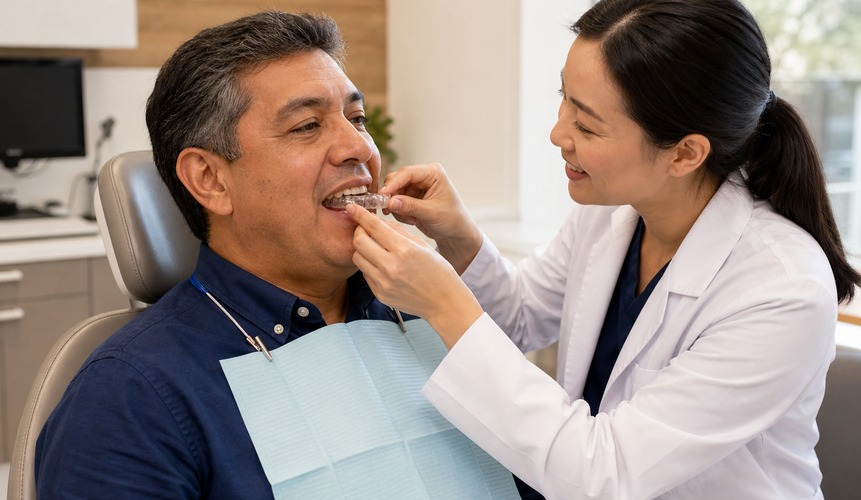
- MADs work best when custom-fitted by a dentist trained in sleep medicine. Regular adjustments may help improve comfort and results.3
- People who snore but don’t have OSA may benefit from a MAD, but only after talking with a doctor.3
- If you were recently diagnosed or are living with obstructive sleep apnea (OSA), you might be searching for treatment options. Mandibular advancement devices may be an option. This guide describes how these mouthpieces can help improve your quality of sleep and whether they’re a practical option for managing sleep apnea symptoms.
Understanding obstructive sleep apnea
Before learning about how mandibular advancement devices work, it’s helpful to understand what OSA is and how it can affect your health.
What is obstructive sleep apnea?
Sleep apnea is a condition that causes your breathing to stop and restart many times throughout the night.4 These interruptions can make it harder for your body to get enough oxygen. The most common type is obstructive sleep apnea (OSA), which happens when your upper airway becomes blocked repeatedly during sleep, making it harder for air to flow.5 These blockages can reduce or completely stop the flow of air, causing your breathing to pause throughout the night. Common symptoms of OSA include:6
- Excessive daytime sleepiness
- Morning headaches
- Feeling irritable or moody
- Difficulty concentrating, struggling to feel present during the day
- Snoring or gasping for air while you sleep
Pauses in breathing may lead to lower oxygen levels. These drops in oxygen make it difficult to get deep, restorative sleep. Normally, blood oxygen levels while sleeping range from 95% to 100%. For people with sleep apnea, these levels can drop significantly — sometimes lower than 88%.7 Your heart, lungs and brain all run on oxygen. When oxygen levels drop, your body feels it.8 Tissues can weaken, and in severe cases, cells may actually start to die.
Reduced oxygen during sleep may help explain why sleep apnea is associated with serious health conditions, such as:5
- High blood pressure
- Heart disease
- Diabetes
- Obesity
- Depression
- Stroke
- Kidney disease
How airways become blocked
As you sleep, the muscles in the throat relax, causing the tongue, palate and uvula to change positions. For some people, the tongue and other soft tissues relax too much. This can cause them to block airflow. Sleeping on your back, narrow airways and extra throat tissue can all increase the risk of a blocked airway during sleep.9
Introduction to mandibular advancement devices (MADs)
Mandibular advancement devices (MADs) may help some people with obstructive sleep apnea (OSA). However, it’s important to speak with a doctor to determine if they’re an appropriate treatment option for you.
What are mandibular advancement devices?
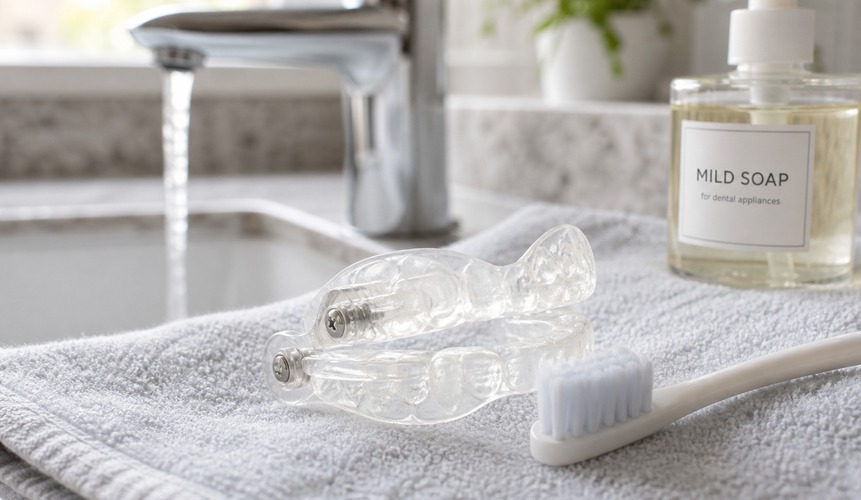
Mandibular advancement devices (MADs) are custom mouthpieces worn during sleep.1 They gently move the lower jaw (mandible) forward, which helps keep the upper airway open.3 MADs are available in two varieties:
- Custom-fitted devices made by a dentist who’s trained in sleep medicine (recommended)3
- Over-the-counter devices, which aren’t customized and may not address your specific sleep needs1