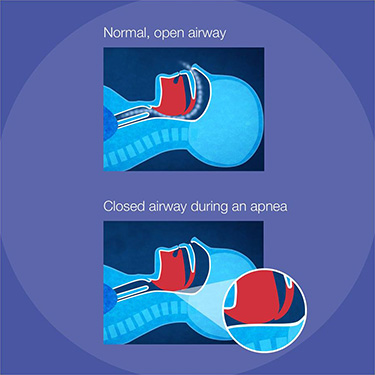
If you’re using a CPAP machine to treat your sleep apnea, you may be wondering about the term apnea-hypopnea index (AHI). What is AHI? How is it calculated? Why does it change?
To break it down, the term apnea means that you stop breathing for at least 10 seconds. Hypopnea is when you have a partial blockage of your airway so your breath is more shallow than normal. When you look at your apnea-hypopnea index, it tells you how many apneas and hypopneas you have per hour while you sleep and gives you an average. For example, if your AHI is 2, you have approximately two incidents of hypopnea or apnea per hour for every hour that you’re asleep.
An AHI less than 5 is considered normal, and some patients with severe sleep apnea may be told by their doctor that they can accept even higher numbers so long as they’re feeling more rested each morning, experiencing fewer symptoms and their AHI is progressively decreasing.
Why does my AHI change?
A woman with sleep apnea messaged us after she noticed that over the previous week her AHI had fluctuated between 1.9 and 5. She said she hadn’t had a “5” in 10 years, but now they were coming every other night even though her CPAP machine was reporting a good mask fit each morning. Concerned, she asked if it’s normal for AHI to go up and down from night to night.
The short answer is: Yes; it is normal for AHI to vary within reason. However, if your AHI was stable, but it is suddenly increasing over the past few days or weeks, you should report this to your equipment provider and/or sleep specialist.