What Is Central Sleep Apnea? | Resmed
What can we help you find?
Search for masks, machines, accessories...

What Is Central Sleep Apnea?

Sleep health Dry mouth Fatigue Seeking care Sleep health Sleep issues

What is central sleep apnea?

Central sleep apnea (CSA) is a type of sleep disorder that occurs when the respiratory control center in your brain fails to send a signal to the muscles that control your breathing during sleep. Central sleep apnea causes you to repeatedly stop and start breathing during the night.

Central sleep apnea vs. obstructive sleep apnea

Central sleep apnea and obstructive sleep apnea both cause you to stop and start breathing repeatedly during the night. However, obstructive sleep apnea is caused by a physical blockage to the upper airway, while central sleep apnea is related to the nervous system and often associated with an underlying medical condition such as heart failure or stroke.1 Due to these underlying conditions, CSA symptoms, diagnosis and treatment may also be different.

Central sleep apnea symptoms

Central sleep apnea symptoms may appear more like symptoms of heart failure or stroke, as these conditions are commonly linked to the disorder.1

Abnormal breathing patterns

A person with central sleep apnea may experience temporary pauses in breathing or periods of abnormal breathing during the night, often witnessed by someone else.

Shortness of breath

Waking up short of breath that eases when you sit up can be a symptom of CSA.

Chest pain

Since CSA is often related to heart failure, it’s not surprising that some people might experience chest pain during the night.

Insomnia or difficulty staying asleep

Worrying about not getting enough sleep can make it harder to fall or stay asleep, resulting in a vicious cycle.

Trouble concentrating during the day

When you don’t get enough restful sleep, your body’s natural circadian rhythm is interrupted and can impair cognitive function during the day.
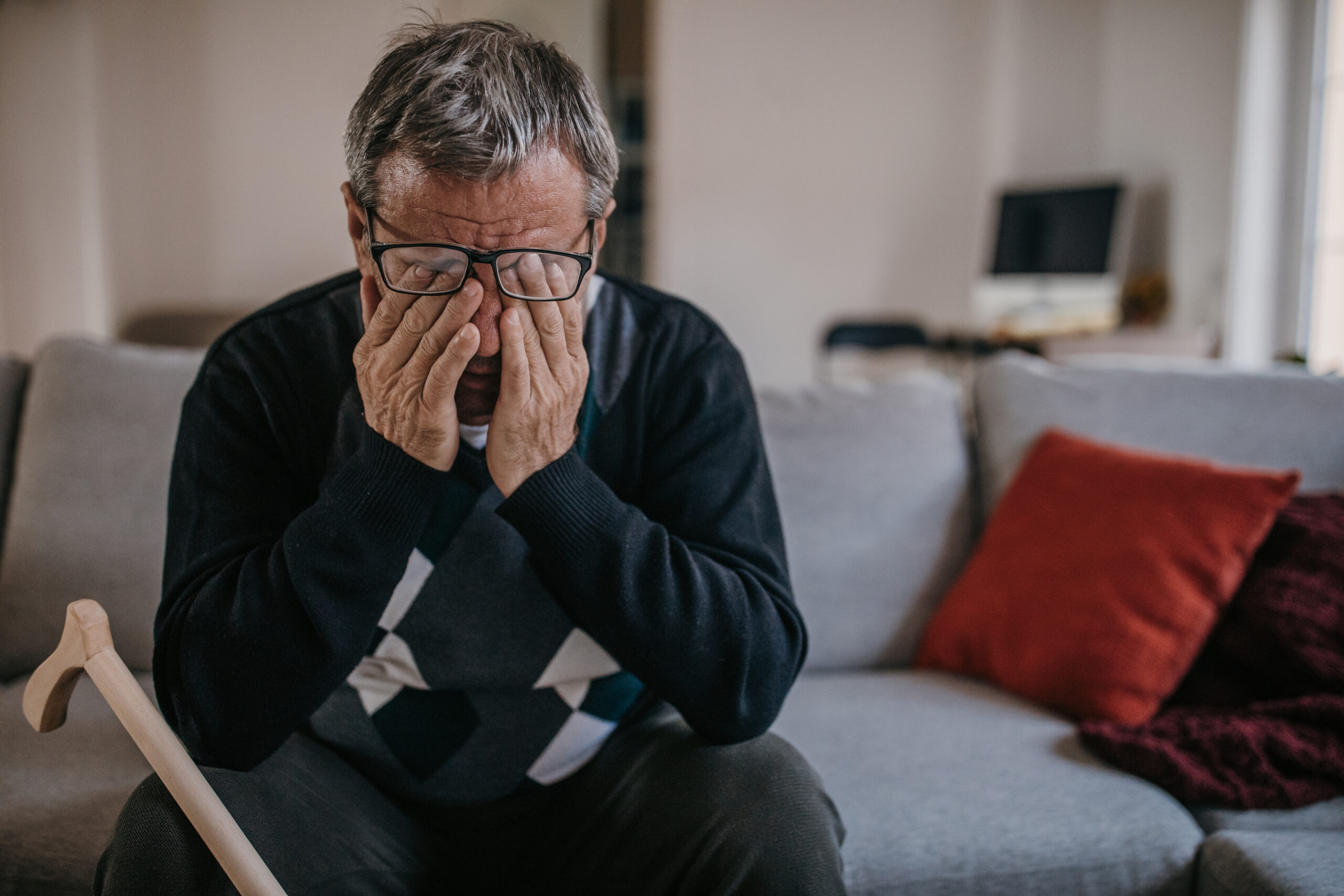
 Man with Central Sleep Apnea
Types of Central Sleep Apnea

Central sleep apnea can result from various conditions that interfere with the brainstem’s ability to regulate breathing. Below are six recognized types of CSA.1

Complex sleep apnea

Also known as treatment-emergent central sleep apnea, this sleep disorder emerges during the early stages of treatment for obstructive sleep apnea. Complex sleep apnea symptoms may resolve with treatment, but in some cases CSA symptoms remain.

Cheyne-Stokes breathing

Cheyne-Stokes breathing or Cheyne-Stokes respiration is a rare and serious type of central sleep apnea that can cause abnormal fluctuations in breathing patterns.

Drug-induced

Opioid drugs such as hydrocodone (Vicodin®), oxycodone (OxyContin®), fentanyl, codeine, morphine and heroin have been linked to central sleep apnea.

High-altitude periodic breathing

Spending time at altitudes above 8,000 feet can cause abnormal breathing patterns during sleep—even in healthy people. High-altitude periodic breathing usually resolves once a person returns to lower altitudes.

Idiopathic central sleep apnea

An idiopathic central sleep apnea diagnosis is rare. It is only given when doctors have ruled out all potential causes yet still don’t know why a person has developed CSA.

Central sleep apnea due to other medical conditions

Certain medical conditions, such as end-stage kidney disease and stroke, may lead to central sleep apnea. This type of CSA does not involve Cheyne-Stokes breathing and is diagnosed based on the presence of underlying health issues.

How is central sleep apnea diagnosed?

If you have symptoms of sleep apnea, your doctor can refer you to a sleep specialist for testing. To confirm if you have sleep apnea, a specialist may recommend several different methods to take a closer look at your sleep habits and behaviors. This may include either an in-lab polysomnography or an at-home sleep test.

Polysomnography is a sleep study conducted overnight in a specialized facility. While you sleep, doctors use equipment to monitor your breathing, blood oxygen levels and heart rate. In some cases, your sleep specialist may provide you with equipment to take a sleep test at home. This at-home test is easier to use but still gives accurate results. Once your doctor and sleep specialist confirm you have sleep apnea, they can help you find the right treatment.

Long-term effects of untreated central sleep apnea

It’s important to find and treat sleep apnea early. If left untreated, it can lead to serious health problems–not just poor sleep.

Untreated sleep apnea, whether OSA or CSA, may increase the risk of heart failure, stroke, high blood pressure and overall poor quality of life.2 Your body needs good sleep to stay healthy. When your sleep is continually interrupted, it can increase your risk of organ failure.3 Getting tested and treated early can help protect your health and improve your quality of life.

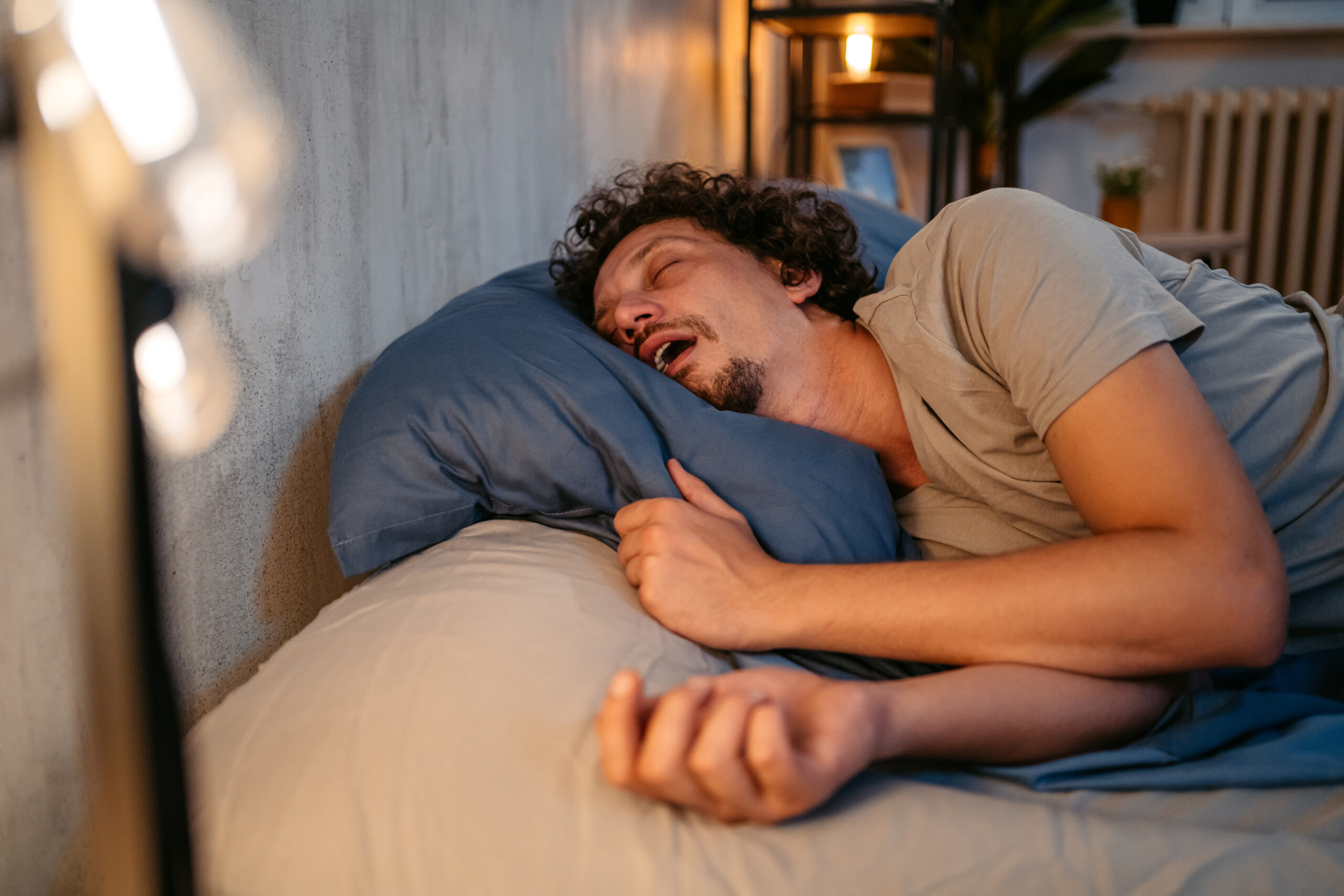
 Man sleeping with Central Sleep Apnea
Central sleep apnea treatment options

Once your doctor confirms you have sleep apnea, they will recommend treatment options. Make sure to maintain open communication with your doctor to determine which central sleep apnea treatment option makes the most sense for you. If a suggested plan isn’t working, your doctor can adjust your treatment to help you get better results.

CPAP therapy and adaptive servo-ventilation (ASV)

Continuous positive airway pressure (CPAP) therapy is highly effective and the most used and most understood method for treating obstructive sleep apnea.4 However, CSA may require different treatments, like adaptive servo-ventilation (ASV) or bilevel positive airway pressure (BiPAP).

An ASV machine5 is a device that helps keep your airways open by sending pressurized air through a mask. It monitors your breathing patterns and changes the air pressure as needed. On the flip side, a BiPAP machine6 also helps with breathing during sleep, but it works a little differently. It uses two levels of air pressure–one when you breathe in (inhalation) and lower one when you breathe out (exhalation).

Medications

In some cases, medication may also be prescribed as part of your central sleep apnea treatment plan. Your healthcare provider may suggest medication as a supplement to other treatment methods. While respiratory stimulant medication can be effective, you and your doctor should discuss any potential side effects before starting this type of treatment.

Lifestyle Adjustments

Beyond sleep apnea equipment and medications, lifestyle adjustments can help improve your sleep. Lifestyle changes that can potentially help reduce the impact of sleep apnea include:

  • Weight loss
  • Cutting back on alcohol consumption
  • Quitting smoking
  • Regular exercise
Sleep apnea tips: living with CSA

If you’ve been diagnosed with central sleep apnea, you might feel a range of emotions. On one hand, you may feel relieved because you now know what’s been causing your symptoms. With a formal central sleep apnea diagnosis, you can move forward with making the right changes to improve your sleep and overall quality of life.

Regular use of CPAP/ASV

If your doctor prescribes CPAP, ASV or BiPAP, make sure to use it as instructed. Sticking to your treatment can help improve your:

  • Sleep quality
  • Daytime energy
  • Mood
  • Blood pressure


Are you concerned about your sleep health?

Take our online sleep quiz and discuss the results with your doctor.

Start sleep quiz

Resources:
  1. “Central Sleep Apnea – Symptoms and Causes.” Mayo Clinic, https://www.mayoclinic.org/diseases-conditions/central-sleep-apnea/symptoms-causes/syc-20352109.
  2. Sleep Apnea – Living With | NHLBI, NIH. 9 Jan. 2025, https://www.nhlbi.nih.gov/health/sleep-apnea/living-with.
  3. Periasamy, Srinivasan, et al. “Sleep Deprivation-Induced Multi-Organ Injury: Role of Oxidative Stress and Inflammation.” EXCLI Journal, vol. 14, May 2015, pp. 672–83. PubMed Central, https://doi.org/10.17179/excli2015-245.
  4. Understanding PAP | Sleep Medicine, https://sleep.hms.harvard.edu/education-training/public-education/sleep-and-health-education-program/sleep-health-education-37.
  5. “Easing Sleep Apnea with ASV Machines.” Cleveland Clinic, https://my.clevelandclinic.org/health/procedures/asv-machine.
  6. BiPap. 14 May 2024, https://www.hopkinsmedicine.org/health/treatment-tests-and-therapies/bipap.