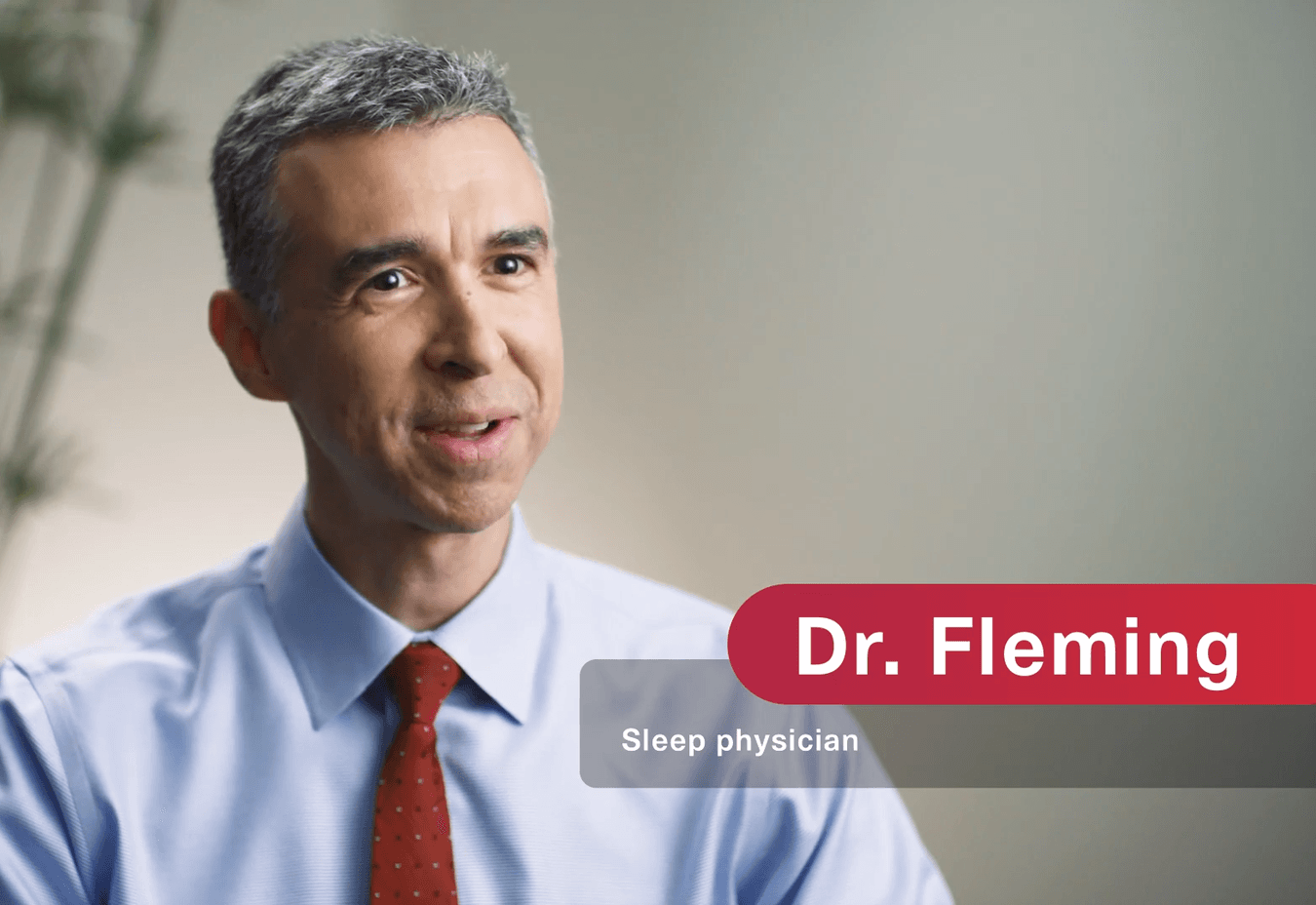
Do I need to talk to my doctor to be referred to a sleep lab?
Yes, especially if you plan to pay through insurance, most of which require a prescription or authorization. It’s also important that you and your physician (or a board-certified sleep specialist) talk through your symptoms and discuss diagnosis options and potential therapies. This conversation will help you understand the “whats” and “whys,” and also ensure that you get the right treatment. This is also a good time to ask any initial questions you have, such as what they think your sleep issue is, why they recommend a certain diagnostic test and what alternatives are available. Don’t know something? Don’t be afraid to ask!
Talk to your specialist or physician about scheduling at a sleep clinic near you.
Can I do a sleep test at home? Are they accurate?
Sleep studies can be performed at home and are often offered based on insurance requirements and the assessment of a sleep specialist. At home you use a small device that tracks your breathing, oxygen levels and level of breathing effort. Overnight sleep studies attended by technicians can give more in-depth information, including more signals such as brainwaves, sleep stages and sequence, and airflow through the nose and mouth. This can lead to a clearer and more accurate diagnosis. Your physician will know if or when to prescribe a sleep study after talking with you about your symptoms.
Read more about at-home tests and the sleep test experience in our blog, Your sleep apnea test: What to expect.
At-home sleep study kits, like the Resmed ApneaLink™ Air, allow you to take your sleep test at home using sleep test equipment and sensors, which you’ll return to a sleep lab. If you do receive an ApneaLink Air, here’s a helpful video on how to use it.
Will it be hard to fall asleep? What if I can’t fall asleep?
This might be the most commonly asked question. It’s understandable! Spending a night away from home while your sleep is monitored can seem daunting, and you may think it will be impossible to fall asleep. While you may not get the best night’s sleep of your life, sleep center rooms are typically like simple hotel rooms. The beds are comfortable, and people often report that once they try to relax, they fall asleep much easier.
We asked the Resmed community for advice, and here’s what some people who’ve been through it said:
- “Get up early, don’t take naps, go for a long walk or read a book before you go to your study. I did just fine and I never sleep well away from home.“
- “Don’t stress. The beds are really comfortable. I typically never slept more than a couple hours at a time so was worried about this. It was not really an issue though. The technician was really understanding and helpful.”
- “Relax, get your results and see what sleep therapy can do for you. Started using CPAP at the age of 24, I’m now 50 won’t go a night without it, makes a world of difference.“
Don’t let your worries about potential results stress you out. Even if you don’t get much sleep, the tech will most likely be able to gather enough information for diagnosis.
Learn more about this in our blog, What if I can’t sleep during the sleep test?
*Everyone’s experience will differ, even if only slightly. These are just a few personal experiences.