Sleep Apnea Testing And Diagnosis | Resmed
What can we help you find?
Search for masks, machines, accessories...

Sleep Apnea Testing And Diagnosis

Sleep health Seeking care Sleep health Sleep issues Sleep test Testing and diagnosis

Sleep apnea test and diagnosis

Do you find yourself waking up tired–even after a full night’s sleep? Is it hard to stay focused during the day? As a result, do you feel irritable or anxious? A sleep apnea test can help you determine if this condition is the cause behind these symptoms. Undiagnosed and untreated sleep apnea can lead to serious health problems like high blood pressure, heart disease and stroke.1

The first step to feeling better is a confirmed sleep apnea diagnosis. It’s important to get checked early so you can find the right treatment. To find out if you have sleep apnea, talk to your doctor about your symptoms. Your doctor may refer you to a sleep specialist for a test. To help you understand the process, we’ll walk you through what to expect during a sleep apnea test and the steps that follow.

What is a sleep apnea test?

A test for sleep apnea, prescribed by a doctor, is a medical test that monitors sleep patterns, breathing and oxygen levels while you’re asleep. Your doctor will refer you to a sleep specialist who will have you take a monitored sleep test in a lab or at home. Your test results will help your doctor determine if you have sleep apnea and create a treatment program for you.

Types of sleep apnea tests

Sleep tests can be done at home or at a certified sleep clinic. However, the test in a sleep clinic may offer a more complete picture of how sleep apnea is affecting your body if you have other chronic conditions. Have an honest discussion with your doctor about your symptoms and medical history. This will help them recommend the best possible test to confirm if you have sleep apnea and create a personalized treatment program.

There are two types of sleep apnea tests:

Polysomnography (PSG)
A polysomnography (PSG) test is performed at a certified sleep clinic. If you have a complex medical history, your doctor may recommend this more comprehensive type of sleep monitoring test. Sleep clinic rooms look a lot like your bedroom at home. Sleep specialists set you up with small sensors that record your sleeping behavior. During a PSG test, lab technicians monitor your brain waves, heart rate, breathing patterns, oxygen levels, blood pressure and more. The test will last overnight, so sleep activity for your full sleep cycle is recorded.

Home sleep apnea test (HSAT)
A home sleep apnea test (HSAT) is a portable test taken at home to monitor your sleep habits. At-home sleep testing devices allow you to take your test at home and, if applicable, return the equipment to the sleep clinic. Your doctor may recommend an HSAT if you have symptoms of sleep apnea, but don’t have a history of other pre-existing medical conditions. These portable test devices help you monitor your sleeping habits from the comfort of your own bed. They’re easy to use and collect sleep data for people with moderate sleep apnea symptoms.

In some cases, your doctor may suggest a follow-up appointment in a sleep lab.

Either an HSAT or PSG are required to diagnose sleep apnea. Discuss your symptoms and any other health conditions with your doctor, so they can prescribe the right test for you. Once you know what you’re dealing with, you and your doctor can work together to get you on a path to improved sleep and energy.

How to get diagnosed with sleep apnea

If you think you might have sleep apnea, there are few steps you can take to get an accurate diagnosis:

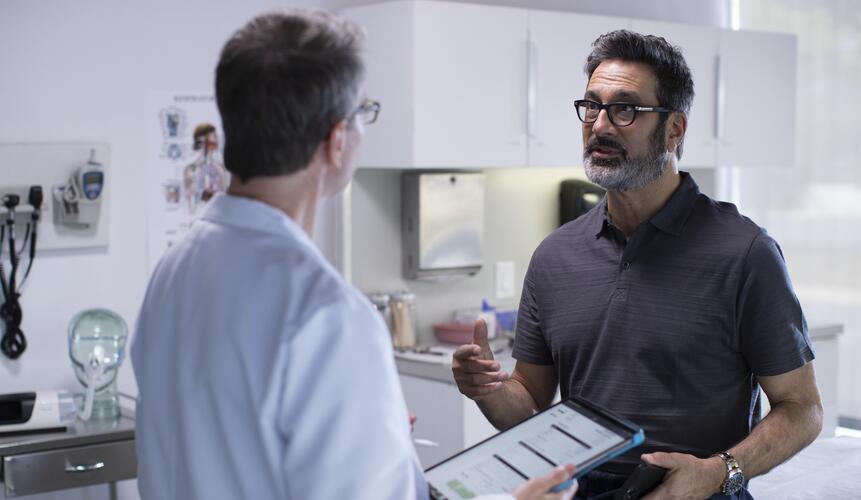
  1. Visit your doctor: Make an appointment with your regular doctor to discuss your symptoms and whether they might be signs of sleep apnea. Your doctor will look at your health history and decide if you should see a sleep specialist.
  2. Get a referral for testing: If needed, your doctor will send you to a sleep specialist. This specialist will ask more in-depth questions about your sleep patterns, symptoms and overall health to determine the best type of sleep test for you.
  3. Take a sleep study: You will take a sleep test either at home or at a specialized sleep center or lab. This test typically happens over the course of one night, but your specialist or the at home sleep test might ask for multiple nights of testing. This test will monitor your breathing, oxygen levels and heart rate while you sleep.
  4. Review your results: After your overnight sleep apnea test, your doctor will go over the results with you. Your test results will include information on your breathing patterns, how you move in your sleep, blood oxygen levels, heart rate and more. One important measurement is called the apnea-hypopnea index (AHI). It shows how many times you stopped breathing while you slept. Learning your AHI can help your doctor determine if your sleep apnea is mild, moderate or severe.

The importance of getting diagnosed for sleep apnea

If you tend to snore, wake up during the night and feel exhausted during the day, you might have sleep apnea. A sleep apnea diagnosis2 can help you start treating your disorder. Early detection and treatment of sleep apnea is an important step toward preventing other health conditions from developing. Treating your sleep apnea as early as possible may help prevent heart disease, high blood pressure, stroke, diabetes and more.3 If you’re formally diagnosed with sleep apnea, you and your doctor will work together to create an effective treatment plan. Once you start treating your sleep apnea, you can have more restful nights and more energetic days.

What happens after a sleep apnea diagnosis?

If you’re diagnosed with sleep apnea, don’t worry – you’re not alone.

After your sleep test is complete, you and your doctor will go over your results together and discuss your diagnosis. If you have sleep apnea, you will discuss the severity level, possible health effects and treatment options.

Once you receive an official sleep apnea diagnosis, your treatment will depend on the severity of your symptoms and the type of sleep apnea you’re diagnosed with. Common treatment options include:

  • Lifestyle changes: Some adjustments to your daily routine can help with sleep apnea, such as maintaining a healthy weight, not drinking alcohol or smoking, sticking to a regular sleep schedule and sleeping on your side instead of your back.
  • Continuous positive airway pressure (CPAP) therapy: A CPAP machine is a device you use while sleeping. It gently blows a continuous stream of air into your airways via a mask to help you breathe better while sleeping.
  • Dental appliances: If your sleep apnea symptoms are mild, your doctor may suggest a special mouthpiece, like a mouthguard, to help keep your airway open while you sleep.
  • Surgery: While surgery is usually a last resort, in some cases it may be the best option. Surgery may remove extra tissue in the throat or correct structural issues to help improve airflow.

Common medical terms you may see in your sleep test results

When sharing the results of your sleep apnea test with you, your doctor will explain several important terms to you. Understanding what these terms mean–and mean for you–will help you get a clearer picture of your sleep apnea diagnosis.

Apnea
This is when you stop breathing during sleep. For obstructive sleep apnea, it’s when the entire airway is blocked, preventing air from entering the lungs.

Hypopnea
Shallow breathing during sleep, typically lasting 10 seconds or more, results in reduced airflow and a drop in blood oxygen levels, potentially disrupting sleep quality.4

Apnea-hypopnea index (AHI)
The severity of sleep apnea can be measured by the average number of times per hour someone had an apnea or hypopnea while they slept.

Oxygen desaturation index (ODI)
Measures the number of times per hour that the level of oxygen in the blood drops below a normal level.

Respiratory disturbance index (RDI)
This is the average number of respiratory disturbances – including apneas, hypopneas and other respiratory events – per hour of sleep.

When should I consider a sleep apnea test?

When you’re having trouble sleeping, it can be difficult to know if it’s related to a serious medical issue. In many cases, if you experience symptoms like snoring, gasping for air or feel exhausted during the day, you may have sleep apnea.

Sleep apnea can affect anyone. In fact, nearly 1 billion people around the world are living with sleep apnea.5 That includes people of all ages, genders and body types. Sleep apnea may go undiagnosed for years, which can lead to serious health conditions. If you experience one or more symptoms of sleep apnea, schedule a visit with your doctor and take the next steps to better sleep–and better living.

Next steps based on where you are in the sleep apnea process
Experiencing sleep apnea symptoms? Start our sleep quiz.

Our sleep quiz can help you understand your sleep habits.

Start sleep quiz

Already taken the sleep quiz? Time to talk to your doctor.

After taking the sleep quiz, discuss your responses, sleep issues and symptoms with your doctor.

Talked to your doctor? Schedule a sleep test.

Your doctor may refer you to a sleep specialist and recommend you schedule a sleep test to track your snoring habits. It can be done in a sleep test clinic or in the comfort of your home.

Resources

  1. Li, Haiyan, et al. “Obstructive Sleep Apnea Syndrome and Its Treatment.” World Journal of Otorhinolaryngology – Head and Neck Surgery, 2015. https://onlinelibrary.wiley.com/doi/10.1016/j.wjorl.2015.08.001
  2. American Heart Association. “Sleep Apnea and Heart Disease, Stroke.” 2025. https://www.heart.org/en/health-topics/sleep-disorders/sleep-apnea-and-heart-disease-stroke
  3. Javaheri, Shahrokh, et al. “Sleep Apnea: Types, Mechanisms, and Clinical Cardiovascular Consequences.” Journal of the American College of Cardiology, 2022. https://pubmed.ncbi.nlm.nih.gov/35508332
  4. Cleveland Clinic. “Hypopnea.” 2025. https://my.clevelandclinic.org/health/diseases/hypopnea
  5. Cleveland Clinic. “Sleep Apnea.” 2025. https://my.clevelandclinic.org/health/diseases/8718-sleep-apnea