Obstructive Sleep Apnea | Resmed
What can we help you find?
Search for masks, machines, accessories...

Obstructive Sleep Apnea

Sleep health Fatigue Sleep health Sleep issues

What is obstructive sleep apnea?

Obstructive sleep apnea (OSA) is the most common type of sleep disordered breathing. It occurs when your throat relaxes and your airway narrows, restricting airflow to your lungs. Your brain responds by waking you up to breathe. This cycle can happen multiple times during the night, preventing you from getting restful sleep and potentially leading to other, more serious health conditions.

Obstructive sleep apnea (OSA) vs. central sleep apnea (CSA)

Across the world, sleep apnea affects over 1 billion people of all shapes, sizes, genders and ages.1 Obstructive sleep apnea (OSA) is the most common form of this disorder. However, central sleep apnea (CSA) is a less common type of sleep apnea that occurs when the brain doesn’t send proper signals to the muscles that control breathing during sleep. CSA is a neurological disorder that affects the parts of your body that control how you move, think and feel.2 OSA is a physiological condition, which means it affects how your body works—such as how your heart beats or how your lungs work. While a sleep specialist can confirm which type of sleep apnea you have, the treatment they prescribe will differ depending on your diagnosis.

Obstructive sleep apnea symptoms3

Dragging yourself through the day? Excessive daytime sleepiness may be just one obstructive sleep apnea symptom. Here are others to look out for:

Loud snoring, choking or gasping for air during sleep

Snoring is one of the most common symptoms of sleep apnea. It occurs when your neck muscles relax and your throat partly closes and becomes narrow, causing a vibration sound.

Daytime drowsiness

A lack of restful sleep can make it hard to get through the day. If you find yourself nodding off or feeling unnaturally tired despite thinking you slept well, you may be experiencing a symptom of OSA.

Depression

35% of people living with OSA have symptoms of depression.4 Depression and anxiety may signal a problem with sleep.

Morning headaches

If you wake up regularly with morning headaches, it could be a sign that you’re not getting enough oxygen during the night. During apneas, when you temporarily stop breathing, your blood oxygen levels can drop, which may lead to headaches in the morning.

High blood pressure

Like headaches, apneas can also lead to high blood pressure. When you stop breathing during apneas, your body releases chemicals to wake you up. This can cause your heart rate and blood pressure to spike.

A dry mouth

Do you find yourself waking up with a dry mouth? This could mean you were snoring or breathing through your mouth while sleeping, which could indicate your airway was obstructed.

Difficulty focusing and remembering things

Sleep deprivation due to apneas can lead to reduced sleep quality, which may make it difficult to focus or remember things during the day. Our brains and bodies need quality sleep to perform their best.

Waking up exhausted

Ever wonder why you feel exhausted in the morning even though you’re sure you got enough sleep? One of the reasons may be sleep apnea, which disrupts your circadian rhythm. This prevents you from getting the quality sleep you need to feel rested.

Insomnia

Insomnia can be an unexpected symptom of OSA.4 When you repeatedly wake up from apneas, it can be difficult to achieve quality sleep. Trouble sleeping is a common symptom of obstructive sleep apnea and 35% of people with insomnia have OSA.5

Sexual dysfunction

Men with OSA may experience sexual issues due to the repeated drop in oxygen levels throughout the night, which can cause testosterone levels to go down.6
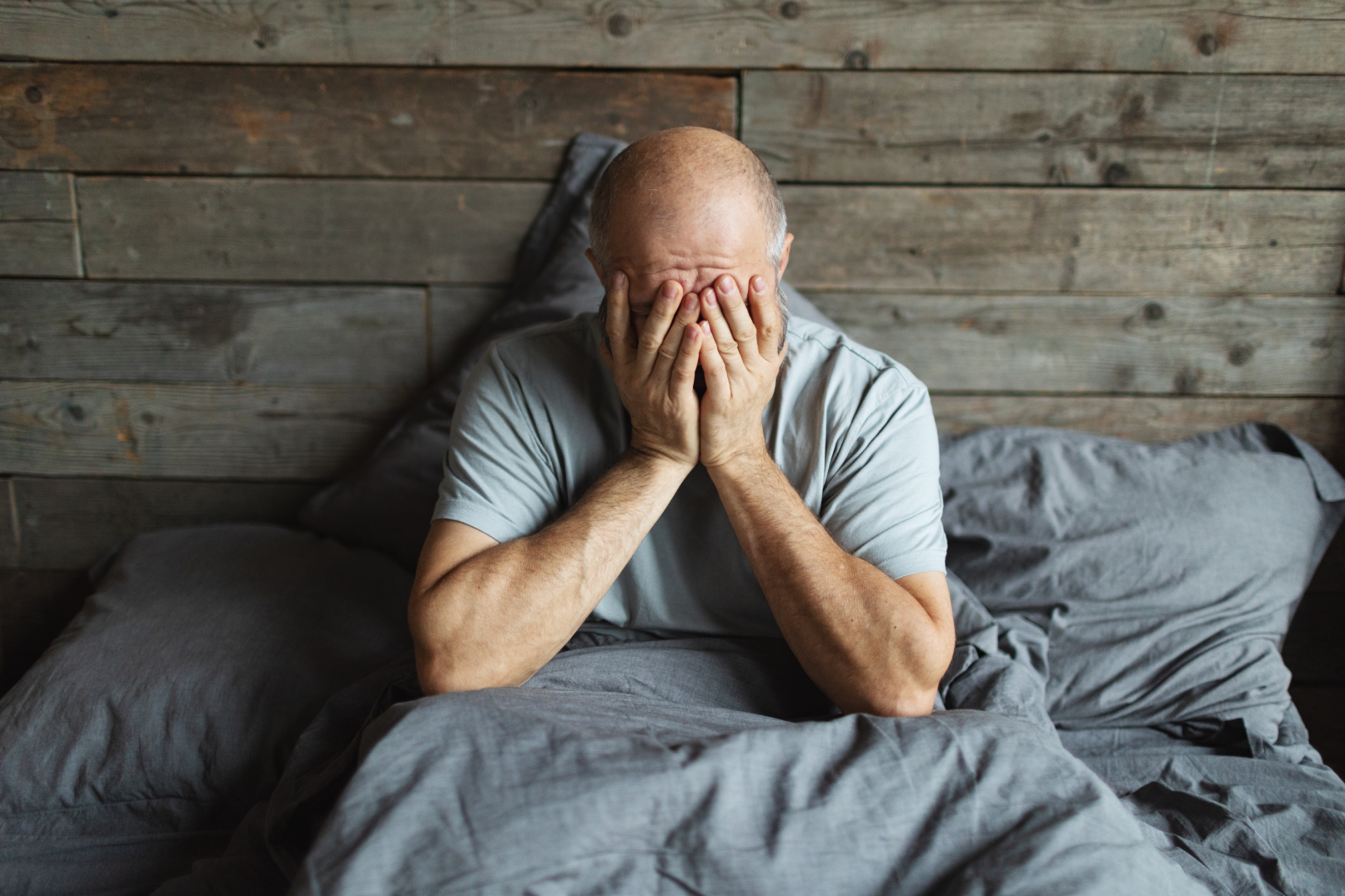

 man struggling to sleep
Severe obstructive sleep apnea symptoms

Severe obstructive sleep apnea means you have an AHI > 30.6 Prolonged, untreated OSA can heighten symptoms like depression and exhaustion, as well as contribute to more severe and potentially life-threatening conditions. When left untreated, OSA can lead to an increased risk of stroke and heart disease, along with insulin resistance that can lead to Type 2 diabetes. In some instances, obstructive sleep apnea’s impact on your ability to focus and stay alert can even increase your risk of being involved in a car accident. Therefore, severe, untreated OSA can significantly decrease your quality of life and take a long-term toll on your health.1

Causes of obstructive sleep apnea

People may develop OSA for different reasons.7 There are many lifestyle choices that can put you at risk for developing OSA, including smoking, having excess weight or obesity, taking narcotics and frequently drinking alcohol. Physical factors can also lead to a sleep apnea diagnosis. Enlarged tonsils or adenoids, a receding chin or a deviated septum can all cause symptoms of obstructive sleep apnea.

Risk factors of obstructive sleep apnea

No one is immune from developing sleep apnea. The following risk factors may increase your chances of developing obstructive sleep apnea:

Excess weight

Excess weight can lead to fat deposits in the upper airway tract, which can cause the airway to narrow while sleeping. Doctors often recommend losing weight in a healthy and sustainable way as part of the treatment for OSA.8,9

Age

The prevalence of sleep apnea is higher in people over 65 years.10

Gender

Men are more likely to develop OSA due to differences in anatomy, hormones, aging or obesity.11

Smoking

Smoking can cause the upper airway to become inflamed, causing it to narrow while sleeping.12

Alcohol use and sedatives

Alcohol and sedatives can slow breathing and relax throat muscles, allowing the airway to close during sleep.12

Allergies or nasal congestion

Allergies or congestion can make breathing harder at night and worsen OSA symptoms.12

Your anatomy

Anatomical factors may include a large tongue, large tonsils or abnormal bone structure in the jaw or skull.

Long-term effects of untreated obstructive sleep apnea

Untreated OSA poses significant long-term health risks, including:

  • Increased blood pressure
  • Reduced oxygen in your blood
  • Spikes in insulin levels
  • Elevated blood glucose levels
  • Heart failure
  • Stroke

Without proper diagnosis and treatment, OSA can become a life-threatening condition and negatively impact daily activities, memory and safety.

 sleep apnea consultation visit
How is obstructive sleep apnea diagnosed?

The two most common ways to diagnose OSA are in-lab polysomnography or a home sleep test.

An in-lab polysomnography sleep study (PSG) is conducted overnight in a sleep lab to monitor breathing, heart rate and other vitals.

A home sleep test (HST) allows you to be tested at home using special equipment and can reduce wait times for diagnosis.

Obstructive sleep apnea treatment options

While sleep apnea is serious, it is treatable. Your doctor will recommend treatment based on severity and type of OSA.8

CPAP therapy

CPAP therapy delivers continuous pressurized air through a mask to keep the airway open during sleep and is highly effective.

Alternative airway pressure devices

APAP and bilevel PAP devices offer variable pressure options for those who cannot tolerate CPAP.

Lifestyle changes

Lifestyle changes may include weight loss, reducing alcohol intake and quitting smoking.

Oral appliance therapy

Oral appliances hold the jaw forward to keep the airway open and reduce snoring.

Changing medication

Certain medications may worsen OSA and your doctor may adjust them.

Decongestants

Decongestants may help reduce nasal swelling and improve airflow.

Surgery

Surgical options may be considered if other treatments fail, including UPPP or other airway procedures.

Obstructive sleep apnea tips: Living with OSA

Following your doctor’s treatment plan is the most effective way to manage OSA. Lifestyle changes, CPAP use and early diagnosis can significantly improve sleep quality and overall health.

Want to understand your sleep health?

Take our online sleep quiz and discuss the results with your doctor.

Start sleep quiz

Resources
  1. Gurubhagavatula I, et al. Obstructive Sleep Apnea Indicator Report. American Academy of Sleep Medicine, 2023.
  2. Javaheri S, Dempsey JA. Central Sleep Apnea. Comprehensive Physiology, 2013.
  3. Johnson KG. Obstructive Sleep Apnea. Continuum, 2023.
  4. Garbarino S, et al. Anxiety and Depression in OSA. Behavioral Sleep Medicine, 2020.
  5. Zhang Y, et al. Insomnia and OSA. Sleep Medicine Reviews, 2019.
  6. Kim SD, Cho KS. OSA and Testosterone Deficiency. World Journal of Men’s Health, 2019.
  7. Malhotra A, et al. Endotypes in OSA. Current Opinion in Pulmonary Medicine, 2020.
  8. ResMed: What is Sleep Apnea?