Quick takeaways
- Obstructive sleep apnea is a condition where your upper airway becomes blocked many times while you sleep.1
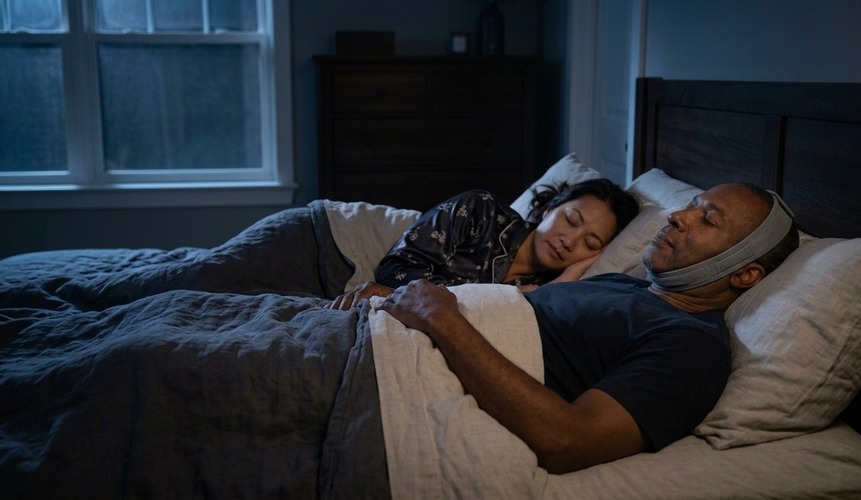
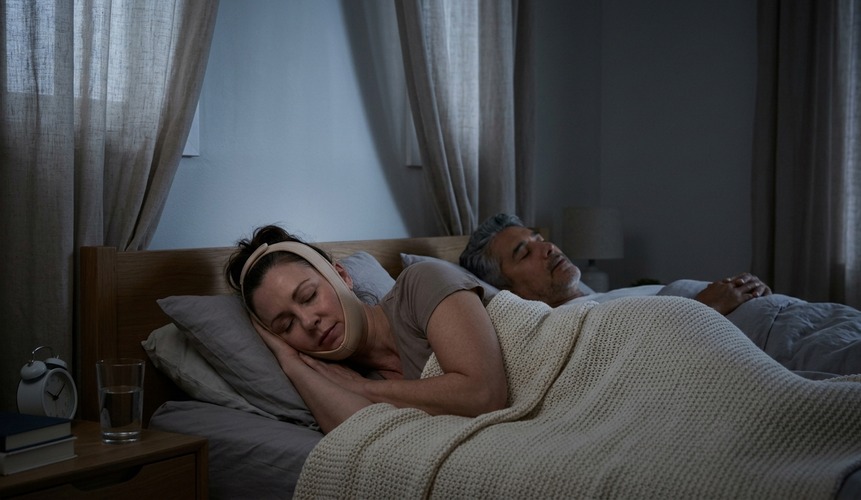
- A chin strap —a soft strip of fabric that wraps around your head and chin as you sleep — help support keeping your mouth closed while you sleep and may reduce snoring for some people.4, 6
- Chin straps may be used alongside other sleep apnea treatments and can make nasal masks more comfortable. 7, 8
- Proper fit and adjustment are important for chin straps.
- Continuous positive airway pressure (CPAP) therapy remains the most effective treatment for obstructive sleep apnea.15
What is obstructive sleep apnea (OSA)?
Obstructive sleep apnea is a condition where the muscles around the throat relax to the point of collapse, restricting airflow during sleep.1 Breathing may become shallow or stop for seconds to minutes at a time. Common symptoms of OSA include:17
- Excessive daytime sleepiness
- Morning headaches
- Feeling irritable or moody
- Difficulty concentrating, struggling to feel present during the day
- Snoring or gasping for air while you sleep
The apnea–hypopnea index (AHI) measures how many times your breathing slows (hypopnea) or stops (apnea) each hour while you sleep. Your AHI score helps you and your doctor understand the severity of your sleep apnea. In general, a higher AHI means more frequent breathing interruptions during the night and more severe sleep apnea.
The severity of obstructive sleep apnea is broken down into three categories: mild, moderate and severe.19 The AHI score helps classify the severity of your sleep apnea.
| OSA Severity | AHI (Breathing interruptions per hour) |
| None/Minimal | Less than 5 |
| Mild | Between 5 and 14 |
| Moderate | Between 15 and 29 |
| Severe | 30 or higher |
Even mild sleep apnea may require treatment, depending on your symptoms and overall health. A doctor can help determine the right plan for you.
What are chin straps, and how do they work?
Chin straps are fabric bands that go around your head and chin. They’re designed to keep your mouth closed while you sleep.3 Chin straps are usually made from soft materials, such as elastic, and are available in different sizes and styles to help you get a comfortable fit.
It’s important to understand that chin straps are not designed to address the airway collapse that happens with obstructive sleep apnea (OSA). The impact a chin strap can have on the number of breathing pauses may vary depending on the sleep stage. One study found that a chin strap alone did not have any impact on the number of breathing pauses in rapid eye movement (REM) sleep.4 Overall, research suggests that using a chin strap on its own does not meaningfully improve OSA symptoms.4