Can You Die From Sleep Apnea? | Resmed
What can we help you find?
Search for masks, machines, accessories...

Can You Die From Sleep Apnea?

Sleep health Seeking care Sleep health Sleep issues Snoring

Can You Die from Sleep Apnea? Understanding the Risks

Quick Takeaways:

  • Sleep apnea is a serious medical condition that can raise the risk of heart disease, stroke, and other life-threatening complications if left untreated.1,2,3,4
  • Severe obstructive sleep apnea (OSA) is linked to a higher risk of sudden cardiac death and reduced life expectancy, but proper treatment greatly lowers these risks.5,6
  • Continuous Positive Airway Pressure (CPAP) therapy can improve sleep, heart health, and overall survival for people with OSA.32
  • Research also shows that CPAP therapy may help people with OSA live longer.7
Understanding sleep apnea and its mortality risks

Sleep apnea is more than feeling tired during the day or frequent snoring that disrupts your loved ones. It’s a serious medical condition that can increase the risk of fatal health conditions if left untreated. Sleep apnea can contribute to life-threatening health complications that may lead to death, with many research findings citing sleep apnea as a risk factor for death.1

What is sleep apnea?

Sleep apnea is a disorder in which breathing stops for short periods during sleep. This pattern of interrupted breathing can cause poor sleep and daytime tiredness.1 The condition ranges from mild to severe, depending on how often breathing is disrupted. In adults, breathing may stop as few as 5 times per hour in mild sleep apnea — but in severe cases, it can stop more than 30 times every hour.2

Obstructive sleep apnea (OSA) is the most common type of sleep apnea. It typically occurs when the airways become partly or fully blocked. Central sleep apnea is less common and occurs when the brain doesn’t properly control breathing. When a person has both conditions, it’s called complex sleep apnea.1

Sleep apnea causes pauses in breathing that can last from 10 seconds to over a minute. These pauses prevent your organs from getting oxygen. Typically, blood oxygen levels while sleeping range from 96% to 100%. For people with sleep apnea, these levels can drop significantly — sometimes lower than 88%.3 If this occurs, it may indicate a serious health issue, and you should seek immediate medical attention.

Your heart, lungs, and brain require oxygen to function properly, and without it, tissue cells begin to die. This lack of oxygen is why sleep apnea is linked to serious health conditions,4 such as:

  • Heart disease
  • Diabetes
  • Obesity
  • Depression
  • Stroke
  • High blood pressure
  • Kidney disease

If left untreated, severe OSA can increase your risk of a heart attack by 2.6 times,5 and people with severe sleep apnea have a 123% higher risk of motor vehicle accidents.6

Lack of quality sleep can also make daily life more challenging. It can lead to brain fog, trouble concentrating, lower productivity at work and strained relationships with loved ones.

Sleep apnea can only be diagnosed by a medical professional. People with this condition may experience symptoms1 such as:

  • Excessive daytime sleepiness
  • Morning headaches
  • Feeling irritable or moody
  • Difficulty concentrating, struggling to feel present during the day
  • Snoring or gasping for air while sleeping
  • Consistently waking up during the night
  • Frequent nighttime trips to the bathroom
  • Nighttime chest pain
  • Feeling like your heart is fluttering or beating fast (heart palpitations)
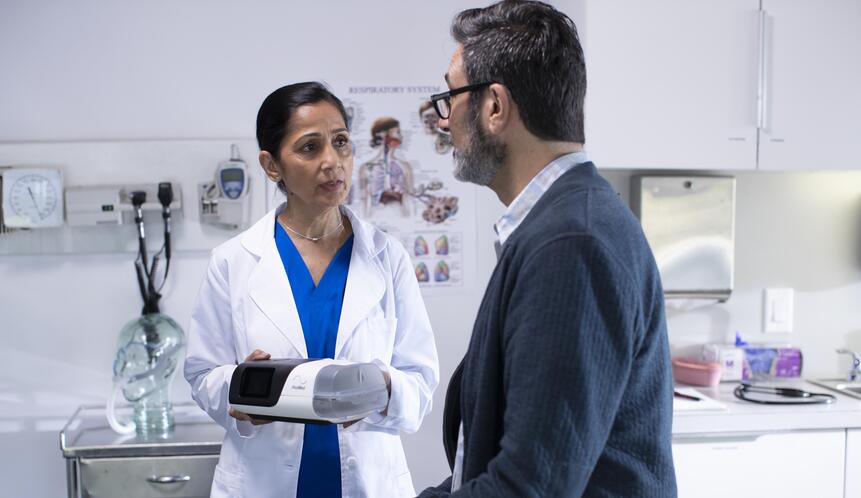
 patient asking doctor can someone die from sleep apnea
The link between sleep apnea and mortality

According to research of over 1 million people, untreated obstructive sleep apnea (OSA) increases the risk of death, even after accounting for other health risk factors.7

People with sleep apnea also have an 83% higher risk of injuries than those without the sleep disorder.8 These include falls, traffic injuries, fractures and head injuries.

While OSA may be linked to reduced life expectancy, it rarely shows up on a death certificate.9 When researchers surveyed doctors, they found that only 12% had put this condition as a cause of death.9 In most cases, OSA is listed as a secondary or contributing cause.

How sleep apnea can lead to death

Untreated OSA may increase acute (sudden) and chronic (ongoing) risk of serious health complications – including death. Acute risks may include unexpected cardiac deaths during the night. This may occur when repeated periods of oxygen deprivation put more strain on the heart than it can handle. Chronic risks are more common. These can include accidents caused by daytime sleepiness, cardiovascular disease, high blood pressure and stroke.11

Because repeated pauses in breathing can lead to drops in blood oxygen levels,4 individuals with untreated obstructive sleep apnea (OSA) may experience added strain on the heart and lungs. This can contribute to other serious health issues over time, such as sudden cardiac events.12

Over time, periods of low blood oxygen levels can damage vital organs.13 The heart must work harder, causing blood pressure to rise. This can contribute to heart disease, stroke and metabolic disorders. Individuals may also experience neurological problems, including poor concentration and memory decline.

Health complications and life expectancy

Approximately 34% of middle-aged men and 17% of middle-aged women are at risk of obstructive sleep apnea (OSA).14 The condition can lead to health complications that impact a person’s life expectancy. Fortunately, effective and timely management can help reduce these health risks.

Cardiovascular complications

According to the American Heart Association, people living with untreated OSA have a much greater chance of developing high blood pressure, heart failure or coronary artery disease than people without this condition. The more severe a person’s OSA, the greater their risk of heart-related complications.14

Obstructive sleep apnea and heart health appear to influence each other. This can create a cycle in which one condition worsens the other. For example, up to 80% of people with uncontrolled high blood pressure meet the criteria for OSA.15

OSA increases the risk of sudden cardiac arrest during sleep. One study found that people with OSA were more than twice as likely to die of sudden cardiac death between midnight and 6 a.m. than those without OSA.16

Finally, OSA can negatively impact blood vessels.17 It causes vessels to thicken or stiffen, changing how efficiently they function. This reduces blood flow to vital organs and further contributes to the risk of heart disease.

 worrying about risks of sleep apnea
Stroke risk

Among people who’ve experienced a stroke, over 7 in 10 had moderate to severe obstructive sleep apnea (OSA).18 When people with OSA experience drops in blood oxygen levels, the body activates stress responses that can raise blood pressure — a factor linked to higher stroke risk.

Over time, repeated oxygen level changes associated with OSA may affect brain function and have been linked to transient ischemic attacks (mini strokes).19 These effects may increase the risk of permanent brain damage and a full ischemic stroke.

Several studies have shown a higher rate of stroke among people with OSA compared to the general population. Researchers observed a 1.5-fold increased risk of stroke in those with OSA compared to those without the disorder.20

Other serious health complications

Apart from heart conditions and stroke, individuals living with OSA may face other health complications. For example, 72% of people with Type 2 diabetes also have OSA.22 There is also a link between OSA and weight management — an estimated 77% of people with OSA also have obesity.23

A consistent lack of oxygen due to OSA may affect vital organs, including the brain, heart and kidneys. It has also been linked to memory impairment and mental health concerns such as anxiety and depression,24 indirectly increasing the risk of complications.

Impact on life expectancy

Without treatment, obstructive sleep apnea (OSA) has been linked to a shorter lifespan. In one study, about 1 in 3 individuals with moderate to severe OSA died over a 14-year period. By comparison, only about 1 in 15 people without OSA died.25

The more severe the OSA, the higher the impact it can have on a person’s lifespan. In fact, moderate to severe OSA is associated with a six-fold higher overall mortality rate.26

Fortunately, life expectancy can improve with the right treatment. People with OSA who use continuous positive airway pressure (CPAP) — a treatment that uses gentle, steady air pressure through a mask to keep your airway open while you sleep — for 5 or more years have reduced mortality.7 They also have a decreased risk of developing conditions like heart disease and Type 2 diabetes.27

Risk factors that increase mortality danger

While sleep apnea (OSA) on its own can be serious, having other health conditions at the same time may further increase overall health risks. Excess body weight, particularly around the neck, can put added pressure on the upper airways — making them more likely to collapse.28 Lifestyle habits, such as a poor diet, smoking and limited physical activity, can also contribute to higher mortality risks in people with OSA.27

Age can also play a role in overall health. In one study, researchers found that older adults with OSA and daytime sleepiness had more than twice the likelihood of death compared to younger individuals without OSA.29

Treatment and improved health outcomes

The good news is that with proper diagnosis and treatment, individuals with OSA can live long, healthy lives. One approach is CPAP therapy — the most used and effective method for treating sleep apnea.30

CPAP works by pushing gentle, pressurized air through a mask worn over the mouth or nose (or both). This constant stream of air helps keep the airway open during the night, preventing the airways from collapsing.

When used as directed, some people with sleep apnea may experience symptom relief after their first night of using CPAP.10 Plus, some people who consistently use their CPAP may see a reduced rate of cardiovascular events and a better quality of life.31,32

Research also shows that CPAP therapy may help people with OSA live longer. In one study, CPAP use was associated with a 37% lower overall mortality risk and a 55% lower risk of heart-related death.7

Concerned about your sleep? Learn more about the quality of your sleep by taking our sleep assessment.

Resources