Can the Right Pillow Help with Sleep Apnea? | Resmed
What can we help you find?
Search for masks, machines, accessories...

Can the Right Pillow Help with Sleep Apnea?

Sleep health Relationships Seeking care Sleep health Sleep issues
Exploring Your Options – Can The Right Pillow Help With Sleep Apnea?

Quick Takeaways

  • The right pillow can’t cure sleep apnea, but it may help reduce discomfort, improve sleep posture, and make CPAP therapy feel more natural.
  • Wedge, CPAP-compatible, and cervical pillows can support airway alignment and comfort, especially for side sleepers.
  • Pillows that promote side sleeping or elevate the upper body may help reduce snoring and breathing interruptions.
  • A supportive pillow can be part of a comprehensive treatment plan that includes CPAP or other doctor-prescribed therapies.

Sleep apnea can leave you constantly chasing a good night’s sleep, but never quite reaching it. You might toss and turn, struggling to find a comfortable position or feel frustrated as you’re trying to adapt to your continuous positive airway pressure (CPAP) therapy. Waking up feeling like you haven’t slept at all is a heavy burden. The good news? Practical solutions are within reach. A new pillow isn’t a cure for sleep apnea, but the right one can be a soothing ally on your journey to better sleep. It may help you feel more supported and rested and make using your CPAP device more comfortable.

Let’s explore options that can help you find the support you need for more restful nights and more energized days.
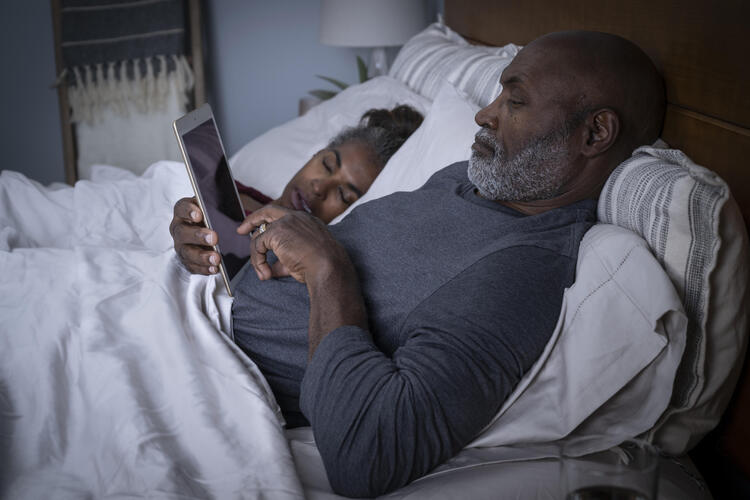
 Laying in bed on a soft pillow
Understanding sleep apnea and the role of pillows

To understand how the right pillow can help with sleep apnea, let’s first look at what the condition is and explore its connection to your breathing and sleeping posture.

What is sleep apnea?

Obstructive sleep apnea (OSA) is the most common type of sleep-disordered breathing. It happens when the muscles in the back of your throat relax too much during sleep, causing the soft tissues to collapse and physically block your airway.1 These pauses in breathing, called apneas, can happen many times per hour. The lack of oxygen forces your brain to briefly wake you up to restart your breathing. These awakenings are so brief you likely won’t remember them in the morning, but they stop you from getting the deep, restorative sleep your body needs.2

Constant disruptions to your sleep can affect your quality of life and lead to noticeable symptoms. Common signs include:1 2

  • Excessive daytime sleepiness that interferes with work or daily activities
  • Frequent, persistent snoring, gasping or choking sounds that keep you or your loved ones awake
  • Waking up with a morning headache, dry mouth or sore throat
  • Difficulty concentrating, memory problems and feeling irritable during the day

Over time, untreated sleep apnea and other sleep disorders may increase the risk of other serious health conditions, including high blood pressure, depression, heart disease and Type 2 diabetes.3

The connection between sleep position and sleep apnea

Your sleeping position can directly affect the severity of your sleep apnea. Sleeping on your back often makes symptoms worse because gravity naturally pulls your tongue and soft tissues down, making an airway blockage more likely.4 Many people have something called positional obstructive sleep apnea, where their breathing issues happen mostly when sleeping on their back. For this reason, side sleeping can be recommended as a lifestyle change to help keep the airway open.5

How pillows can influence sleep apnea symptoms

Your pillow’s main role is to support your head and neck. This promotes healthy, neutral spinal alignment that’s essential for optimal breathing during sleep.6 7 An unsupportive pillow can cause your head to tilt in a way that may block the airway, similar to bending a straw. Therefore, a well-designed pillow can act as a complementary approach to your overall management plan. Just keep in mind that a pillow is a supportive tool, not a standalone medical treatment for sleep apnea.6

Types of pillows for sleep apnea management

Pillows designed to help people with sleep apnea come in several forms, each with unique features to address specific needs.

Wedge pillows

A wedge pillow is a large, triangular foam cushion that elevates your entire upper body. Research suggests that sleeping on an incline may help reduce breathing disruptions for people with obstructive sleep apnea (OSA). And the amount you elevate your head doesn’t have to be dramatic. In fact, some people may benefit at a mild head-of-bed elevation of just 7–8 degrees.8

What’s more, an elevated sleeping position can also help people who experience acid reflux, a condition that can worsen sleep apnea symptoms.9 10 It may take a few nights to get used to the new sleeping angle, so be patient with the adjustment period.

CPAP-compatible pillows

CPAP-compatible pillows may help make CPAP therapy feel more comfortable and easier to adjust to. They feature special cutouts and indentations designed to create space for your mask, frame and tubing. The design stops a pillow from pushing your mask out of place, which is a common cause of air leaks or pressure on your face. Limited but supportive clinical evidence suggests these designs can improve comfort and user preference, but effects on how well it works to support treatment and prevent leaks are modest in small trials.11 12

Because they enhance comfort and help prevent disruptions, these pillows may help you feel more comfortable when using your CPAP. They’re often made from supportive memory foam and are designed to work with all major mask types.

Cervical and contour pillows

Also known as orthopedic pillows, cervical pillows have a distinct wave-like shape that follows the natural curve of your head, neck and shoulders. The contoured design provides targeted support to your neck, helping to maintain proper alignment and keep your airway from narrowing.7 13 Some studies suggest that the improved posture from a cervical pillow may also help reduce the intensity of snoring.14

Specialty sleep apnea pillows

Specialty sleep apnea pillows include other innovative designs aimed at improving sleep posture. For example, body pillows are long cushions you can hug. They support your back and hips, helping side sleeping feel more stable and secure, which can discourage you from rolling onto your back.

Other positioning pillows have built-in bumpers or anti-snore features that make sleeping on your back more uncomfortable, so you can train yourself to stay on your side throughout the night. Unlike conventional pillows, which provide general comfort, these specialty pillows have a targeted function to promote a healthier sleep posture.5 15

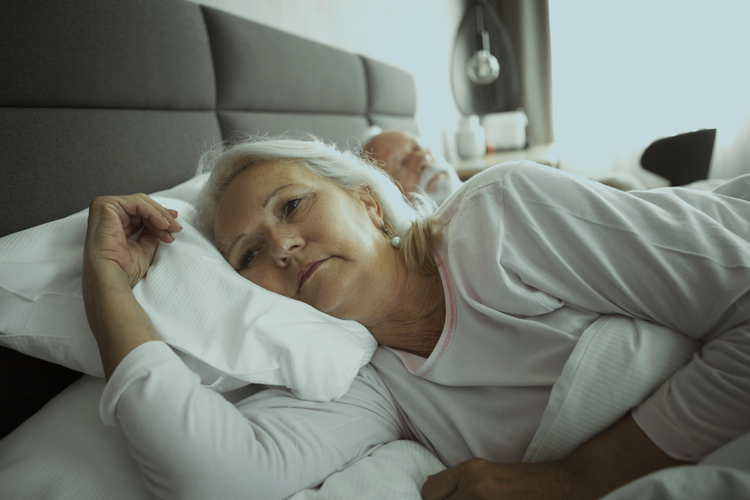
 Senior couple sleeping
Key pillow characteristics for sleep apnea

When shopping for a pillow, a few key characteristics can make all the difference.

Optimal pillow height (loft)

A pillow’s height is important for keeping your spine and airway aligned. Side sleepers generally need a thicker, firmer pillow to fill the space between their shoulder and head. For back sleepers, a medium-height pillow that cradles the neck without pushing the chin to the chest can be an effective option.6 7

Many pillows now have adjustable loft with removable foam layers, so you can find a truly personalized fit. You may need a new pillow if you notice signs of a poor fit, such as:

  • Waking up frequently with neck pain, shoulder aches or stiffness
  • Feeling like your head is either sinking too low or being propped up too high
  • Constantly having to bunch up or re-fluff your pillow during the night
Material considerations

The material inside your pillow shapes its feel, support, durability and breathability. Memory foam is popular because it can contour to your shape, providing excellent relief from pressure. Latex can provide more responsive, bouncy support, and tends to be more breathable than traditional memory foam.

High-quality foam and latex options are naturally hypoallergenic. The firmness of the material is also important to think about, as a pillow that’s too soft may not provide enough support to help you maintain proper alignment through the night.6 7

Customization options

Many newer pillows come with features that allow you to tailor them to your needs. Pillows with adjustable fills, such as shredded memory foam or buckwheat hulls, let you add or remove material to achieve the preferred height. CPAP users who feel warm from their mask or tubing may find that pillows with integrated cooling gel layers or breathable covers may help them feel cooler and more comfortable. If hygiene is a concern, look for removable and washable covers.

If you travel frequently, you might opt for a more compact, travel-friendly version of your favorite pillow to help maintain consistent support on the go.6

Practical considerations and professional guidance

Choosing a pillow is just one step. It can also be beneficial when combined with other approaches to manage your sleep apnea.

Integrating pillows with other sleep apnea treatments

Your pillow should always complement your primary, doctor-prescribed treatment, not replace it. CPAP is the most used and understood method for treating sleep apnea,16 and research suggests CPAP therapy may result in a 55% lower risk of cardiovascular-related death in people with obstructive sleep apnea (OSA).17 18

A supportive pillow can make your CPAP therapy more comfortable, which may help support consistent use and contribute to better overall well-being. Similarly, a good pillow can help maintain the proper jaw position needed for an oral appliance to work as intended and may help support the comfort and effectiveness of positional therapy.6

When to talk to your doctor

Pillow adjustments alone may not be enough to resolve your sleep apnea symptoms. It’s important to talk to your doctor or sleep specialist if you are still feeling tired during the day or if your bed partner notices you are still snoring or having breathing pauses while you sleep. Your doctor can assess your symptoms, discuss pillow options and determine if a sleep study is needed to ensure your treatment plan is working as it should.6

Cost-benefit analysis

Specialty pillows can have a higher price tag than conventional ones, but it’s helpful to view them as part of your overall effort to support better sleep and comfort. Many companies offer trial periods and return policies, which can provide flexibility in finding the right pillow. Be sure to check with your insurance provider to see if any pillow-related purchases are eligible for coverage.

Research and the evidence base

Scientific research on pillows as a tool for sleep apnea is still growing. While many studies confirm the benefits of positional changes, such as side sleeping and upper-body elevation, fewer large-scale clinical trials have focused on regular commercial pillow designs. Much of the support for specialty pillows comes from smaller studies and consistent feedback from users who report greater comfort and ease when using their CPAP therapy.5 6 11 13 15 Future developments may include even smarter pillows with more advanced sensors to provide real-time feedback on sleep posture.

Finding the right pillow can take a little trial and error, but the effort can be well worth it. A comfortable, supportive pillow can play a helpful role in supporting restful sleep and complementing your OSA treatment.

Learn more about how you sleep and if there’s more you can discuss it with your doctor.

Take a sleep assessment

Resources

  1. National Heart, Lung, and Blood Institute. What Is Sleep Apnea? (updated 2025). https://www.nhlbi.nih.gov/health/sleep-apnea
  2. Slowik JM, et al. Obstructive Sleep Apnea. StatPearls (updated 2024). https://www.ncbi.nlm.nih.gov/books/NBK459252/
  3. Luyster, Faith S., et al. “Sleep: A Health Imperative.” Sleep, vol. 35, no. 6, June 2012, pp. 727–34. https://pmc.ncbi.nlm.nih.gov/articles/PMC3353049/
  4. de Vries GE, et al. Usage of positional therapy in adults with obstructive sleep apnea. J Clin Sleep Med. 2015. https://pmc.ncbi.nlm.nih.gov/articles/PMC4298770/
  5. Srijithesh PR, et al. Positional therapy for obstructive sleep apnoea. Cochrane Database Syst Rev. 2019. https://pmc.ncbi.nlm.nih.gov/articles/PMC6491901/
  6. American Academy of Sleep Medicine. Practice Guidelines & Patient Resources (Positional Therapy). https://aasm.org/clinical-resources/practice-standards/practice-guidelines/ and https://sleepeducation.org/patients/positional-therapy/
  7. Edwards BA, et al. Impact of body posture and sleep stages on apnea severity in OSA. J Clin Sleep Med. 2008. https://jcsm.aasm.org/doi/10.5664/jcsm.2258
  8. de Barros Souza FJFB, et al. Influence of head-of-bed elevation in patients with obstructive sleep apnea. Sleep & Breathing. 2017. https://pmc.ncbi.nlm.nih.gov/articles/PMC5700252/
  9. El Hage Chehade N, et al. Association between obstructive sleep apnea and gastroesophageal reflux disease: systematic review and meta-analysis. J Gastroenterol Hepatol. 2023. https://pubmed.ncbi.nlm.nih.gov/37300443/
  10. Albarqouni L, et al. Head of bed elevation to relieve GERD symptoms: systematic review. Fam Pract. 2021. https://pmc.ncbi.nlm.nih.gov/articles/PMC7816499/
  11. Salvaggio A, et al. Gel pillow with side cutouts in CPAP-treated OSA: randomized trial. J Bras Pneumol. 2016. https://pmc.ncbi.nlm.nih.gov/articles/PMC5094873/
  12. Rowland S, et al. Comparing CPAP interfaces: efficacy, leak, comfort, preference. J Clin Sleep Med. 2018. https://pmc.ncbi.nlm.nih.gov/articles/PMC5734878/
  13. Kushida CA, et al. Cervical positioning for reduction of sleep-disordered breathing in mild–moderate OSAS. Sleep Med. 2001. https://pubmed.ncbi.nlm.nih.gov/11868144/
  14. Chung TT, et al. Efficacy of an anti-snore/smart pillow in OSAS. Sleep Disord. 2021. https://onlinelibrary.wiley.com/doi/10.1155/2021/8824011
  15. Lee KI. Positional therapy for obstructive sleep apnea. Sleep Med Res. 2023. https://sleepmedres.org/journal/view.php?doi=10.17241/smr.2023.01837
  16. Understanding PAP, 2021. Division of Sleep Medicine at Harvard Medical School. https://sleep.hms.harvard.edu/education-training/public-education/sleep-and-health-education-program/sleep-health-education-37
  17. Benjafield AV, et al. Positive airway pressure therapy and all-cause & cardiovascular mortality in OSA: systematic review and meta-analysis. Lancet Respir Med. 2025. https://www.thelancet.com/journals/lanres/article/PIIS2213-2600(25)00002-5/abstract
  18. Mazzotti DR, et al. Positive Airway Pressure, Mortality, and Cardiovascular Risk in Older Adults With OSA. JAMA Netw Open. 2024. https://jamanetwork.com/journals/jamanetworkopen/fullarticle/2823539