The proof behind the benchmark
From compliance and adherence to leak performance and provider preference,1 AirFit™ P10 continues to deliver the outcomes that matter most.
Built for your practice as much as your patients
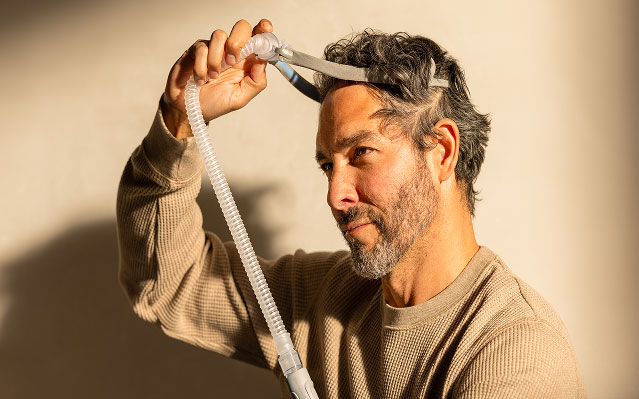
Setting the pace in compliance
Earlier compliance² helps patients establish therapy early while giving providers confidence in treatment success.
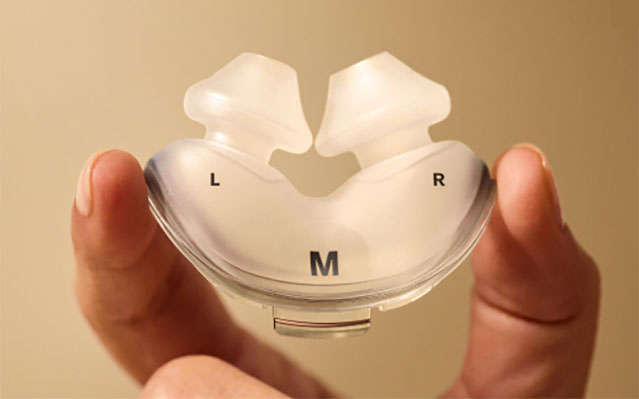
Reduced leaks designed for better therapy
Lower leak rates³ help support more consistent therapy, giving providers confidence they’re making a strong mask choice.
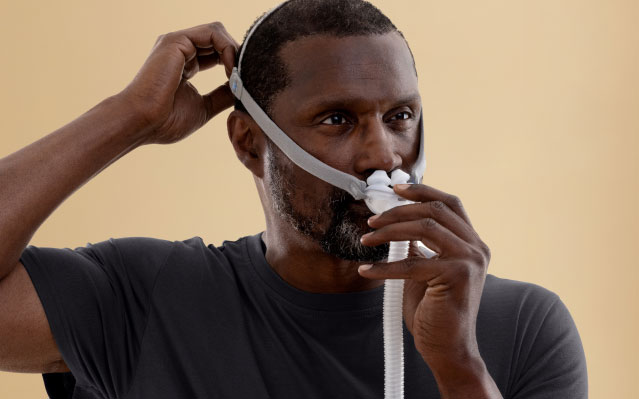
Simplified setup for everyday use
A streamlined design simplifies setup, fitting and patient onboarding, creating a more efficient experience for both providers and patients.
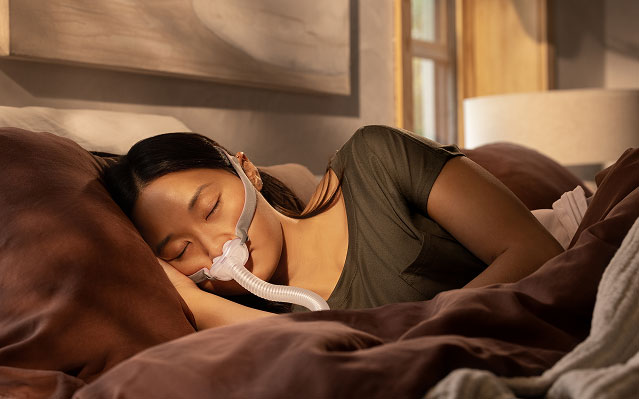
Quiet therapy patients can stay with
At just 20 dBA,⁴ QuietAir™ venting helps reduce disturbances for patients and their bed partners.
Experience AirFit™ P10 firsthand
Contact your Resmed Sales Representative or email customercare@resmed.com to request a sample.
References
- Source: Based on an online, double-blinded survey of 92 U.S.-based HME providers conducted by Peel Research Partners, Dec 12–22, 2025.
- Source: Data are derived from an analysis of new PAP therapy patients in the United States using AirView™ and myAir™ platforms. Patients were included if myAir™ setup occurred from 7 days before through 14 days after the AirView™ setup date (i.e., −7 to +14 days) and valid mask data were available. Compliance (90-day) was assessed for setups between January 2024 and December 2024. Compliance was defined as PAP use for ≥4 hours per night on ≥70% of nights during any consecutive 30-day period within the first 90 days of therapy, with the AirView™ setup date counted as day 1. Days to compliance represents the number of days from AirView™ setup until the first date the patient achieved compliance. Analysis included the top 45 mask models, representing 99.8% of mask selections among new users in myAir™. Days to compliance (90th percentile) is the number of days from AirView™ setup by which 90% of patients achieved compliance. Overall average = 41.7 days mean across the 45 included mask models; n = 557,021. AirFit P10 = 39 days, n = 65,796.
- Source: Data are derived from an analysis of U.S. PAP therapy patients using AirView™ and myAir platforms. Patients were included based on registration within ±14 days of AirView setup and valid mask data. Compliance was assessed for 2024 setups (n = 557,021; AirFit™ P10 n = 65,796), and 1-year adherence for 2023 setups (n = 389,270; AirFit™ P10 n = 50,156). Compliance was defined as PAP use for ≥4 hours per night on ≥70% of nights during any consecutive 30-day period within the first 90 days of therapy. AirFit™ P10 demonstrated lower leak rates than the average for pillows masks (median 1.9 vs. 2.2 L/min; 95th percentile 12.0 vs. 12.7 L/min). No statistical significance testing was performed.
- Source: Resmed internal verification testing conducted June 2026.