What your face may say about your sleep
Your unique facial features can offer insights into your airway and nighttime breathing. Try our simple screener, powered by AI and grounded in clinical research, to explore your sleep health in minutes.1
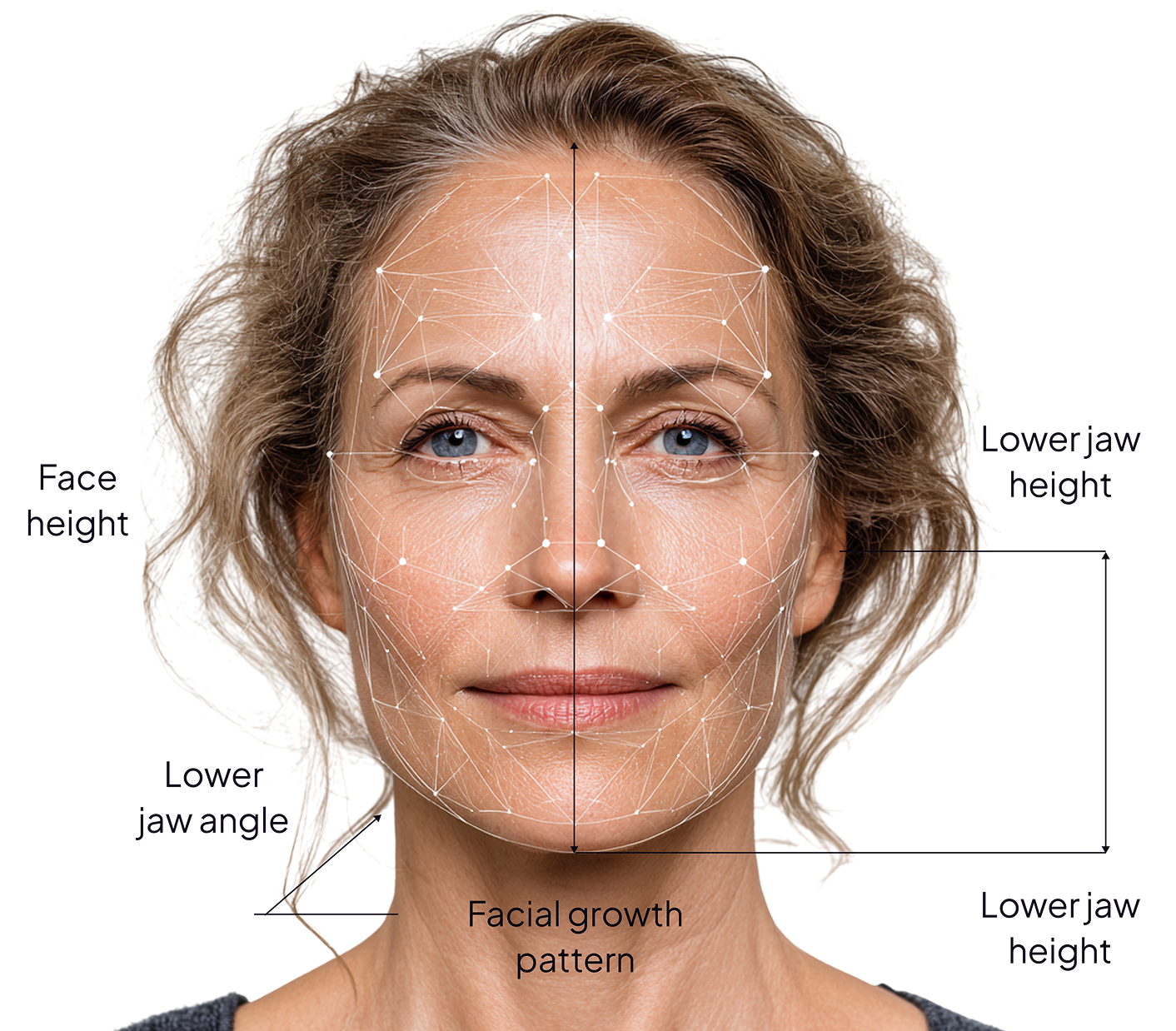
Why face anatomy matters
The relationships between your facial structure, jaw alignment and neck can reveal how your airway behaves during sleep. A brief facial analysis can assess these subtle features to help you understand your sleep and breathing patterns.2
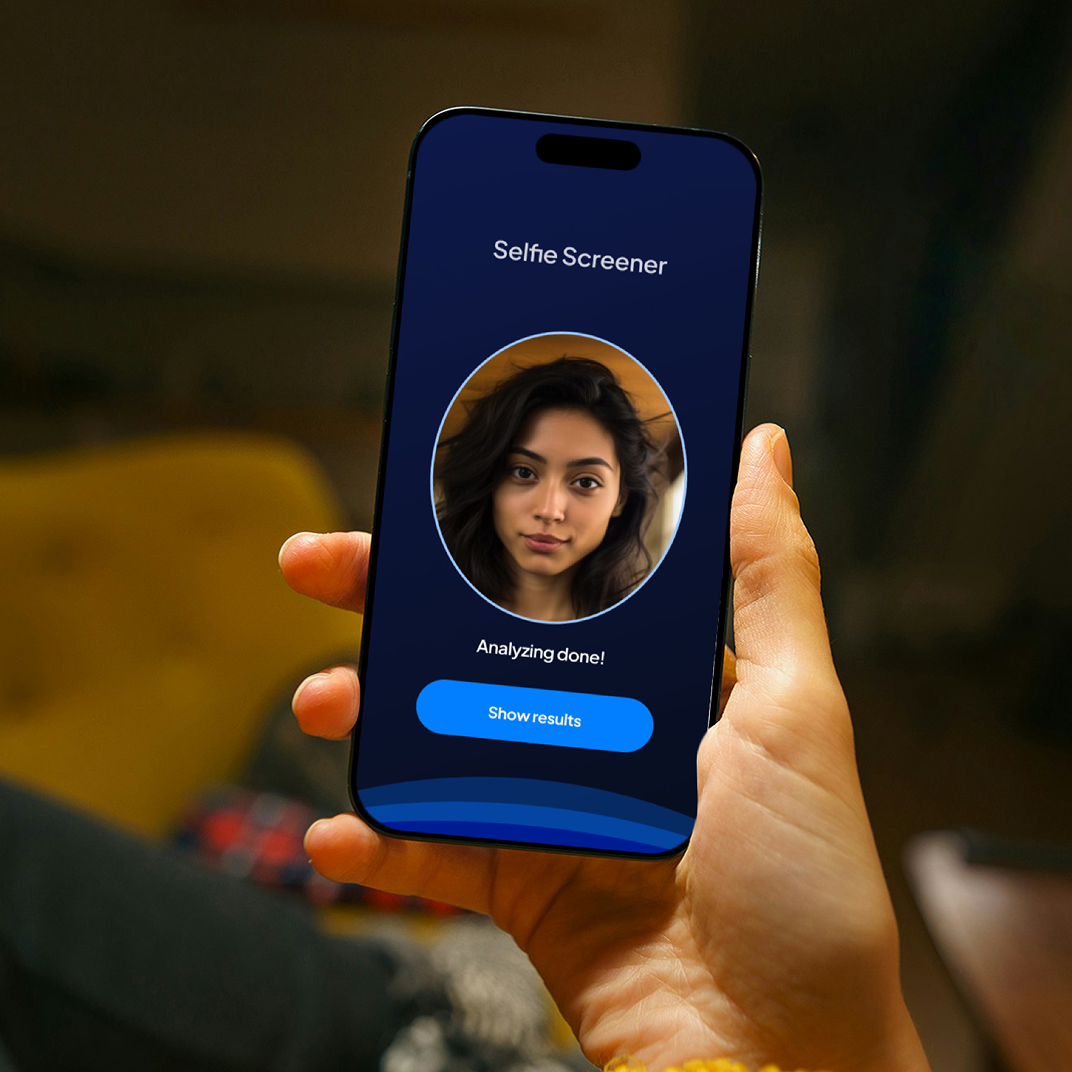
How it works
 |
Take a quick selfie It takes less than a minute |
 |
Get ready for your analysis AI does the work for you |
 |
Receive your results Your sleep health quality explored |
FAQs
The SelfieScreener analyzes your selfie to identify visual features – such as facial structure, proportions and other subtle features – that may be associated with sleep apnea. The tool offers informational insights only to help you decide whether to explore your sleep health further. It does not diagnose or assess medical risk.
Yes. Studies have shown that people with obstructive sleep apnea can often share physical features in the shape and proportions of their face, jaw and neck that can affect how easily the airway stays open during sleep.(citation footnote).
The Selfie Screener was designed using an AI-powered model trained on selfies from thousands of volunteers. The goal was to explore whether certain visual features could be associated with sleep apnea and to offer a quick, engaging way for people to learn more about their sleep health.
No. All you need is a smartphone, tablet or computer with a camera and internet browser – no app or downloads required. It shouldn’t take more than a few minutes!
Your data is handled under Resmed’s Terms of Use and Privacy Policy. You’ll be prompted to agree to both policies before using the tool.
SelfieScreener is not a medical device and does not provide a diagnosis or assess medical risk. While the tool is designed to identify visual features that may be associated with sleep apnea, its accuracy cannot be claimed. If you have concerns about your sleep, contact your healthcare provider.
Once the SelfieScreener has analyzed your selfie, you’ll get a summary of your results, potential insights into your sleep and some recommended next steps.
The SelfieScreener tool is for informational and educational purposes only.
This tool is not clinically validated or a substitute for the professional judgment of a health care professional in diagnosing and treating patients. Always seek the advice of a qualified healthcare provider with any questions you may have regarding a medical condition.
References:
- Source: Lee RW, Petocz P, Prvan T, Chan AS, Grunstein RR, Cistulli PA. Prediction of obstructive sleep apnea with craniofacial photographic analysis. Sleep. 2009;32(1):46-52.
- Source: https://pmc.ncbi.nlm.nih.gov/articles/PMC2938867/
- Source: https://pmc.ncbi.nlm.nih.gov/articles/PMC2938867/
- Source: https://www.nhlbi.nih.gov/health/sleep-apnea/symptoms & https://pmc.ncbi.nlm.nih.gov/articles/PMC6087747/#s2
- Source: Lee RW, Petocz P, Prvan T, Chan AS, Grunstein RR, Cistulli PA. Prediction of obstructive sleep apnea with craniofacial photographic analysis. Sleep. 2009;32(1):46-52