What can we help you find?
Search for masks, machines, accessories...

CPAP vs. BiPAP: Which is right for your sleep apnea treatment?

In this article

    Quick takeaways

    • CPAP (continuous positive airway pressure) and BiPAP (bilevel positive airway pressure) are prescription therapies that use gentle air pressure to keep your airway open while you sleep, and both have been extensively studied for their effectiveness in treating sleep-disordered breathing.1
    • CPAP provides steady air pressure throughout the night and is a well-studied, widely used treatment for most people with obstructive sleep apnea (OSA), making it the most commonly prescribed therapy for this condition.1
    • BiPAP uses two levels of air pressure: Higher pressure when you breathe in and lower pressure when you breathe out, which may make breathing feel more comfortable for some people who experience difficulty exhaling against continuous pressure.2
    • For most people with OSA, CPAP is the first choice for treatment, while BiPAP may be recommended for people living with additional breathing conditions, such as chronic obstructive pulmonary disease (COPD), where dual-pressure support may be beneficial.2
    • The right treatment choice depends on your diagnosis and overall health, and your doctor can help guide that decision based on your specific needs.1

    What is obstructive sleep apnea (OSA)?

    Obstructive sleep apnea (OSA) is a condition where breathing repeatedly slows down or stops during sleep, typically occurring when the muscles in the back of the throat relax and cause the airway to narrow or collapse for short periods of time.3

    These pauses in breathing can last several seconds and may happen many times per hour, depriving the body of essential oxygen. When oxygen levels drop, the body responds to the stress, and over time, this can affect overall health and could increase the risk of other health problems.12 These pauses also disrupt your sleep throughout the night, even if you do not fully wake up, so people living with OSA often experience persistent tiredness, grogginess and difficulty concentrating during the day.9

    Common signs of OSA include excessive daytime sleepiness, morning headaches, feeling irritable or moody, difficulty concentrating, snoring or gasping for air while you sleep, and struggling to feel present during the day.9

    Left untreated, OSA may raise the risk of serious health problems such as high blood pressure, heart disease and stroke, but the right treatment can help keep your airway open and help you feel more rested.3

    What is CPAP therapy?

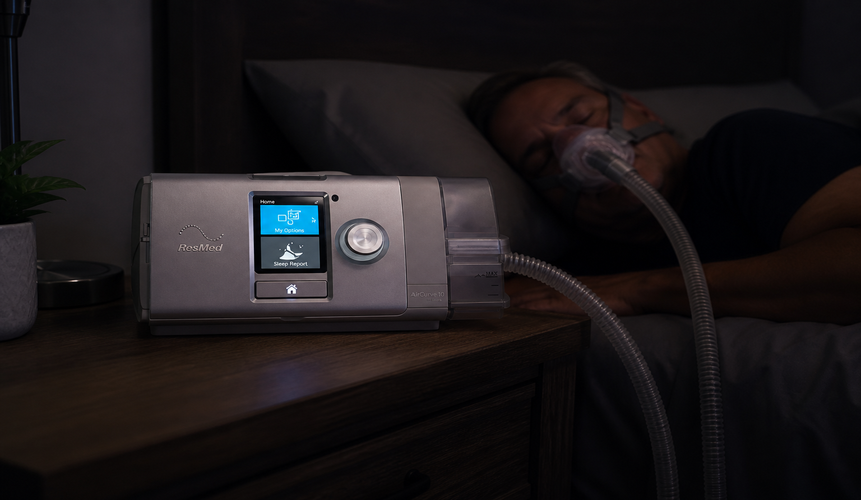
    Continuous positive airway pressure (CPAP) therapy helps people with OSA breathe consistently throughout the night by using a small machine placed by your bed to gently deliver a steady flow of air through a mask.4 A typical system includes a CPAP device, a flexible tube and a mask that fits over your nose or over both your nose and mouth.4 The gentle air pressure helps keep your airway open, so you can breathe steadily throughout the night.

    With over 40 years of safety and effectiveness, CPAP is the most used and understood method for treating OSA.10,11 After starting CPAP, 82% of people said they felt improvement in brain fog13, 62% reported that their productivity improved14, and 73% reported feeling an improvement in their quality of life.15

    In one study, CPAP demonstrated a connection to helping people with sleep apnea live longer, as people using CPAP experienced a 37% lower risk of death.7

    What is BiPAP therapy?

    BiPAP therapy also helps you breathe while you sleep, but it operates differently than CPAP by delivering two pressure levels: a higher pressure when you breathe in and a lower pressure when you breathe out, which may make it easier and more comfortable to breathe out.2 For people who have trouble breathing out against CPAP’s steady air pressure, BiPAP may be an alternative solution.5

    BiPAP is typically recommended for people with specific conditions, including central sleep apnea, COPD, or conditions that affect the nerves and muscles used for breathing. It may also be an option for people who have trouble adjusting to CPAP.5

    BiPAP is not a “better” version of CPAP, but rather a different type of therapy that may be a better fit for some people. For most people with obstructive sleep apnea (OSA), CPAP remains the recommended treatment.1

    How do CPAP and BiPAP work to treat sleep apnea?

    The key difference between CPAP and BiPAP

    CPAP delivers a steady flow of air throughout the night to help keep your airway open while you breathe in and out.1 BiPAP works differently, using two levels of air pressure: Higher pressure when you breathe in and lower pressure when you breathe out. This may feel more comfortable for some people.2

    For people who find it difficult to breathe out against CPAP’s steady air pressure, BiPAP may feel more comfortable because it uses lower air pressure.5 Both therapies can keep the airway open during sleep, which is the core goal for treating OSA.1

    How each therapy addresses OSA

    Both CPAP and BiPAP keep the airway open during sleep. However, CPAP uses one type of air pressure to keep the airway open, while BiPAP uses two levels of air pressure, providing extra breathing support for people who need it.

    Both treatments can help reduce breathing pauses, support healthier oxygen levels and allow for more restful sleep, making either therapy a valuable tool for managing obstructive sleep apnea.1

    Who is CPAP typically recommended for?

    Why CPAP is the most recommended treatment for OSA

    Studies support CPAP as the first choice for treating OSA. It has been shown to reduce the number of times breathing may pause or slow down during sleep by as much as 86%10, alleviate OSA symptoms after the first night of use, and reduce the risk of heart-related death by 55%.7

    If you’ve been diagnosed with OSA, your doctor will most likely suggest giving CPAP a try, and in one study, 85% of respondents said they adjusted to CPAP within one month.16

    What makes someone a good candidate for CPAP

    Good candidates for CPAP include people diagnosed with mild, moderate or severe OSA, those who are comfortable breathing with steady air pressure throughout the night, and people looking for a well-studied treatment with strong clinical support and over 40 years of effectiveness.1,10 CPAP may also appeal to people who are interested in a drug-free treatment with zero medication-related side effects.

    Who is BiPAP typically recommended for?

    When a doctor might recommend BiPAP over CPAP

    A doctor may suggest BiPAP when a person has trouble adjusting to CPAP, especially if they find it difficult to breathe out against the steady air pressure CPAP delivers.5

    BiPAP may be used for people with central sleep apnea (CSA), a condition where the brain does not send steady signals to breathe.5 BiPAP may also be considered for people who develop central sleep apnea after starting CPAP.5

    People living with COPD, conditions that affect the nerves and muscles used for breathing, or a condition where breathing becomes too shallow related to body weight may also benefit from BiPAP.5

    If you have a condition beyond OSA, or if CPAP has been difficult to adjust to, BiPAP may be an option. This doesn’t mean your treatment isn’t working. Rather, you need a different approach that better fits your needs.

    Is BiPAP better than CPAP?

    BiPAP isn’t a better or newer version of CPAP. It works differently and serves people with certain breathing needs.1 For most people with obstructive sleep apnea (OSA), CPAP is the recommended treatment, but your doctor may suggest BiPAP if CPAP isn’t the right fit for your breathing needs.5

    When might a doctor suggest switching from CPAP to BiPAP?

    Common reasons for considering a switch

    If you use CPAP but have trouble breathing out, even after changing settings and trying different masks, your doctor may recommend giving BiPAP a try.5

    Additionally, your doctor may recommend taking an additional sleep test. If the test shows that your breathing is still pausing or stopping despite using CPAP, your doctor may consider changing your treatment approach.5

    Some people develop central sleep apnea (CSA) after starting CPAP. In these cases, a doctor may recommend a different type of breathing support, such as BiPAP therapy.5

    If you have a new or worsening condition, such as COPD or a neuromuscular disorder, your doctor may check whether CPAP is still the right treatment for you.5

    Starting CPAP again after stopping treatment

    If you’ve stopped using CPAP, you may be able to start again with the right support.6 If air pressure made CPAP uncomfortable, your doctor may recommend BiPAP as another option.5 Follow-up visits and check-ins with your care team can help you work through challenges and get back on track with treatment.1

    What are the potential benefits of CPAP and BiPAP therapy?

    How CPAP may support long-term health

    Consistent CPAP use can lead to more restful sleep, and better sleep quality is associated with improved energy, focus and daytime alertness.1 Additionally, research suggests CPAP may help lower cardiovascular risks. In one study of a large study population living with OSA, regular CPAP use was associated with a 37% lower overall mortality risk and a 55% lower risk of heart-related death.7

    How BiPAP may help people who need different pressure support

    With the right settings, BiPAP may help reduce pauses in breathing and keep oxygen levels from dropping while you sleep.5 It can be a good alternative to CPAP for people who need extra breathing support, and people using BiPAP have been shown to experience better sleep quality, less daytime sleepiness and improved energy levels.5

    What to discuss with your doctor

    Questions to guide your conversation

    Ask your doctor which therapy fits your diagnosis and sleep study results, and whether other health conditions such as COPD or central sleep apnea might make BiPAP a better fit for you.5 Share any discomfort you have had with CPAP, such as trouble breathing out, mask leaks or difficulty falling asleep with the pressure.5 Talk about what to expect in the first few weeks and how long it may take to adjust, and ask about follow-up support such as data reviews, remote check-ins or equipment changes.1

    The more openly you share your experience, the better your doctor can help you find a treatment that works.

    When to see your doctor

    Talk to your doctor if you have been diagnosed with sleep apnea but have not started treatment, or if you use CPAP and still feel tired during the day despite steady use. You should also talk to your doctor if you’re having trouble adjusting to CPAP and wondering if it’s worth continuing, or if you notice new or worsening symptoms such as more daytime sleepiness, morning headaches, or gasping at night. If you have another health condition, such as COPD, heart failure or a neuromuscular disorder, and wonder whether BiPAP might help, your doctor can guide you on the best next steps.

    Next steps

    CPAP and BiPAP are both effective therapies that use pressurized air to keep your airway open during sleep, but they deliver pressure in different ways.1 For most people with OSA, CPAP is a well-studied, widely used first choice.1 BiPAP offers a different type of breathing support that may fit people with certain conditions or help people who have trouble adjusting to CPAP.5

    The right choice depends on your diagnosis and overall health, and your doctor can help you understand the different options and decide on a treatment plan that addresses your individual circumstances.

    If you’re living with OSA and exploring treatment options, talk to your doctor about whether CPAP or BiPAP is right for you, as they can provide guidance tailored to your specific diagnosis and circumstances.

    This content is for informational and educational purposes only and is not a substitute for professional medical consultation, diagnosis or treatment. Always seek the advice of your doctor regarding a medical condition. Treatment outcomes vary by individual. No guarantees of symptom relief or quality-of-life improvement are implied.

    References:

    1. Source: Harvard Medical School, Division of Sleep Medicine. (2021). “Understanding PAP.” Harvard Medical School. Accessed on 08 October 2026. https://sleep.hms.harvard.edu/education-training/public-education/sleep-and-health-education-program/sleep-health-education-37
    2. Source: Johns Hopkins Medicine. (2024). “BiPap.” Johns Hopkins Medicine. Accessed on 08 October 2026. https://www.hopkinsmedicine.org/health/treatment-tests-and-therapies/bipap
    3. Source: National Heart, Lung, and Blood Institute. (2025). “Sleep apnea – what is sleep apnea?” NHLBI, NIH. Accessed on 08 October 2026. https://www.nhlbi.nih.gov/health/sleep-apnea
    4. Source: National Heart, Lung, and Blood Institute. (2022). “CPAP.” NHLBI, NIH. Accessed on 08 October 2026. https://www.nhlbi.nih.gov/health/cpap
    5. Source: Antonescu-Turcu A, Parthasarathy S. (2010). “CPAP and bi-level PAP therapy: new and established roles.” Respir Care, 55(9):1216-1229. https://pmc.ncbi.nlm.nih.gov/articles/PMC3119924/
    6. Source: Avellan-Hietanen H, Maasilta P, Bachour A. (2020). “Restarting CPAP Therapy for Sleep Apnea After a Previous Failure.” Respir Care, 65(10):1541-1546. DOI: 10.4187/respcare.07766. https://pubmed.ncbi.nlm.nih.gov/32694184/
    7. Source: Benjafield AV, Pepin JL, Cistulli PA, et al. (2025). “Positive airway pressure therapy and all-cause and cardiovascular mortality in people with obstructive sleep apnoea: a systematic review and meta-analysis of randomised controlled trials and confounder-adjusted, non-randomised controlled studies.” Lancet Respir Med, 13(5):403-413. DOI: 10.1016/S2213-2600(25)00002-5. https://pubmed.ncbi.nlm.nih.gov/40118084/
    8. Source: Durtette A, Dargent B, Gierski F, et al. (2024). “Impact of continuous positive airway pressure on cognitive functions in adult patients with obstructive sleep apnea: A systematic review and meta-analysis.” Sleep Med, 123:7-21. DOI: 10.1016/j.sleep.2024.08.019. https://pubmed.ncbi.nlm.nih.gov/39226674/
    9. Source: Patil SP, Ayappa IA, Caples SM, Kimoff RJ, Patel SR, Harrod CG. (2019). “Treatment of Adult Obstructive Sleep Apnea With Positive Airway Pressure: An American Academy of Sleep Medicine Systematic Review, Meta-Analysis, and GRADE Assessment.” J Clin Sleep Med, 15(2):301-334. doi:10.5664/jcsm.7638 https://pmc.ncbi.nlm.nih.gov/articles/PMC6374080/
    10. Source: National Institute for Health and Clinical Excellence. Continuous positive airway pressure for obstructive sleep apnoea/hypopnoea syndrome.
    11. Source: Noble D. Obstructive sleep apnea: How it affects your heart – Mayo Clinic Press. Mayo Clinic Press. March 12, 2026. Accessed November 10, 2026. https://mcpress.mayoclinic.org/sleep-apnea/obstructive-sleep-apnea-how-it-affects-your-heart/
    12. Source: Resmed retrospective survey of patients ≥18 years old with obstructive sleep apnea registered in myAir using sleep therapy ≥4 hours per night. Survey June 2025 – September 2025. n=433.
    13. Source: Resmed retrospective survey of patients ≥18 years old with obstructive sleep apnea registered in myAir using sleep therapy ≥4 hours per night. Survey June 2025 – September 2025. n=1674.
    14. Source: Resmed retrospective survey of patients ≥18 years old with obstructive sleep apnea registered in myAir using sleep therapy ≥4 hours per night. Survey June 2025 – September 2025. n=1853.
    15. Source: Resmed retrospective survey of patients ≥18 years old with obstructive sleep apnea registered in myAir using sleep therapy ≥4 hours per night. Survey June 2025 – September 2025. n=2,000.

    * The cited research is for educational purposes only and does not establish new uses or indications for use for CPAP. Use CPAP as directed and talk to your doctor for medical advice. Individual results may vary.

    Stay in the know

    The first name field is required

    The last name field is required

    The email field is required

    Wrong email format

    Please select a Country

    Please make a selection, this field is required