What can we help you find?
Search for masks, machines, accessories...

Sleep Apnea in Active-Duty Military: Risks, Readiness and Treatment

In this article

    Quick takeaways

    • Active-duty service members face unique hazards that may contribute to developing sleep apnea, including deployment8, poor sleep environments and coexisting health conditions.25
    • Sleep apnea may impact an individual’s reaction times and ability to concentrate, jeopardizing their safety.26
    • Continuous positive airway pressure (CPAP) therapy is the most common and effective form of therapy, but it requires additional considerations for those serving in field or deployment settings.1
    • Resources are available to promote service members’ health and quality of life.

    Understanding sleep apnea in the military

    The demands of military life, including irregular sleep schedules, deployments and environmental exposures, may trigger or worsen sleep apnea. As a result, military personnel and veterans may be associated with higher rates of sleep apnea compared to the general population. Fortunately, accurate screening tools and effective sleep apnea treatment can improve a person’s quality of life while supporting their career and health goals. This article defines sleep apnea, highlights its link to military service, and covers diagnosis and treatment options.

    What is sleep apnea?

    Sleep apnea is a condition where breathing stops and restarts many times throughout the night. These interruptions can make it harder for your body to get enough oxygen.27

    There are two main forms of sleep apnea, including obstructive sleep apnea (OSA) and central sleep apnea (CSA). 27 OSA is the most common form of the condition, affecting nearly one billion people worldwide.13 This is a condition where your upper airway becomes blocked repeatedly during sleep, making it harder for air to flow. These blockages can reduce or completely stop the flow of air, causing your breathing to pause throughout the night.27 This can happen as few as five times per hour each night in mild cases or 30 or more times for those with severe OSA.2

    CSA is less common, with a study of nearly 30,000 people showing that less than 6% of people with sleep apnea had this form of sleep apnea.4 CSA is a condition in which the brain doesn’t send signals to the muscles that control breathing, causing breathing to pause during sleep.27 This condition is sometimes linked to neurological conditions or injuries.28 This includes traumatic brain injuries and spinal cord injuries, which military personnel are more likely to experience than the general population.5,19

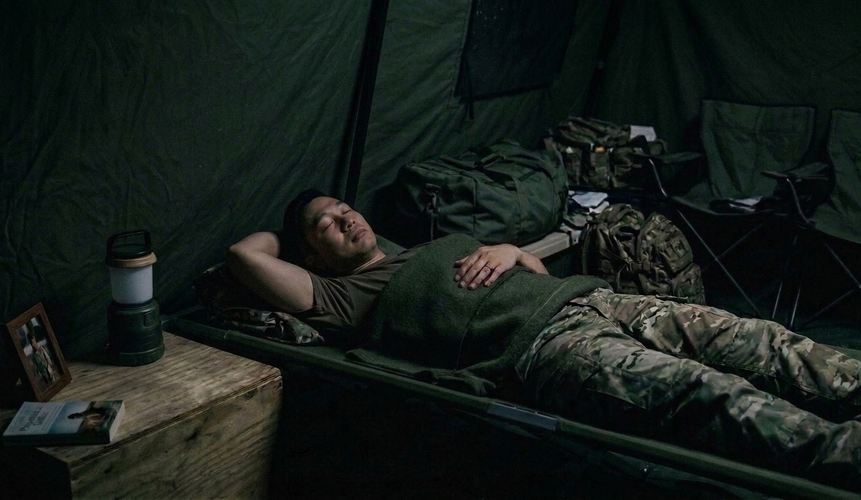
    Another form of CSA is treatment-emergent CSA (TECSA), formerly known as complex sleep apnea. TECSA features a mix of both OSA and CSA. In a study of sleep lab participants, up to 12% of people have TECSA.29 For people living with TECSA, breathing pauses continue even after sleep apnea treatment begins. Instead of an airway blockage, these pauses occur because the brain does not send the signal to breathe. In many people, breathing pauses linked to central sleep apnea improved or stopped on their own after about three months of CPAP therapy.30 For most individuals, military service doesn’t support restful sleep. Noisy or poorly ventilated sleeping environments, chronic stress, and inconsistent sleep times can disrupt sleep. Over time, untreated sleep apnea may increase the risk of developing hypertension, cardiovascular disease and diabetes.7
    How common is sleep apnea among service members?

    Research suggests an association between military service and sleep apnea. According to one study, roughly 21% of veterans surveyed were diagnosed with obstructive sleep apnea (OSA).10 Even more, post-traumatic stress disorder (PTSD) has also been associated with a higher risk of developing OSA.10 Another study found that deployed soldiers had an 89% higher risk of being diagnosed with sleep apnea than non-deployed soldiers.8 Between 2016 and 2021, nearly 60,000 active-duty service members received a new obstructive sleep apnea (OSA) diagnosis.9

    A service member’s branch of the military may influence their risk of developing OSA. For example, while all branches of the military saw an increase in OSA diagnoses between 2005 and 2019, studies have found that service members in the Army have considerably higher rates of OSA than those in the Air Force, Navy and Marines.11

    Across the world, sleep apnea affects nearly one billion adults.13 In the United States, OSA is underdiagnosed.12 Estimates suggest that about 80% of cases remain undiagnosed.12 Even among those who are diagnosed, up to 26% of people remain untreated.12 Because OSA is often associated with older age and obesity,14 it may be overlooked in younger, physically fit service members. And because fatigue is often considered a normal part of the job, sleep-related conditions may go unnoticed.15 One study reported that about 41.8% of service members get less than five hours of sleep per night.31They may also sleep in environments that aren’t ideal for quality sleep.25

    Risk factors unique to military life

    Military personnel may be at higher risk for sleep apnea. Research suggests that sleep apnea is more common among deployed service members. Among those deployed, higher risk of sleep apnea has been observed in individuals deployed to combat areas or who reported feeling in great danger of being killed, while combat exposures itself were not associated with increased risk.8

    How sleep apnea affects military readiness and performance

    Sleep apnea is a serious medical condition that can affect an individual’s job performance, career opportunities, and overall health. Studies show that sleep-disordered breathing, including obstructive sleep apnea (OSA), is increasingly common among military personnel which may pose unique challenges for the demands of military life.17

    Impact on mission effectiveness

    Daytime sleepiness, slower reaction times, difficulty concentrating and making quick decisions are among the most common symptoms associated with sleep apnea.26 When an individual’s sleep is constantly interrupted, they can’t achieve restorative rest.2 Poor sleep may influence alertness and focus during high-stakes operations.15 For example, for those handling flight operations, tactical missions or combat situations, the effects of sleep apnea may negatively impact safety and effectiveness.

    Fatigue may lead individuals to skip steps in procedures, ignore standard safety checks, or make poor decisions in high-stakes situations. This may contribute to motor vehicle accidents, injuries and operational mishaps.32 Plus, people living with untreated sleep apnea are more likely to use medical services and visit the emergency room.9 Treating sleep apnea can support better health.

    Career and assignment impact

    For service members living with moderate to severe sleep apnea, waivers and accommodations may be available.18 The U.S. Department of Defense’s minimum fitness standards require individuals with obstructive sleep apnea to obtain a waiver to deploy. Those who use CPAP machines must prepare necessary replacement equipment and supplies before deploying, including air filters, masks and a rechargeable battery backup.

    Other health connections

    Obstructive sleep apnea (OSA) often occurs alongside other health conditions that are more widely diagnosed among service members and veterans. For example, military members living with OSA are four times more likely to develop post-traumatic stress disorder (PTSD) than colleagues without OSA.9 Constant sleep disruptions can worsen PTSD symptoms, and PTSD-related hyper alertness and nightmares may make sleep apnea more difficult to manage.33,34

    Additionally, traumatic brain injuries (TBI), which are comparatively common among people who’ve served in combat, are associated with an increased risk of developing OSA.20 Because TBI can affect the brain’s ability to regulate breathing patterns,3 an individual may be more likely to experience breathing irregularities. Those living with chronic pain may take opioids, which can also trigger or worsen apnea symptoms.21

    Sleep and weight management are also closely linked, and excess weight is one of the strongest risk factors for OSA.22 Unfortunately, untreated OSA may make weight management more difficult by negatively affecting metabolism and hormone regulation.35 This cycle can create additional challenges for military members trying to meet fitness standards.

    Diagnosis and treatment in the Military Health System

    A timely and accurate sleep apnea diagnosis can support better overall health and may help military personnel carry out their duties. Learning how sleep apnea is screened and treated in the military can shed light on available resources and ways to overcome common barriers to treatment.

    How sleep apnea is diagnosed

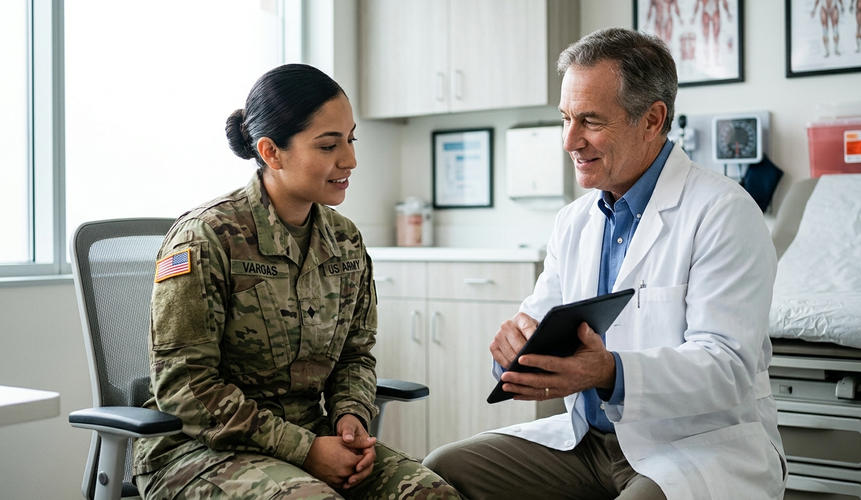
    During medical exams, doctors may ask several questions to assess a person’s obstructive sleep apnea symptoms and risk factors. Service members may be asked how often they feel fatigue during the day, whether they wake up gasping for breath and whether they have a family history of obstructive sleep apnea.23 While these questions aren’t enough to make a diagnosis, they can help a doctor determine whether further evaluation is appropriate.

    The next step to getting a diagnosis is to complete a sleep study.23 A sleep test helps you get answers about what’s happening while you sleep. It can help your doctor understand if you have a sleep condition like obstructive sleep apnea.

    This test collects information from your body as you sleep. Your doctor can use this information to determine if you have a sleep condition. These studies may be completed at military treatment facilities, on-base sleep centers. Home sleep studies are often a practical testing option for those who require testing while deployed or in remote locations.

    Treatment options for active duty

    Once diagnosed with OSA, most individuals are prescribed continuous positive airway pressure (CPAP) therapy. Continuous positive airway pressure (CPAP) therapy is designed to help people with sleep apnea breathe consistently throughout the night.24 CPAP is highly effective and is the most used and understood method for treating sleep apnea.1 It’s also a drug-free sleep apnea treatment with zero medication-related side effects. When used as directed, it can help alleviate OSA symptoms after the first night of use. Plus, CPAP therapy has been shown to help people with sleep apnea live longer.16

    While CPAP is highly effective, it may not always be practical for those serving in the military. These devices typically require electricity and regular equipment maintenance, which may not be feasible in the field or during deployment. Military members living with OSA can talk to their doctors about selecting a treatment that fits their needs and the environment they work in. For those service members living with mild OSA, oral appliance therapy may be a recommended alternative to CPAP.2

    CPAP during deployment

    Deployment conditions create unique logistical challenges for service members who use CPAP equipment. Reliable power supply and charging options may not always be accessible, and equipment must often operate quietly to safeguard tactical security. Keeping equipment clean is another challenge, especially in dusty, sandy or humid environments. Service members may address some of these challenges by using portable cleaning systems and battery backups.

    Resources available

    The Military Health System within the U.S. Department of Defense offers extensive resources for managing sleep apnea. Many major military installations have specialized sleep centers, and telehealth services are available for those who are deployed. These resources promote ongoing care and monitoring for military personnel, including those who are deployed, stationed overseas or training in remote environments.

    References:

    1. Source: Understanding Pap, 2021. Division of Sleep Medicine at Harvard Medical School. https://sleep.hms.harvard.edu/education-training/public-education/sleep-and-health-education-program/sleep-health-education-37
    2. Source: Slowik JM, Sankari A, Collen JF. Obstructive Sleep Apnea. [Updated 2025 Mar 4]. In: StatPearls [Internet]. Treasure Island (FL): StatPearls Publishing; 2025 Jan-. https://www.ncbi.nlm.nih.gov/books/NBK459252/
    3. Source: Goldman M et al. Respiratory Patterns in Neurological Injury, Pathophysiology, Ventilation Management, and Future Innovations: A Systematic Review. Explor Res Hypothesis Med. 2023;8(4):338-349. doi: 10.14218/ERHM.2022.00081. https://www.xiahepublishing.com/2472-0712/ERHM-2022-00081
    4. Source: Patel, S.R., Genuardi, M.V., DeSensi, R. et al. Real world characteristics of central sleep apnea: a review of 29,000 consecutive patients undergoing polysomnography. Sleep Breath 29, 296 (2025). 29(5): 296. (2025). doi: 10.1007/s11325-025-03446-5.
    5. Source: Landvater, J., et al. (2024). Traumatic brain injury and sleep in military and veteran populations: A literature review. NeuroRehabilitation, 55(3), 245–270. https://doi.org/10.3233/NRE-230380
    6. Source: Yu L et al. CPAP improves sleep stability and attenuates acute nocturnal hypertension (NBPF) in OSA, with maximal benefits in severe cases. Front Neurol. 2025 Jul 7;16:1587127. doi: 10.3389/fneur.2025.1587127
    7. Source: Caldwell, J. A., et al. (2019). The association of insomnia and sleep apnea with deployment and combat exposure in the entire population of US army soldiers from 1997 to 2011: a retrospective cohort investigation. Sleep, 42(8), zsz112. https://doi.org/10.1093/sleep/zsz112
    8. Source: Caldwell, J. A., et al. (2025). Insomnia and sleep apnea in the entire population of US Army soldiers: Associations with deployment and combat exposure 2010-2019, a retrospective cohort investigation. Sleep health, 11(1), 14–24. https://doi.org/10.1016/j.sleh.2024.09.004
    9. Source: Wickwire, E. M., et al. (2025). Health and Utilization Burden of OSA Among US Active-Duty Military Personnel. Chest, 168(4), 1023–1033. https://doi.org/10.1016/j.chest.2025.05.007
    10. Source: Goldstein, L. A., et al. (2025). Prevalence of Obstructive Sleep Apnea Among Veterans and Nonveterans. American journal of health promotion: AJHP, 39(2), 215–223. https://doi.org/10.1177/08901171241273443
    11. Source: Moore, B. A., et al. (2021). Incidence of insomnia and obstructive sleep apnea in active duty United States military service members. Sleep. https://doi.org/10.1093/sleep/zsab024
    12. Source: Change to: Watson, N. et al., (2025). 0637 Prevalence and Unmet Need of Obstructive Sleep Apnea in the United States. Sleep. 48;(1): A278. https://doi.org/10.1093/sleep/zsaf090.0637
    13. Source: Benjafield, A.V., et al. (2019). Estimation of the global prevalence and burden of obstructive sleep apnoea: a literature-based analysis. Lancet Respir Med. 7(8):687-698. doi: 10.1016/S2213-2600(19)30198-5.
    14. Source: National Heart, Lung, and Blood Institute. (2025). Sleep apnea causes and risk factors. https://www.nhlbi.nih.gov/health/sleep-apnea/causes
    15. Source: MacFadden, J. (2025). The impact of obstructive sleep apnea and fatigue on military safety and performance. https://safety.army.mil/MEDIA/Risk-Management-Magazine/ArtMID/7428/ArticleID/8113/The-Impact-of-Obstructive-Sleep-Apnea-and-Fatigue-on-Military-Safety-and-Performance
    16. Source: Benjafield AV et al. (2025). Positive airway pressure therapy and all-cause and cardiovascular mortality in people with obstructive sleep apnoea: a systematic review and meta-analysis of randomised controlled trials and confounder-adjusted, non-randomised controlled studies. Lancet Respir Med.13(5):403-413. doi: 10.1016/S2213-2600(25)00002-5
    17. Source: Eliason, M., et al. Sleep-Disordered Breathing in the Active-Duty Military Population and Its Civilian Care Cost. Fed Pract. 2017 Feb;34(2):32-36. PMID: 30766255; PMCID: PMC6372027
    18. Source: Military recognizes importance of sleep, investigates use of alternative treatment device for sleep apnea. (2023, March 15). US Army. https://www.army.mil/article/264859/military_recognizes_importance_of_sleep_investigates_use_of_alternative_treatment_device_for_sleep_apnea
    19. Source: Graco M et al. Prevalence of central sleep apnea in people with tetraplegic spinal cord injury: a retrospective analysis of research and clinical data. Sleep. 2023 Dec 11;46(12):zsad235. doi: 10.1093/sleep/zsad235
    20. Source: Haynes ZA et al. Obstructive sleep apnea among survivors of combat-related traumatic injury: a retrospective cohort study. J Clin Sleep Med. 2022 Jan 1;18(1):171-179. doi: 10.5664/jcsm.9530. https://pmc.ncbi.nlm.nih.gov/articles/PMC8807913
    21. Source: Freire, C., Sennes, L. U., & Polotsky, V. Y. (2022). Opioids and obstructive sleep apnea. Journal of clinical sleep medicine : JCSM: official publication of the American Academy of Sleep Medicine, 18(2), 647–652. https://doi.org/10.5664/jcsm.9730
    22. Source: Fattal, D., Hester, S., & Wendt, L. (2022). Body weight and obstructive sleep apnea: A mathematical relationship between body mass index and apnea-hypopnea index in veterans. Journal of Clinical Sleep Medicine : JCSM : Official Publication of the American Academy of Sleep Medicine, 18(12), 2723. https://doi.org/10.5664/jcsm.10190
    23. Source: Kapur, V. K., et al. (2017). Clinical practice guideline for diagnostic testing for adult obstructive sleep apnea. Journal of clinical sleep medicine : JCSM : official publication of the American Academy of Sleep Medicine, 13(3), 479–504. https://doi.org/10.5664/jcsm.6506
    24. Source: National Heart, Lung, and Blood Institute. CPAP. NHLBI, NIH. Published March 24, 2022. https://www.nhlbi.nih.gov/health/cpap
    25. Source: Troxel WM et al. Sleep in the Military: Promoting Healthy Sleep Among U.S. Servicemembers. Rand Health Q. 2015 Nov 30;5(2):19. https://pmc.ncbi.nlm.nih.gov/articles/PMC5158299/
    26. Source: Sleep Apnea Symptoms. https://www.nhlbi.nih.gov/health/sleep-apnea/symptoms
    27. Source: What is Sleep Apnea. https://www.nhlbi.nih.gov/health/sleep-apnea
    28. Source: Yuan T et al. Lesions causing central sleep apnea localize to one common brain network. Front Neuroanat. 2022 Sep 29;16:819412. doi: 10.3389/fnana.2022.819412. https://pmc.ncbi.nlm.nih.gov/articles/PMC9559371/
    29. Source: Cassel W et al. A prospective polysomnographic study on the evolution of complex sleep apnoea. Eur Respir J. 2011 Aug;38(2):329-37. doi: 10.1183/09031936.00162009. https://pubmed.ncbi.nlm.nih.gov/21464115/
    30. Source: Morgenthaler TI et al. The complex sleep apnea resolution study: a prospective randomized controlled trial of continuous positive airway pressure versus adaptive servoventilation therapy. Sleep. 2014 May 1;37(5):927-34. doi: 10.5665/sleep.3662. https://pubmed.ncbi.nlm.nih.gov/24790271/
    31. Source: Mysliwiec V et al. Sleep disorders and associated medical comorbidities in active duty military personnel. Sleep. 2013 Feb 1;36(2):167-74. doi: 10.5665/sleep.2364. https://pmc.ncbi.nlm.nih.gov/articles/PMC3543057/
    32. Source: Rabat A et al. Fatigue and management of warfighter mental endurance. BMJ Mil Health. 2025 Sep 22;171(5):447-451. doi: 10.1136/military-2025-002963. https://pmc.ncbi.nlm.nih.gov/articles/PMC12505106/
    33. Source: Slavish DC et al. Bidirectional associations between daily PTSD symptoms and sleep disturbances: A systematic review. Sleep Med Rev. 2022 Jun;63:101623. doi: 10.1016/j.smrv.2022.101623. https://pubmed.ncbi.nlm.nih.gov/35367721/
    34. Source: McCall CA, Watson NF. A Narrative Review of the Association between Post-Traumatic Stress Disorder and Obstructive Sleep Apnea. J Clin Med. 2022 Jan 14;11(2):415. doi: 10.3390/jcm11020415. https://pmc.ncbi.nlm.nih.gov/articles/PMC8780754/
    35. Source: Framnes SN, Arble DM. The Bidirectional Relationship Between Obstructive Sleep Apnea and Metabolic Disease. Front Endocrinol (Lausanne). 2018 Aug 6;9:440. doi: 10.3389/fendo.2018.00440. https://pmc.ncbi.nlm.nih.gov/articles/PMC6087747/

    Stay in the know

    The first name field is required

    The last name field is required

    The email field is required

    Wrong email format

    Please select a Country

    Please make a selection, this field is required