Types of Sleep Apnea: Obstructive and Central | Resmed
What can we help you find?
Search for masks, machines, accessories...

Types of Sleep Apnea: Obstructive and Central

Sleep health Diagnosed Sleep Apnea Sleep issues

Quick Takeaways:

  • There are two main types of sleep apnea — obstructive and central — each with different causes and treatments.
  • Obstructive sleep apnea (OSA) is the most common and happens when relaxed throat muscles block the airway during sleep.
  • Central sleep apnea (CSA) occurs when the brain doesn’t send proper signals to control breathing.
  • Understanding your specific type of sleep apnea can help you and your doctor choose the best treatment to improve your sleep and overall health.

If you’ve been diagnosed with sleep apnea or you think you might have it, it can be helpful to understand the different types. Each type has its own causes, symptoms and ways of being diagnosed. Understanding each type can give you a better idea of what treatment options might be available. Keep in mind that only a doctor can diagnose sleep apnea, and you’ll want to work with your doctor to determine the best treatment plan for you.

What is sleep apnea?

Sleep apnea is a condition where breathing stops and restarts many times throughout the night. These interruptions can make it harder for your body to get enough oxygen. It can cause symptoms such as:1

  • Excessive daytime sleepiness
  • Morning headaches
  • Feeling irritable or moody
  • Difficulty concentrating or struggling to feel present during the day
  • Snoring or gasping for air while you sleep

There are two main types of sleep apnea:

  • Obstructive sleep apnea (OSA)
  • Central sleep apnea (CSA)

Because sleep apnea interrupts your sleep, you might feel tired or groggy during the day despite getting more than seven hours of sleep. This can affect your focus, energy levels and quality of life. Over time, untreated sleep apnea can also increase your risk of developing other health issues, such as high blood pressure, heart disease, Type 2 diabetes and eye problems.2 It can also increase the likelihood of workplace errors or traffic accidents.3

How common is obstructive sleep apnea (OSA)?

Obstructive sleep apnea (OSA) is the most common type of sleep apnea. It affects nearly 1 billion people around the world, with 83 million adults in the U.S. living with the condition.4,5

Many people don’t realize they have sleep apnea. In fact, more than 80% of people with obstructive sleep apnea are undiagnosed.8 If you think you might be in this group, talk to your doctor about your sleep. Early diagnosis and treatment can help prevent serious health conditions and improve quality of life.

Obstructive sleep apnea (OSA)

Obstructive sleep apnea (OSA) is a condition where breathing repeatedly slows down or stops during sleep. This typically occurs when the muscles in the back of the throat relax, causing the airway to narrow or collapse for short periods of time. These pauses in breathing can last several seconds and may happen many times per hour. Breathing pauses can reduce oxygen levels and disrupt sleep throughout the night, even if a person doesn’t fully wake up. As a result, people with OSA often feel tired, groggy or less focused during the day.1

OSA symptoms can also be influenced by your sleeping position. For example, you may experience more breathing pauses when lying on your back.33

While OSA is more common in men, anyone can have it. In fact, 202 million women around the world live with this condition.10 Rates of OSA are particularly high among women after menopause.11
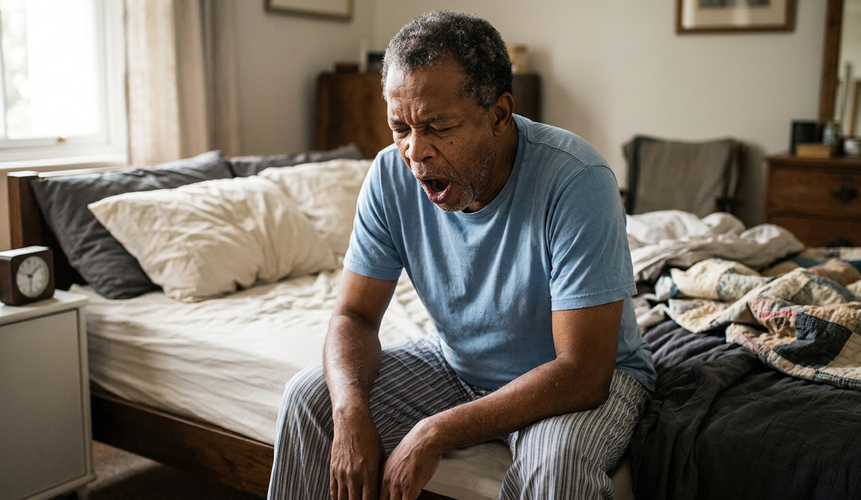
 tired-man-sleep-apnea
How body structure can affect OSA

Certain physical features can make it easier for the airway to narrow or become blocked during sleep. Examples include:

  • Large tongue12
  • Abnormalities in your face, jaw or skull31
  • Extra soft tissue in the soft palate12
  • Deviated septum and other nasal obstructions13
  • Recessed chin (retrognathia)14
Diagnosing OSA

If your doctor suspects that you have OSA, they may refer you to a sleep specialist. The specialist will review your symptoms and medical history and, if necessary, schedule a sleep test.6

A sleep test collects information about your health — including oxygen levels, heart rate, brain waves and breathing patterns — while you sleep.6

There are two types of sleep tests that your doctor might prescribe:

  • Home sleep test (HST): HSTs can be completed from the comfort of your own bed. Your doctor may recommend a home sleep test if you’re showing symptoms of a sleep disorder and have not been diagnosed with other chronic medical conditions.32
  • In-lab polysomnography sleep study (PSG): PSGs are usually conducted overnight in a sleep lab, where a trained technician monitors your sleep. Your doctor may recommend an in-lab sleep study if you have a more complex medical history and may benefit from comprehensive sleep monitoring.7

A sleep specialist can determine whether you have OSA based on the results of your sleep study.

What is AHI?

Your doctor will classify your obstructive sleep apnea as mild, moderate or severe based on your Apnea-Hypopnea Index (AHI). The AHI measures the number of times per hour your breathing pauses or becomes shallow while you sleep.

Your AHI determines the severity of your OSA:

  • AHI 5–14: Mild OSA
  • AHI 15–29: Moderate OSA
  • AHI 30+: Severe OSA
Treatments for OSA

Once you have an OSA diagnosis, your doctor will recommend a treatment plan based on your symptoms and sleep study results. Common treatments include:

  • Continuous positive airway pressure (CPAP): A CPAP device keeps your airway open by sending a continuous stream of pressurized air into your nose or mouth. CPAP is highly effective and is the most used and understood method for treating sleep apnea. It is a drug-free sleep apnea treatment with zero medication-related side effects and can help reduce symptoms after the first night.16,17,18
  • Oral appliances: These devices push your lower jaw forward, creating space behind your tongue and helping prevent airway collapse. They may be an alternative to CPAP for people with mild to moderate OSA.34
  • Positional therapy: If you only experience OSA when sleeping on your back, positional therapy devices such as pillows and vibrating alarms may help you sleep on your side.20

If these treatments do not relieve your symptoms and you have moderate to severe OSA, your doctor may discuss surgery options, including:

  • Hypoglossal nerve stimulation (HNS): A surgical implant that moves your tongue forward each time you breathe to help keep your airway open.21
  • Uvulopalatopharyngoplasty (UPPP): A procedure where a surgeon removes soft tissue from the throat to help reduce airway blockage.22
  • Maxillomandibular advancement: A procedure that repositions the jaws to help open the airway.23
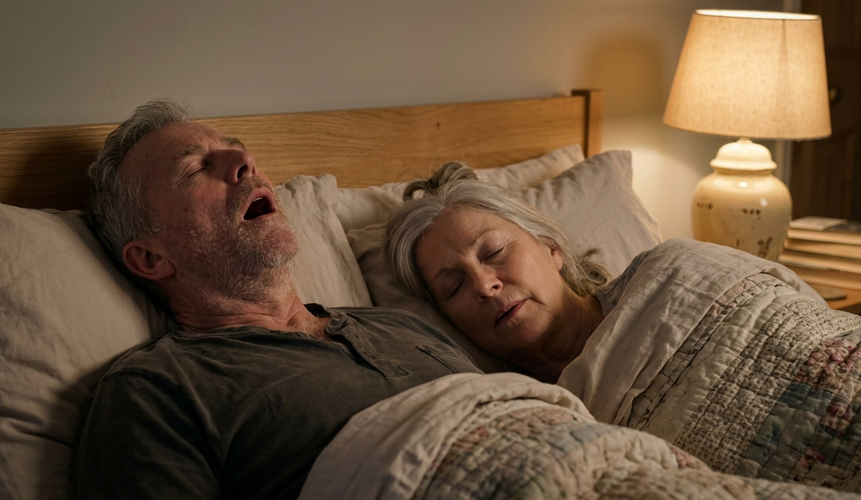
 couple-sleeping-obstructive-sleep-apnea

Central sleep apnea (CSA)

Among people who are tested for sleep apnea, 5–10% are diagnosed with central sleep apnea (CSA).35 CSA occurs when the brain stops telling the muscles to breathe regularly during sleep. Unlike OSA, the breathing muscles do not continue working during these pauses.1

CSA may be caused by or linked to underlying medical conditions, including stroke, kidney failure and atrial fibrillation.25 It is more common in older adults and people with heart failure but is less connected to risk factors associated with OSA, such as obesity.27

Different forms of central sleep apnea (CSA)

There are several different types of CSA:

  • Primary CSA: A rare type of CSA that does not have a clear cause.36
  • Cheyne-Stokes breathing: A breathing pattern that alternates between fast, deep breaths and slow, shallow breaths. It is common in people with heart failure.36
  • Medication-related CSA: Certain medications, such as opioids or sedatives, may affect breathing control.38
  • High-altitude CSA: People who visit or live at altitudes above 2,000 meters may experience CSA because of lower oxygen levels.15
  • Treatment-emergent CSA (TECSA): Formerly known as complex sleep apnea, TECSA can appear after someone starts treatment for OSA. Nearly 2 out of 3 people with TECSA saw their central breathing pauses improve after 90 days of consistently using CPAP.29,37
  • CSA linked to other health issues: Sometimes CSA occurs alongside conditions such as heart disease or stroke.25
Diagnosing CSA

Before your doctor diagnoses CSA, they will likely request a sleep test. They may look for signs that differentiate CSA from other sleep-disordered breathing conditions, including:

  • Breathing muscles that do not work when breathing stops38
  • Pauses in breathing despite an open airway38
  • Unstable or distinctive breathing patterns30
Treatments for CSA

The treatment for CSA depends on the type and cause.

Adaptive servo-ventilation (ASV), a device that automatically adjusts air pressure to stabilize breathing, is used for many forms of CSA. However, ASV is not appropriate for everyone and is not recommended for people with certain types of heart failure.38

Other treatments may include:

  • Bi-level positive airway pressure (BiPAP)
  • Supplemental oxygen therapy
  • Treatment of related medical conditions
  • Medication adjustments when CSA is drug-induced

Only a doctor can diagnose the type of sleep apnea you may have and recommend the best treatment plan.

Understanding sleep apnea risk

Certain conditions or lifestyle factors may influence the type of sleep apnea you have. Understanding your personal risk factors can help you find the right care and support.

Sleep apnea types in special populations
  • Pregnancy-associated sleep apnea: This type tends to be predominantly OSA, and the risk can increase with higher age or body mass index (BMI).28
  • Neuromuscular disease-related sleep apnea: Neuromuscular disease affects the nerves and muscles and how they communicate with each other. These conditions can contribute to mixed apnea.26
  • Post-stroke sleep apnea: After a stroke, people may experience symptoms of both OSA and CSA, although OSA is more common.39
  • Heart failure-associated sleep apnea: About 40% of people with congestive heart failure have CSA.24
  • Opioid-induced sleep apnea: Opioid use is predominantly associated with CSA but may also increase the risk of OSA.19
  • Altitude-induced sleep apnea: Altitudes above 5,000 meters can cause CSA.15
How doctors tell different types apart

Doctors can tell the difference between sleep apnea types using several criteria:

  • Breathing patterns: Sleep studies often reveal distinctive breathing patterns, especially in people with CSA.25
  • Breathing effort: With obstructive sleep apnea, the body continues making an effort to breathe, but the airway is physically blocked. With central sleep apnea, the brain briefly stops sending signals to breathe.30
  • Response to treatment: People with TECSA may experience CSA symptoms after starting treatment for OSA.29
  • Associated symptoms and health conditions: Certain symptoms and medical conditions are associated with different forms of sleep apnea. OSA often occurs alongside conditions such as asthma and COPD.9
  • Advanced testing: Additional tests may help doctors distinguish between OSA, CSA and mixed apnea.40
  • Overlap with other conditions: When people have symptoms of multiple sleep-disordered breathing conditions, they may experience mixed apnea.29

If you’ve been diagnosed with sleep apnea, you’re not alone — millions of Americans are living with it every day. Understanding the type of sleep apnea you have can help you make sense of your treatment options and feel more confident about your doctor’s recommendations.

Considering your treatment options? Explore Resmed’s wide range of CPAP devices and accessories. 

References: 

  1. Source: National Heart, Lung, and Blood Institute. Sleep apnea – what is sleep apnea? NHLBI, NIH. https://www.nhlbi.nih.gov/health/sleep-apnea 
  2. Source: Sleep Apnea Living With. National Heart, Lung, and Blood Institute. https://www.nhlbi.nih.gov/health/sleep-apnea/living-with 
  3. Source: Knauert et al., (2015). Clinical consequences and economic costs of untreated obstructive sleep apnea syndrome. World Journal of Otorhinolaryngology – Head and Neck Surgery. https://doi.org/10.1016/j.wjorl.2015.08.001 
  4. Source: Benjafield, Adam V., et al. “Estimation of the Global Prevalence and Burden of Obstructive Sleep Apnoea: A Literature-Based Analysis.” The Lancet. Respiratory Medicine, vol. 7, no. 8, Aug. 2019, pp. 687–98. PubMed, https://doi.org/10.1016/S2213-2600(19)30198-5 
  5. Source: Sönmez, I. et al., (2025). Unmasking obstructive sleep apnea: Estimated prevalence and impact in the United States. Respiratory Medicine. https://www.sciencedirect.com/science/article/abs/pii/S0954611125004111 
  6. Source: Sleep Studies. National Heart, Lung, and Blood Institute. https://www.nhlbi.nih.gov/health/sleep-studies 
  7. Source: Kapur VK, et al. Clinical practice guideline for diagnostic testing for adult obstructive sleep apnea: an American Academy of Sleep Medicine clinical practice guideline. J Clin Sleep Med. 2017;13(3):479-504. https://doi.org/10.5664/jcsm.6506 
  8. Source: Faria A, Allen AH, Fox N, et al. The public health burden of obstructive sleep apnea. Sleep Sci. 2021;14(3):257-265. https://doi.org/10.5935/1984-0063.20200111  
  9. Source: Bouloukaki, I., et al. (2022). Overlaps between obstructive sleep apnoea and other respiratory diseases, including COPD, asthma and interstitial lung disease. Breathe (Sheff). https://pmc.ncbi.nlm.nih.gov/articles/PMC9973497/  
  10. Source: Wimms A, et al. Global prevalence of mild obstructive sleep apnea in females. Sleep. 2023;46(suppl 1):A234. https://doi.org/10.1093/sleep/zsad077.0532 
  11. Source: Bixler EO, et al. Prevalence of sleep-disordered breathing in women: effects of gender. Am J Respir Crit Care Med. 2001;163(3 pt 1):608-613. https://doi.org/10.1164/ajrccm.163.3.9911064  
  12. Source: Schwab RJ, et al. Identification of upper airway anatomic risk factors for obstructive sleep apnea with volumetric magnetic resonance imaging. Am J Respir Crit Care Med. 2003;168(5):522-530. https://doi.org/10.1164/rccm.200208-866OC 
  13. Source: Yeom, S.W. et al., (2021). Association between septal deviation and OSA diagnoses: a nationwide 9-year follow-up cohort study. Journal of Clinical Sleep Medicine. https://pmc.ncbi.nlm.nih.gov/articles/PMC8494085/ 
  14. Source: Jenzer, A., Schlam, M. Retrognathia. National Library of Medicine National Center for Biotechnology Information. (2023) https://www.ncbi.nlm.nih.gov/books/NBK538303/ 
  15. Source: Burgess, K. and Ainslie, P. (2016) Central Sleep Apnea at High Altitude. Advances in Experimental Medicine and Biology. https://pubmed.ncbi.nlm.nih.gov/27343103/  
  16. Source: Understanding Pap. Division of Sleep Medicine at Harvard Medical School. (2021). https://sleep.hms.harvard.edu/education-training/public-education/sleep-and-health-education-program/sleep-health-education-37 
  17. Source: Djonlagic I, et al. First night of CPAP: impact on memory consolidation, attention and subjective experience. Sleep Med. 2015;16(6):697-702. doi:10.1016/j.sleep.2015.01.017. https://pubmed.ncbi.nlm.nih.gov/25953301/ 
  18. Source: Before and After CPAP Machine Effects: How Your Body Changes. Sleep Foundation. (2025). https://www.sleepfoundation.org/cpap/before-and-after-cpap-machine-body-changes 
  19. Source: Freire, C., et al. (2022). Opioids and obstructive sleep apnea. Journal of Clinical Sleep Medicine. https://jcsm.aasm.org/doi/10.5664/jcsm.9730  
  20. Source: Srijithesh, P.R., et al., Positional therapy for obstructive sleep apnoea. National Library of Medicine National Center for Biotechnology Information. (2019). https://pmc.ncbi.nlm.nih.gov/articles/PMC6491901/ 
  21. Source: Mashaqi S, et al. The hypoglossal nerve stimulation as a novel therapy for treating obstructive sleep apnea: a literature review. Int J Environ Res Public Health. 2021;18(4):1642. https://doi.org/10.3390/ijerph18041642 
  22. Source: Uvulopalatopharyngoplasty (UPPP). Medline Plus. https://medlineplus.gov/ency/article/007663.htm 
  23. Source: Zaghi, S., et al., (2016). Maxillomandibular Advancement for Treatment of Obstructive Sleep Apnea: A Meta-analysis. JAMA Otolaryngol Head Neck Surgery. https://pubmed.ncbi.nlm.nih.gov/26606321/ 
  24. Source: Müller, M., et al. (2010). Central sleep apnoea syndrome in chronic heart failure: an underestimated and treatable comorbidity. Netherlands Heart Journal. https://pmc.ncbi.nlm.nih.gov/articles/PMC2871747/  
  25. Source: Rana, A, Sankari, A. (2023). Central Sleep Apnea. National Library of Medicine National Center for Biotechnology Information. https://www.ncbi.nlm.nih.gov/books/NBK578199/ 
  26. Source: Aboussouan, L. (2015). Sleep-disordered Breathing in Neuromuscular Disease. American Journal of Respiratory and Critical Care Medicine. https://www.atsjournals.org/doi/full/10.1164/rccm.201412-2224CI  
  27. Source: Badr, M., et al., (2019). Central Sleep Apnea: a Brief Review. Current pulmonology reports. https://pmc.ncbi.nlm.nih.gov/articles/PMC6883649/ 
  28. Source: Tayade, S. and Toshniwal, S. (2022). Obstructive Sleep Apnea in Pregnancy: A Narrative Review. Cureus. https://pmc.ncbi.nlm.nih.gov/articles/PMC9668203/  
  29. Source: Noah, W., et al. (2025). Treatment-emergent central sleep apnea resolves with lower inspiratory pressure. Journal of Clinical Sleep Medicine. https://jcsm.aasm.org/doi/10.5664/jcsm.11492 
  30. Source: Eckert, D., et al. (2007). Central sleep apnea: Pathophysiology and treatment. Chest. https://pmc.ncbi.nlm.nih.gov/articles/PMC2287191/
  31. Source: Finke H, et al. Craniofacial risk factors for obstructive sleep apnea: a systematic review and meta-analysis. J Sleep Res. 2023;33(1):e14004. https://doi.org/10.1111/jsr.14004 
  32. Source: Slowik, Jennifer M., et al. “Obstructive Sleep Apnea.” StatPearls, StatPearls Publishing, 2025. PubMed, http://www.ncbi.nlm.nih.gov/books/NBK459252/ 
  33. Source: Menon A, Kumar M. Influence of body position on severity of obstructive sleep apnea: a systematic review. ISRN Otolaryngol. 2013;2013:670381. https://doi.org/10.1155/2013/670381  
  34. Source: National Heart, Lung, and Blood Institute. Treatment for sleep apnea. https://www.nhlbi.nih.gov/health/sleep-apnea/treatment  
  35. Source: Muza RT. Central sleep apnoea: a clinical review. J Thorac Dis. 2015;7(5):930-937. https://doi.org/10.3978/j.issn.2072-1439.2015.04.45  
  36. Source: MedlinePlus. Central sleep apnea. https://medlineplus.gov/ency/article/003997.htm  
  37. Source: Zhang J, et al. Treatment-emergent central sleep apnea: a unique sleep-disordered breathing. Chin Med J (Engl). 2020;133(22):2721-2730. https://doi.org/10.1097/CM9.0000000000001125  
  38. Source: Fodor AC, Huțanu D, Budin CE, et al. Central sleep apnea in adults: an interdisciplinary approach to diagnosis and management—a narrative review. J Clin Med. 2025;14(7):2369. https://doi.org/10.3390/jcm14072369  
  39. Source: Johnson KG, Johnson DC. Frequency of sleep apnea in stroke and TIA patients: a meta-analysis. J Clin Sleep Med. 2010;6(2):131-137. https://pmc.ncbi.nlm.nih.gov/articles/PMC2854698/  
  40. Source: Khandoker AH, Karmakar CK, Penzel T, Glos M, Palaniswami M. Investigating relative respiratory effort signals during mixed sleep apnea using photoplethysmogram. Ann Biomed Eng. 2013;41(10):2229-2236. https://doi.org/10.1007/s10439-013-0827-1  

Stay in the know

Be among the first to hear all the latest news and developments.

The first name field is required

The last name field is required

The email field is required

Wrong email format

Please select a Country

Please make a selection, this field is required