Quick Takeaways:
- Continuous positive airway pressure (CPAP) therapy is one of the most effective treatments for obstructive sleep apnea. It uses gentle, steady air pressure to keep your airway open while you sleep.
- With regular use, treating sleep apnea with CPAP therapy can improve sleep quality, boost energy and reduce long-term risks like high blood pressure and heart disease.15
- Finding the right mask and pressure settings can make a big difference in comfort and treatment success.
- Modern CPAP machines include features like humidifiers, ramp settings, and mobile apps to make therapy easier to adjust to and track.
Whether you’ve just been diagnosed with obstructive sleep apnea (OSA) or are simply exploring treatment options, it can be helpful to know that continuous positive airway pressure (CPAP) therapy is one of the most effective ways to manage OSA to improve your sleep and overall health.1
But how does CPAP therapy work? And what do you need to know about using CPAP?
Below, learn more about OSA and CPAP therapy, including how this treatment works, tips for making it work for you and where you can find CPAP support, education and solutions.
Understanding sleep apnea and CPAP therapy
Before diving into how CPAP works, it helps to understand what causes sleep apnea and why therapy can make such a powerful difference.
What is sleep apnea?
Sleep apnea is a condition where breathing stops and restarts many times while you sleep. This can make it harder for your body to get enough oxygen. The most common type is obstructive sleep apnea (OSA), which occurs when the muscles around the throat relax to the point of collapse, restricting airflow during sleep. Breathing may become shallow or stop for seconds to minutes at a time.2
When you sleep, your entire body relaxes, including the muscles in your nose, mouth and throat that help keep your airway open so that air can get into your lungs. For people with OSA, when these muscles relax, the airway collapses or becomes obstructed. This temporarily stops your breathing and prevents oxygen from getting into your lungs.3
Because many of the symptoms of sleep apnea occur when you’re asleep, it can be challenging to recognize them. However, there are key signs to look for. One of the most common symptoms of OSA is excessive daytime sleepiness, which may cause you to feel unusually tired or drowsy despite getting a full night’s sleep.18 People with OSA may choke or gasp for breath while asleep or experience frequent snoring that keeps their bed partners awake.4
How CPAP therapy works
Continuous positive airway pressure (CPAP) therapy is a drug-free sleep apnea treatment that uses mild, continuous air pressure to keep the airway open while you sleep. It doesn’t breathe for you; it delivers consistent pressure to your airway as you breathe in your sleep. CPAP therapy is highly effective and is the most used and understood method for treating obstructive sleep apnea.16
This pressure helps keep the upper airway open and pushes pressure into the alveoli, which are the small air sacs in the lungs where oxygen enters the blood. The pressure helps expand these air sacs, increasing the surface area, which can help support healthy oxygen levels.5
CPAP components and system overview
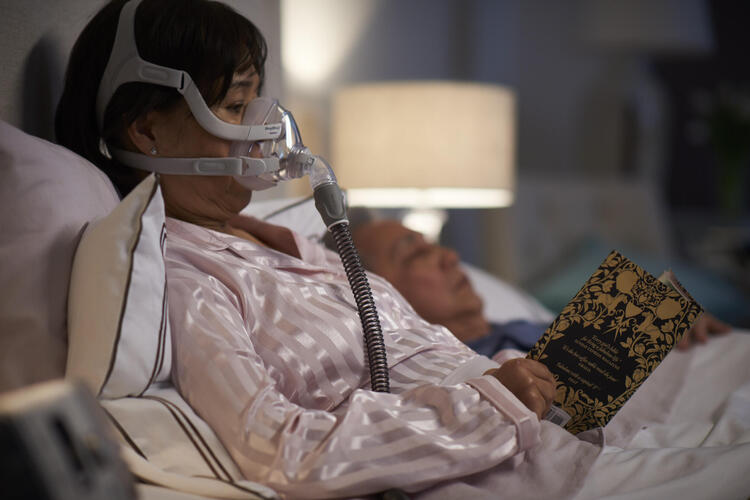
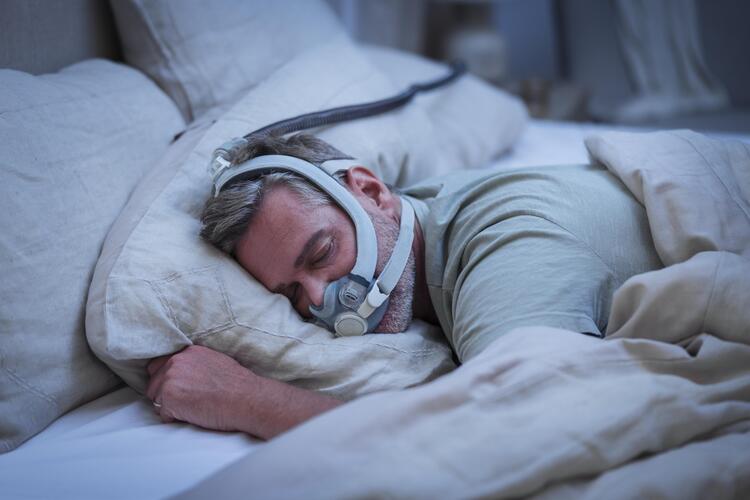
There are several CPAP devices to choose from, and they typically have the same basic components: a mask, tubing and the CPAP machine itself. For adults, CPAP usually involves wearing a mask that either covers the entire nose or sits just under it to deliver steady air throughout the night. Some CPAPs use a full-face mask, which covers both the mouth and nose.5
CPAP pressure is measured in centimeters of water (cm H₂O). Doctors typically aim to set the lowest effective pressure needed to help prevent breathing pauses during sleep. For many adults, this often falls within a range like 6 to 14 cm H₂O.6
Clinical Benefits of CPAP Therapy
Why is CPAP therapy the go-to treatment for obstructive sleep apnea (OSA)? Learn more about the health benefits of CPAP below.
Immediate effects on the body
Once you start using your CPAP machine, you may notice improvements right away, which can include better sleep quality, reduced snoring and less daytime sleepiness.7 The continuous pressure created by CPAP helps keep the airway open during sleep, which supports healthy oxygen levels.
Long-term health benefits
While you may start to feel more rested early on, consistent CPAP therapy use to treat obstructive sleep apnea can lead to other health benefits over time. This can include reaching healthier blood pressure levels, lowering stroke risk and improving memory and other cognitive functions.7
Unsurprisingly, using a CPAP machine to treat OSA can also have a significant impact on sleep quality, which has a range of health benefits. Better sleep can lead to healthier weight management, a stronger immune system, improved mood and reduced stress.8
Measuring treatment effectiveness
One way to tell if CPAP is making a difference for you is to consider how you feel after you start using it. Do you feel well-rested in the morning? Do you feel like you’re getting a good night’s sleep? Have your bed partners noticed any changes, such as less snoring while you sleep? These questions can help you reflect on your CPAP therapy experience and guide conversations with your doctor.
That said, there are other, more objective ways to measure CPAP therapy benefits.
In many cases, a sleep study is used to diagnose OSA prior to your doctor prescribing CPAP therapy. These studies use a measurement called the apnea hypopnea index (AHI) to determine the severity of your sleep apnea. For example, someone with an AHI of less than 5 does not have OSA, while someone with an AHI over 30 is considered to have severe OSA.9 CPAP therapy is generally recommended for everyone who’s been diagnosed with OSA.19
Assessing the effectiveness of CPAP treatment can vary by case. Most people will be asked to see their doctor in about 30 to 90 days after starting CPAP therapy. At this time, your doctor will likely ask you questions about your sleep (such as whether your sleep quality has improved) or your daytime symptoms (such as if you are feeling less daytime tiredness).10
Your CPAP machine collects data about how many times your breathing becomes shallow or pauses completely per hour, and whether your mask is properly in place as you sleep. Your doctor will analyze this data to determine how effective your treatment is and how regularly you are using the device. With this information, they may increase or decrease your pressure settings or discuss trying a different style mask to help make CPAP therapy work better for you.10