OSA in primary care:
a practical clinical guide
Resources designed for primary care providers to identify, prioritize, evaluate and manage obstructive sleep apnea (OSA) as part of whole-patient care.
WHEN TO CONSIDER SLEEP APNEA
Recognizing obstructive sleep apnea in primary care
Key symptoms, risk factors and comorbidities that raise suspicion for OSA and help primary care providers identify patients who may benefit from further assessment.
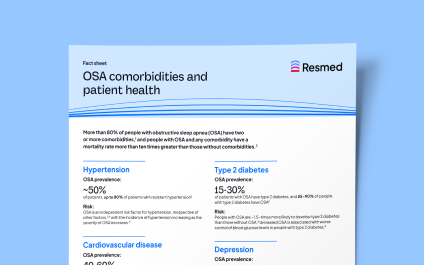
Comorbidities can offer valuable clues about the potential presence of OSA
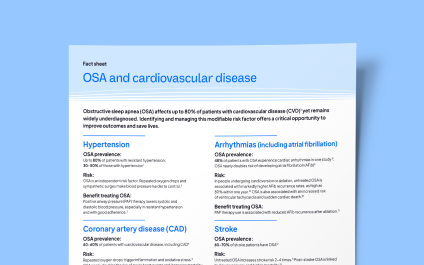
OSA can play a significant role in hypertension and cardiovascular disease
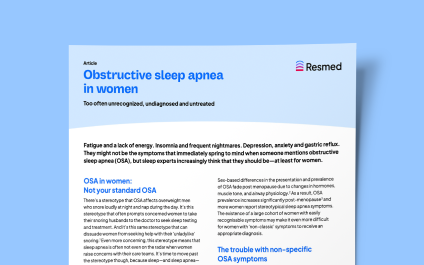
Women with OSA often have different symptoms and presentations
PRIORITIZING EVALUATION AND CARE
Assessing risk and urgency in sleep apnea care
Patient symptoms, comorbid conditions and other considerations influencing the urgency of evaluation and treatment for obstructive sleep apnea in primary care.
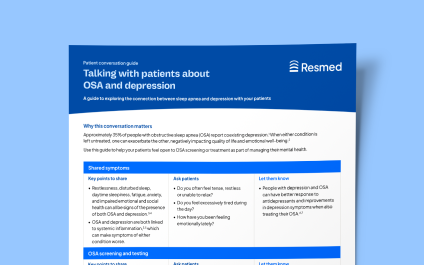
Addressing potential sleep apnea may help people manage their depression
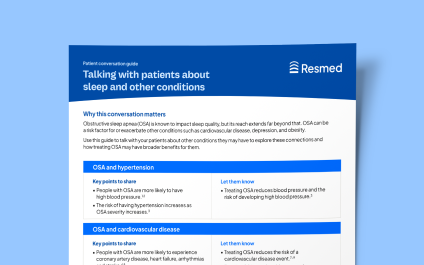
The relationship between OSA and comorbid conditions can inform the path forward
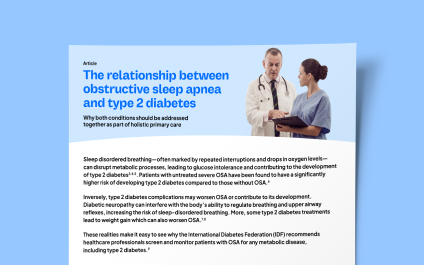
How treating OSA may benefit type 2 diabetes management
CHOOSING THE RIGHT APPROACH
Matching patients to the right sleep apnea pathway
Selecting appropriate diagnostic and treatment pathways for obstructive sleep apnea based on patient characteristics, risk factors and clinical context.
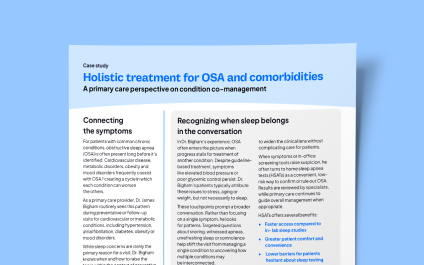
How one PCP regularly uses home sleep apnea tests (HSATs) to facilitate patient care
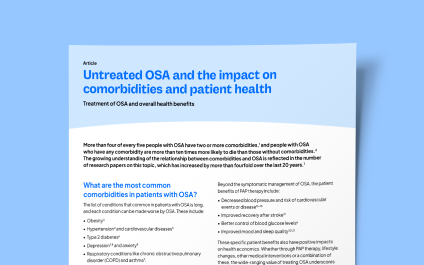
The value of treating OSA on comorbidities and overall health

Research showing benefit of positive airway pressure (PAP) therapy on all-cause and cardiovascular mortality
MANAGING OR REFERRING
Knowing when OSA can be managed in primary care
Practical guidance to help primary care physicians decide when OSA can be managed within primary care or when more complex care is needed, requiring referral to a sleep specialist.
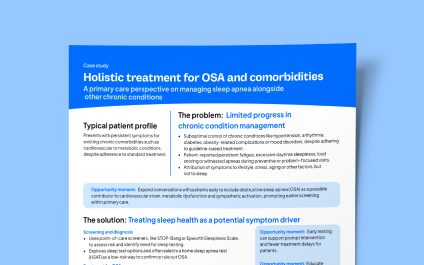
How Dr. James Bigham incorporates OSA management into primary care
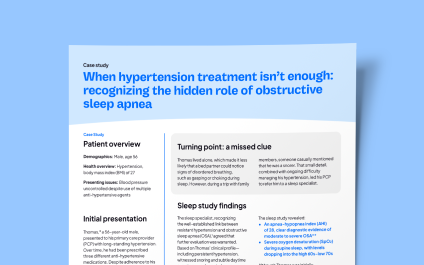
Learnings from a sleep physician to help primary care providers identify and manage OSA
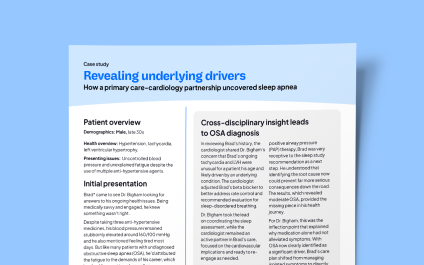
How a team-based approach to OSA care made all the difference for one patient
Explore more resources and tools
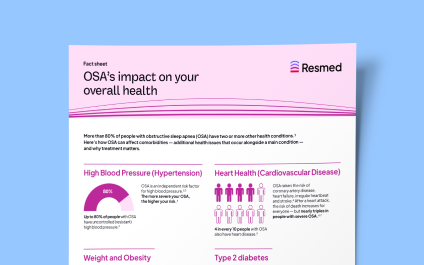
OSA and other health conditions
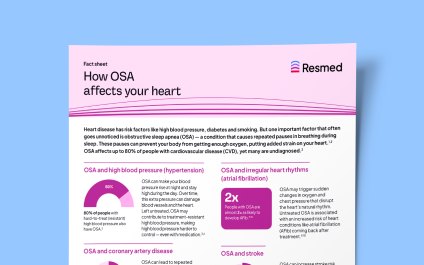
OSA and cardiovascular disease
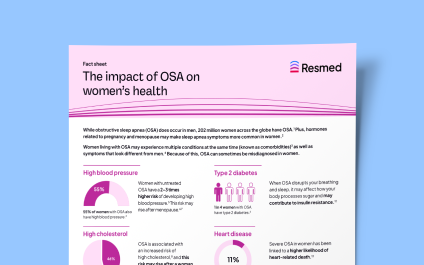
Women and OSA