Snoring: What Causes It? | Resmed
What can we help you find?
Search for masks, machines, accessories...

Snoring: What Causes It?

Sleep health Dry mouth Fatigue Sleep health Snoring

Snoring: Causes, symptoms and solutions

Snoring is a common nighttime occurrence that happens while you sleep.1 Some people snore gently, like a purring cat. Others may sound more like a rattling chainsaw when they snore, disrupting sleep for both the person snoring and their bed partner. So, why do you snore? In some cases, snoring can be completely harmless. In other instances, it may be a sign of a more serious medical condition like sleep apnea.2 That’s why understanding snoring, its causes and possible solutions is essential for protecting your health and improving your sleep quality.

Snoring symptoms: what to look out for

Snoring isn’t just a loud, unpleasant noise. Snoring can come with specific symptoms that may affect your health—or stand as warning signs of a more serious condition, such as obstructive sleep apnea. Recognizing these symptoms can help you decide when to seek medical advice.

Common snoring symptoms include:

  • Loud snoring that disrupts your sleep or your partner’s sleep
  • Pauses in breathing or gasping for air during sleep
  • Waking up with a dry mouth or sore throat
  • Excessive daytime fatigue or sleepiness
  • Difficulty concentrating or memory issues

If you notice these signs, especially breathing pauses or gasping, they may be linked to sleep apnea symptoms and should be discussed with your doctor.3

What causes snoring?

What causes snoring? Snoring happens when airflow through your mouth and nose is partially blocked during sleep. As your throat muscles relax, the airway can narrow. When air pushes through this narrowed space, it causes surrounding tissues to vibrate—creating the sound we know as snoring.

There are several common snoring causes, including:1

  • Airway obstruction: Enlarged tonsils or a large uvula (the small, punching bag-shaped tissue that hangs from the back of the soft palate) can obstruct airflow and cause you to snore.
  • Relaxed throat muscles: During sleep, neck and throat muscles relax. In some cases, the throat partly closes and becomes narrow, leading to vibration and snoring.
  • Nasal problems: Chronic nasal congestion or a deviated septum (a crooked partition between the nostrils) can make snoring more likely.
  • Obesity: Excess weight around the neck and throat can narrow breathing passages.
  • Alcohol use: Drinking alcohol—especially before bed—can overly relax throat muscles and slow your body’s natural wake-up response.
  • Sleeping position: Sleeping on your back can cause the tongue and soft tissues to fall backward, increasing the chances of snoring.

Understanding what causes snoring is the first step toward finding the right solution.
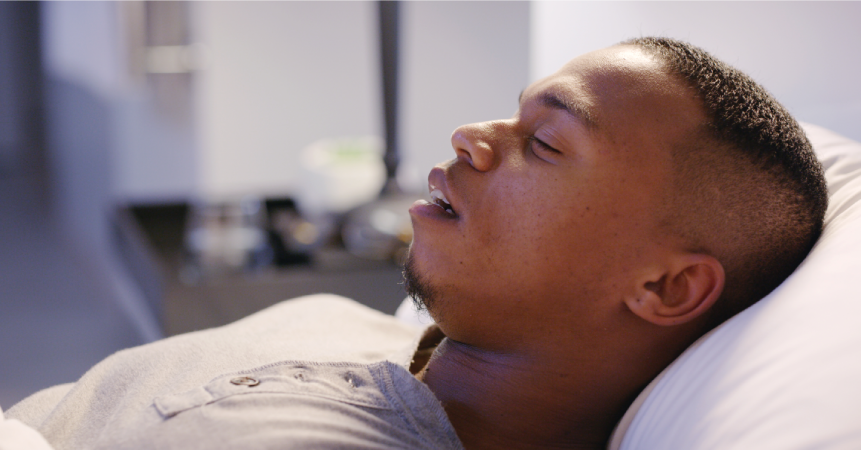
 man snoring at night
Why do I snore? Understanding personal triggers for snoring

While general snoring causes apply to many people, you might still wonder, “Why do I snore?” The answer often lies in your unique anatomy, habits and overall health.

Some of the most common personal triggers include:

  • Excess weight
  • Ongoing nasal congestion or allergies
  • Alcohol use
  • Smoking
  • Sleeping on your back

Tracking your routines can help you identify patterns. Consider using a journal or sleep-tracking app to log your sleep position, alcohol intake and how rested you feel in the morning. Sharing this information with your doctor can make it easier to pinpoint your specific snoring causes and create a personalized plan.

Why does my bed partner snore?

If you find yourself asking, “Why does my bed partner snore?” you’re not alone. A partner’s snoring can disrupt your sleep and potentially strain your relationship.4

Snoring in a bed partner may be caused by sleep position, allergies, health conditions, alcohol use or smoking.1 While it can be frustrating, approaching the issue as a team can make a difference. Encourage open communication and suggest exploring solutions together—whether that means adjusting sleep positions, making lifestyle changes or consulting a doctor. Improving one person’s snoring can enhance both partners’ sleep, energy levels and overall quality of life.

Snoring and sleep apnea symptoms: Are they linked?

Snoring and sleep apnea are closely connected—but they are not the same thing. Just because you snore doesn’t automatically mean you have sleep apnea. However, loud and frequent snoring can be one of the most common sleep apnea symptoms.3

Obstructive sleep apnea occurs when the airway becomes repeatedly blocked during sleep, causing pauses in breathing. Warning signs include:

  • Pauses in breathing during sleep
  • Gasping or choking for air
  • Excessive daytime sleepiness
  • Morning headaches
  • Trouble concentrating

If your snoring is accompanied by these sleep apnea symptoms, it’s important to speak with a healthcare professional. Treating sleep apnea can significantly improve your sleep and reduce long-term health risks.

 woman wakes up from snoring
How to stop snoring: Effective solutions

If you’re wondering how to stop snoring, there are several practical steps you can take. The right snoring treatment depends on what’s causing your symptoms.

Lifestyle changes are often the first line of defense:

  • Change your sleep position: Sleeping on your side instead of your back may reduce snoring.
  • Avoid alcohol before bed: Skipping that nightly drink can prevent excessive muscle relaxation.
  • Maintain a healthy weight: Weight loss can reduce fatty tissue around the neck and decrease airway narrowing.
  • Exercise regularly: Physical activity can support weight management and overall respiratory health.
  • Quit smoking: Smoking can irritate and inflame airway tissues, worsening snoring.

Beyond lifestyle adjustments, other snoring solutions may help:

  • Nasal strips or nasal dilators to improve airflow
  • Humidifiers to reduce airway dryness
  • Oral appliances (mouthpieces) that reposition the jaw
  • Continuous positive airway pressure (CPAP) therapy for those diagnosed with sleep apnea

If snoring is related to sleep apnea, treating the underlying condition is key to long-term improvement.

When should you see a doctor about snoring?

Occasional snoring may not be cause for concern. But if your snoring is loud, frequent or getting worse, it may be time to seek medical advice.

You should consider seeing a doctor if:

  • Your snoring disrupts your or your partner’s sleep regularly
  • You wake up choking or short of breath
  • You experience excessive daytime sleepiness
  • You notice other sleep apnea symptoms

A healthcare provider can evaluate your snoring causes and determine whether sleep apnea or another condition is involved. Addressing the root cause can help you—and your sleep partner—enjoy more restful nights and more energetic days.

Do you or your bed partner snore? Start our free sleep quiz.

Take our free online sleep quiz and discuss the results with your doctor.

Start sleep quiz

Sources
  1. “Snoring – Symptoms and Causes.” Mayo Clinic, https://www.mayoclinic.org/diseases-conditions/snoring/symptoms-causes/syc-20377694.
  2. “Snoring – Diagnosis and Treatment.” Mayo Clinic, https://www.mayoclinic.org/diseases-conditions/snoring/diagnosis-treatment/drc-20377701.
  3. “Sleep Apnea – Symptoms.” NHLBI, NIH, 9 Jan. 2025, https://www.nhlbi.nih.gov/health/sleep-apnea/symptoms.
  4. “World Sleep Day 2025 Report.” Resmed, https://document.resmed.com/documents/global/resmed-wsd-2025-report.pdf.