Sleep Apnea : A Comprehensive Overview | Resmed
What can we help you find?
Search for masks, machines, accessories...

Sleep Apnea : A Comprehensive Overview

Sleep health Fatigue Seeking care Sleep health Sleep issues

Sleep apnea overview

Sleep apnea is a common condition that causes lapses in your breathing while you rest.1It affects roughly one in three middle-aged adults in the U.S.2, impairing their quality of life by preventing them from getting the restorative rest they need. Because symptoms of sleep apnea are not always easy to recognize, many people who struggle with the condition do not know they have it.

Once you know what sleep apnea is and some of the warning signs, you can start taking back control of your sleep and overall health. Arming yourself with the right information can help you have a conversation with your doctor about sleep apnea. From there, you and your doctor can talk about testing and treatment options.

What is sleep apnea?

Sleep apnea is a disorder in which the muscles in the throat relax to the point of collapse, restricting airflow. This causes breathing to become shallow and even stop for seconds or minutes at a time, depriving the body and brain of oxygen. The lack of deep sleep can cause significant fatigue and elevate the risk of serious health problems. Many people with sleep apnea are unaware they have it.

Types of sleep apnea3

There are three main types of sleep apnea. Obstructive sleep apnea (OSA) occurs when tissues in your throat close over your windpipe, blocking airflow and waking you up. Central sleep apnea (CSA) is the result of your brain stem not sending the necessary signals to your breathing system. Finally, complex sleep apnea syndrome (CompSAS) is a combination of both of the above conditions.

Obstructive sleep apnea

Obstructive sleep apnea (OSA) occurs when the muscles and other tissues in your throat relax as you sleep. This causes them to collapse over your windpipe. If air doesn’t flow properly, you might wake up gasping. While sleep apnea can affect anyone, people with excess weight, obesity or certain physical traits, like a large tongue or oversized tonsils, have a higher risk of developing OSA. People who drink alcohol4 or smoke tobacco5 have a higher risk of developing the condition.

Central sleep apnea

Central sleep apnea (CSA) is the result of a miscommunication between your brain stem and your breathing system. If your muscles don’t get the correct signals from your brain, your breathing stops. There could be a number of causes of CSA, including underlying conditions like end-stage kidney disease6and stroke7.

Complex sleep apnea syndrome

Complex sleep apnea syndrome typically begins as OSA and then develops into a combination of both conditions. It may appear after someone starts continuous positive airway pressure (CPAP) therapy. Mask leaks and increased ventilation as a result of the therapy can impact carbon dioxide levels in the blood, triggering CompSAS. If you’re using CPAP to treat your sleep apnea, work with your doctor or CPAP equipment provider to be sure your mask fits properly to reduce the risk of developing complex sleep apnea syndrome. Do your best to stick with your treatment and mention any concerns you have about your CPAP equipment to your equipment provider. CPAP equipment isn’t one-size-fits-all. Whether you’re worried about air leaks or if your mask does not fit quite right, your provider or doctor can help you find the right mask for your needs. And if you’re concerned that CPAP isn’t the right treatment for you, talk to your doctor.
 sleep apnea symptoms
Sleep apnea symptoms

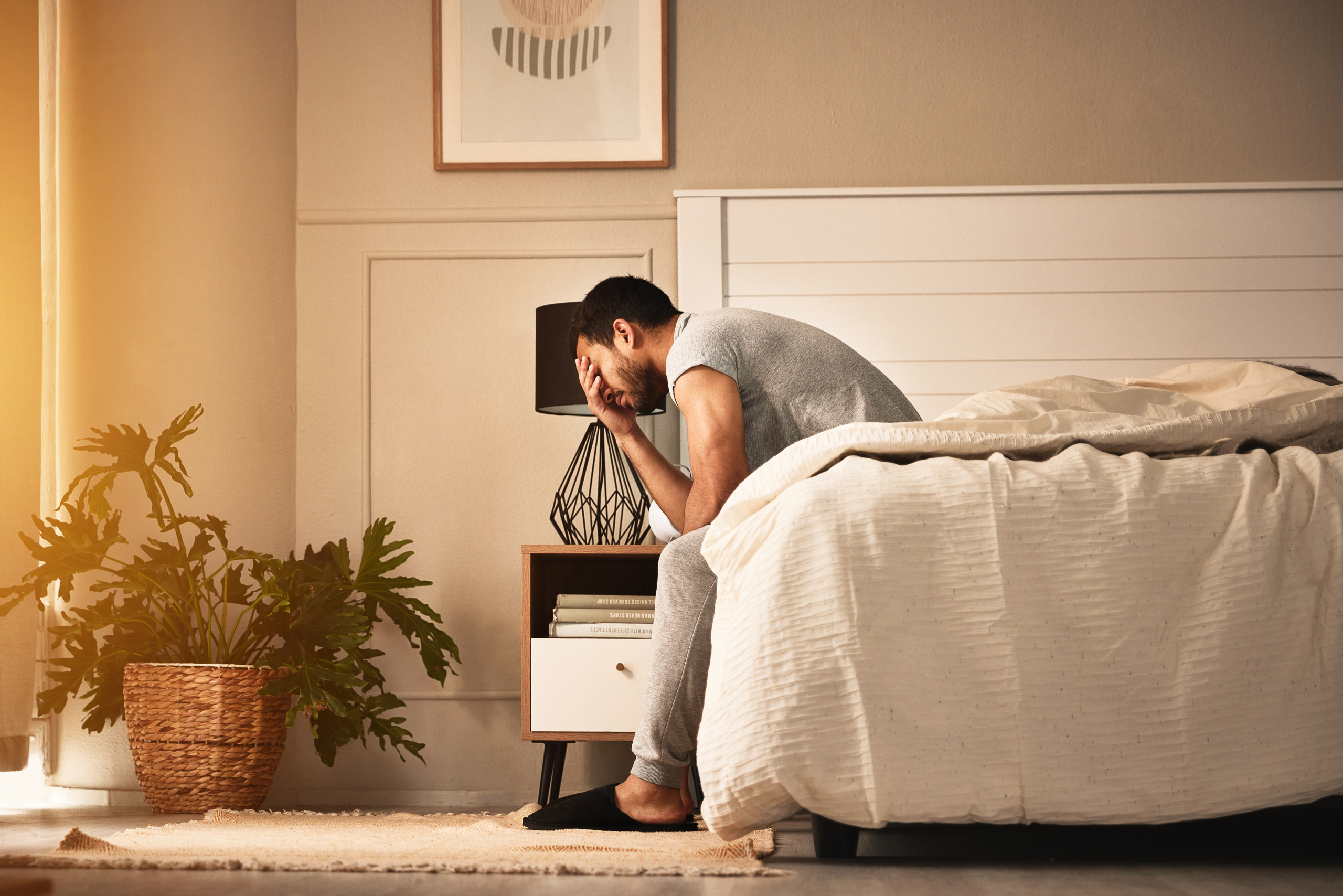
One of the most recognizable and common sleep apnea symptoms is snoring–especially snoring that’s loud enough to wake you or your bed partner up. Other symptoms of sleep apnea include8:

  • Gasping for air during sleep
  • Morning headaches
  • Waking up with a dry mouth or sore throat
  • Feeling irritated throughout the day
  • Excessive daytime sleepiness
  • Difficulty staying asleep
  • Trouble paying attention or concentrating during the day

If you’re experiencing some or all of these symptoms, talk to your doctor about getting tested for sleep apnea.

Sleep apnea tests and diagnosis

Your doctor can make a recommendation or referral to a sleep specialist based on your current symptoms. It’s important to discuss your symptoms with your doctor early, so they can determine if a sleep test is the right step to take next. There are two types of sleep tests your doctor can recommend:

Home sleep test (HST): Your doctor may recommend a home sleep test if you’re showing symptoms of a sleep disorder and have not been diagnosed with any other chronic medical conditions. HSTs can be conveniently completed from the comfort of your own bed and may reduce the amount of time you have to wait to get tested.9

In-lab polysomnography sleep study (PSG): Your doctor may recommend a PSG if you have a more complex medical history and may benefit from comprehensive sleep monitoring. PSGs are usually conducted overnight in a sleep lab, where a trained lab technician can monitor your sleep.9

 Sleep Apnea Treatment Options
Sleep apnea treatment options

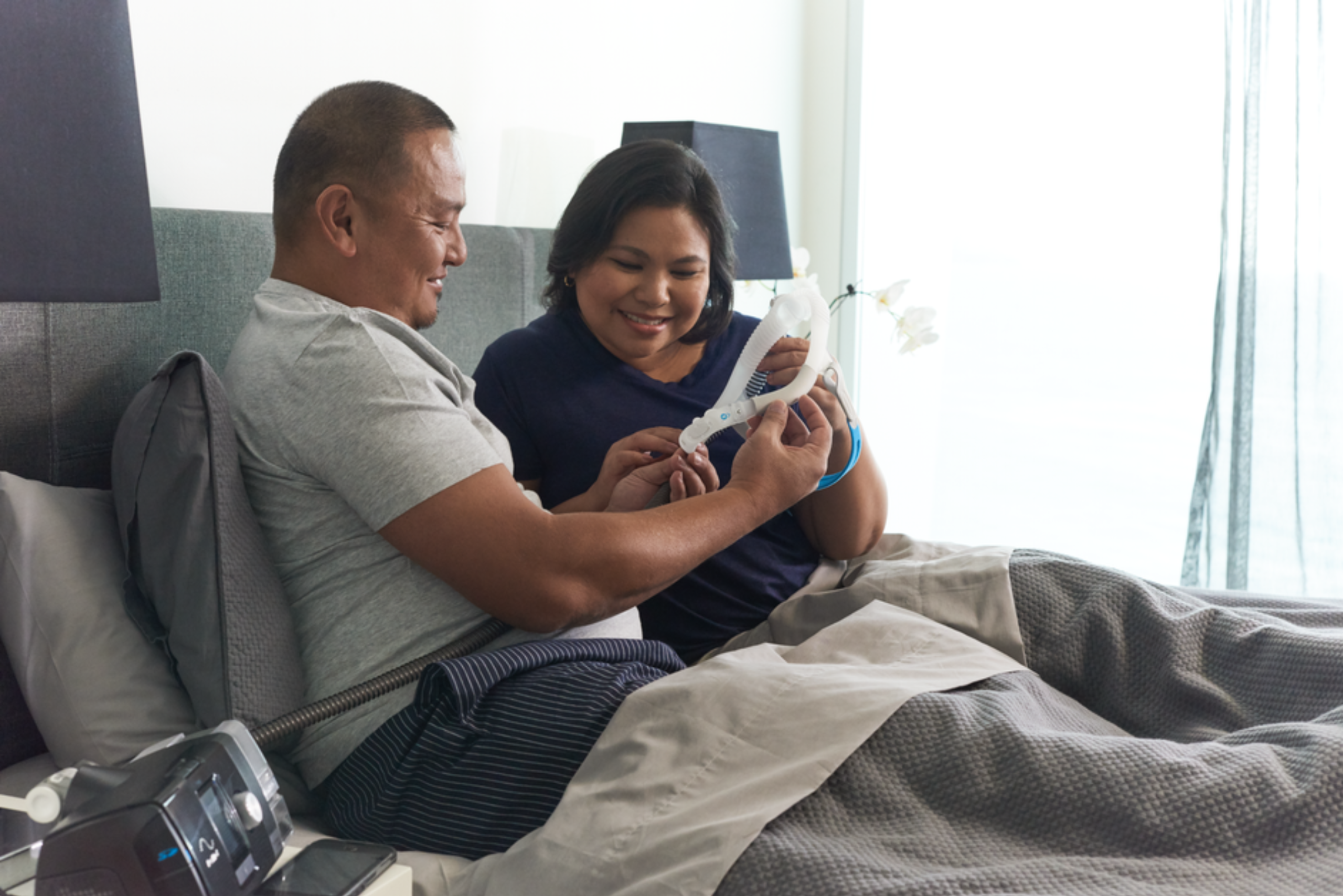
Perhaps the most well-known sleep apnea treatment option is continuous positive air pressure (CPAP) therapy. CPAP therapy is more than a treatment; it is a path to living longer.10 CPAP therapy involves a mask that fits over your nose and/or mouth and connects to a machine that pushes air through the mask. This continuous airflow is delivered to your airway and helps prevent stops and pauses in overnight breathing due to sleep apnea.

Another sleep apnea treatment option is an oral appliance.11 With this treatment, you’ll go to bed wearing a device that holds your jaw in place, so the muscles don’t relax enough to cut off your airway. There are a few different types of oral appliances, so it might take some time to find the one that works best for you.

Your doctor may also recommend lifestyle changes. Excess weight or obesity can put stress on your breathing system. Your doctor may recommend a sustainable weight loss program to alleviate your sleep apnea symptoms. If you smoke or drink alcohol, your doctor may also recommend that you stop to help reduce your sleep apnea symptoms.

Orofacial myofunctional therapy is yet another sleep apnea treatment option, especially for those who cannot tolerate CPAP.12 It involves performing exercises for your mouth and facial muscles to reposition your tongue. These exercises can also give you more control of the muscles that move your lips and upper airways.

You and your doctor will work together to determine which treatment option–or combination of options–will help you get back to sleeping better, breathing easier and getting more enjoyment out of life.

Experiencing sleep issues or potential sleep apnea symptoms?

Take our online sleep quiz and discuss the results with your doctor.

Start sleep quiz

Resources

  1. Source: Sleep Apnea – What Is Sleep Apnea? | NHLBI, NIH. 9 Jan. 2025, https://www.nhlbi.nih.gov/health/sleep-apnea.
  2. Source: Benjafield, Adam V., et al. “Estimation of the Global Prevalence and Burden of Obstructive Sleep Apnoea: A Literature-Based Analysis.” The Lancet. Respiratory Medicine, vol. 7, no. 8, Aug. 2019, pp. 687–98. PubMed, https://doi.org/10.1016/S2213-2600(19)30198-5.
  3. Source: “Obstructive vs. Central Sleep Apnea: Key Differences and Treatment Options.” American Association of Sleep Technologists (AAST), https://aastweb.org/obstructive-vs-central-sleep-apnea-key-differences-and-treatment-options/.
  4. Source: “Alcohol and Sleep Apnea.” Sleep Foundation, 16 Nov. 2022, https://www.sleepfoundation.org/sleep-apnea/alcohol-and-sleep-apnea.
  5. Source: Ioannidou, Despoina, et al. “Smoking and Obstructive Sleep Apnea: Is There An Association between These Cardiometabolic Risk Factors?—Gender Analysis.” Medicina, vol. 57, no. 11, Oct. 2021, p. 1137. PubMed Central, https://doi.org/10.3390/medicina57111137.
  6. Source: “Central Sleep Apnea – Symptoms and Causes.” Mayo Clinic, https://www.mayoclinic.org/diseases-conditions/central-sleep-apnea/symptoms-causes/syc-20352109.
  7. Source: Badr, M. Safwan, et al. “Central Sleep Apnea: A Brief Review.” Current Pulmonology Reports, vol. 8, no. 1, Mar. 2019, pp. 14–21. PubMed Central, https://doi.org/10.1007/s13665-019-0221-z.
  8. Source: Sleep Apnea – Symptoms | NHLBI, NIH. 9 Jan. 2025, https://www.nhlbi.nih.gov/health/sleep-apnea/symptoms.
  9. Source: Rosenberg, Russell, et al. “The Role of Home Sleep Testing for Evaluation of Patients with Excessive Daytime Sleepiness: Focus on Obstructive Sleep Apnea and Narcolepsy.” Sleep Medicine, vol. 56, Apr. 2019, pp. 80–89. ScienceDirect, https://doi.org/10.1016/j.sleep.2019.01.014.
  10. Source: Benjafield, Adam V., et al. “Positive Airway Pressure Therapy and All-Cause and Cardiovascular Mortality in People with Obstructive Sleep Apnoea: A Systematic Review and Meta-Analysis of Randomised Controlled Trials and Confounder-Adjusted, Non-Randomised Controlled Studies.” The Lancet. Respiratory Medicine, vol. 13, no. 5, May 2025, pp. 403–13. PubMed, https://doi.org/10.1016/S2213-2600(25)00002-5.
  11. Source: Sleep Apnea – Treatment | NHLBI, NIH. 9 Jan. 2025, https://www.nhlbi.nih.gov/health/sleep-apnea/treatment.
  12. Source: Saba, Elias S., et al. “Orofacial Myofunctional Therapy for Obstructive Sleep Apnea: A Systematic Review and Meta-Analysis.” The Laryngoscope, vol. 134, no. 1, Jan. 2024, pp. 480–95. PubMed, https://doi.org/10.1002/lary.30974