Improving patient compliance with ResMed VPAPs
As you are aware, changes on a national level in sleep therapy programs are putting pressure on your top line revenues. Additionally, compliance requirements have changed. You need to take every opportunity to help patients become and stay compliant.
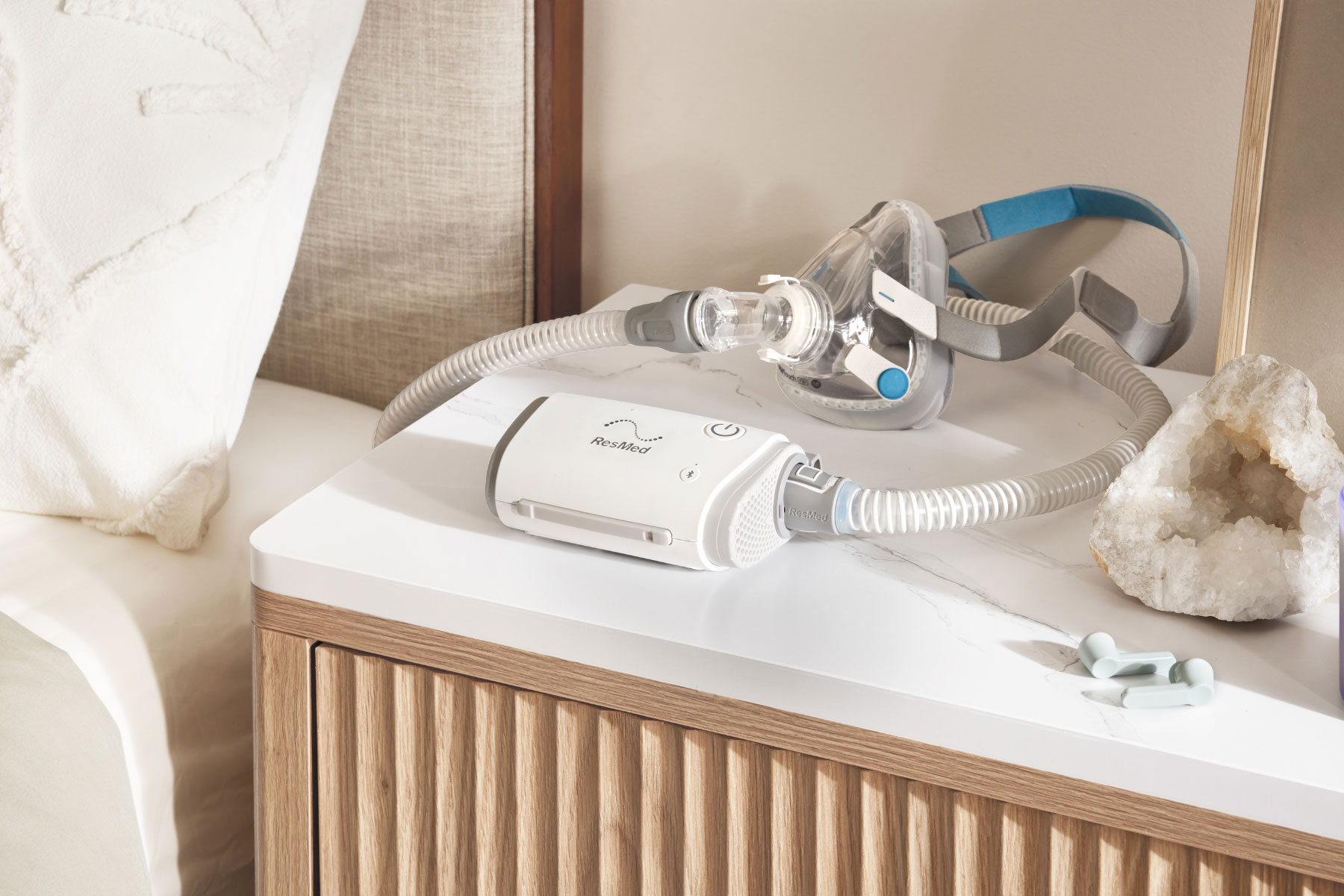
Choosing the right device for each patient is critical. That’s where ResMed’s S9 VPAP bilevels come in. Our S9 VPAP devices can help you save time and resources by addressing your patients’ unique therapy needs, including your most complex ones. In fact, when compared to competitors, ResMed VPAPs have been rated #1 by patients and clinicians in all categories.1
Four innovations to increase compliance
In a recent study of 50 patients, all patients sleeping with an S9 device slept through the four hour compliance threshold – even the patients who had struggled most with compliance.6 S9 VPAP bilevels are designed with quiet comfort in mind, with four exclusive features that help you increase patient sleep time and therapy acceptance:
Four innovations to increase compliance
In a recent study of 50 patients, all patients sleeping with an S9 device slept longer than they had with their existing device – even the patients who had struggled most with their therapy.6 S9 VPAP bilevels are designed with quiet comfort in mind, with four exclusive features that help you sleep longer and better:
Superior humidification with Climate Control
Patients report significantly less dryness and rainout with the S9, and find temperature at the mask to be much more comfortable.2-3
Quietest device on the market
The exceptionally quiet Easy-Breathe motor makes sleep more peaceful for patients and their sleeping partners by reducing both conducted and radiated noise.4
Stylish, user-friendly award-winning design
The sleek appearance and user-friendly design make therapy less intimidating.4-5
Uniquely comfortable Easy-Breathe waveform
Patients find the natural Easy-Breathe waveform more comfortable to breathe with and experience fewer wakeups.2-4
1 "Analysis of the Sleep Market Survey Results." Respiratory Management Jun 2009:23-24.
2 Details at www.clinicaltrials.gov ID NCT01013207
3 Benjafield et al. Climate Control: Humidification with heated tube. ResMed Science Center 2010
4 ResMed 2009 user trials
5 Lewis et al. Early predictors of CPAP use for the treatment of OSA. Sleep 2004
6 Wimms AJ, Richards GN, Benjafield et al. Adherence comparison of a new CPAP system in sleep disordered breathing. Sleep 2011;34 (Abstract Suppl): 0391.
ResMed VPAP devices provide quiet, comfortable therapy to a wide range of bilevel patients, from noncompliant CPAP users to those requiring additional ventilatory support.
Operating pressure range (cm H2O) |
3-25 | 3-25 | 3-25 | 3-25 | 4-25 | ||||
DISEASE STATES |
|||||||||
Obstructive sleep |
|||||||||
Ventilatory assistance |
|||||||||
CompSAS, CSA/CSR |
|||||||||
MODES OF OPERATION |
|||||||||
CPAP |
|||||||||
VAuto |
|||||||||
SPONT (S) |
|||||||||
Spontaneous/Timed (ST) |
|||||||||
Timed (T) |
|||||||||
ASV |
|||||||||
ASVAuto |
|||||||||
PRODUCT FEATURES |
|||||||||
Easy-Breathe motor |
|||||||||
Easy-Breathe waveform |
|||||||||
Climate Control |
|||||||||
SmartStart™/Stop feature |
|||||||||
Vsync automatic leak management |
|||||||||
Adjustable breath trigger/ cycle |
|||||||||
TiControl™ (Ti Max/Ti Min) |
|||||||||
Auto-adjusting bilevel pressure for OSA events |
|||||||||
CSA detection |
|||||||||
Optional integrated oximetry |
|||||||||
Leak alert |
|||||||||
3 meter tubing |
|||||||||
Learns and adapts to breathing pattern |
|||||||||
Learns and adapts to minute ventilation |
|||||||||
Learns and adapts to backup rate |
|||||||||
HUMIDIFICATION |
|||||||||
Optional, fully integrated |
|||||||||
Climate Control with ClimateLine™ |
|||||||||
DATA TRANSFER |
|||||||||
Wireless module |
|||||||||
Data card |
|||||||||
DATA STORAGE |
|||||||||
Detailed data on data card (30 sessions) |
|||||||||
High resolution flow pressure on data card |
|||||||||
Sleep report on screen |
|||||||||
Compliance and summary data on data card |
365 sessions | 180 sessions | 365 sessions | 180 sessions | 365 sessions | ||||
Important changes from Medicare
In 2010, Medicare established new documentation requirements for qualifying patients on bilevel therapy. To maximize patient care and profitability, we’re providing some additional tools and resources to help identify noncompliant patients and retain them before they abandon sleep therapy.
Effective August 1, 2010, Medicare established new guidelines for their local coverage policy (“PAP Devices for the Treatment of Obstructive Sleep Apnea”) regarding qualifying patients on bilevel therapy. The policy, updated February 4, 2011, now requires specific documentation in order to change a patient from a continuous positive airway pressure (CPAP) device to a bilevel device, either in the lab or home setting.
Medicare Criteria for Noncompliant OSA patients1
Copy of Notification from DMAC Jurisdiction A, NHIC
(http://www.medicarenhic.com/dme/medical_review/mr_bulletins/mr_bulletin_current/081910_pap2.pdf)
- Verify that a CPAP device (E0601) has been tried and proven ineffective based on a therapeutic trial in either a facility or home setting
- Document the following criteria in the patient's medical record for changing from a CPAP to bilevel device:
- Appropriate interface has been properly fitted and the patient is using it without difficulty, and this properly fitted
interface will be used with the E0470 device; AND - Current pressure setting of the CPAP (E0601) prevents the patient from tolerating therapy, and lower pressure settings
of E0601 were tried but failed to:- Adequately control symptoms of OSA; OR
- Improve sleep quality; OR
- Reduce AHI/RDI to acceptable levels
- Appropriate interface has been properly fitted and the patient is using it without difficulty, and this properly fitted
- Provide necessary prescription for bilevel device without a backup rate (E0470) — eg, VPAP S or VPAP Auto
- Schedule follow-up visit with patient as needed to review compliance information
(Commercial payors' coverage criteria may vary. Please note it is the provider's responsibility to verify current requirements and policies with local payors before filing any claims.)
For additional coverage, coding and documentation requirements, suppliers should refer to the PAP LCD and related Policy Article on the DME MAC Web sites.
Need more information?
To help ensure you’re continuing to meet necessary reimbursement requirements, we’re providing some additional tools and resources for you to share with your staff and for your future reference. You may also contact your local Medicare contractor for more information.
CPAP and Bilevel Medicare Guidelines Sheet
This flowchart takes you through the Medicare requirements for treating OSA patients (including the new bilevel qualifications) and the necessary documentation for continued coverage. The back page provides specific instructions on scripting ResMed CPAP, APAP and bilevel devices.
Bilevel Physician Notification Information Sheet
This information sheet outlines the new Medicare bilevel requirements and is designed to share with your referring physicians.
When your CPAP patients are noncompliant, everybody loses. This simple spreadsheet shows how you can benefit from placing noncompliant CPAP users on the proper bilevel therapy.
"1 Interpreted from: Centers for Medicare & Medicaid Services, “LCD for Positive Airway Pressure (PAP) Devices for the Treatment of Obstructive Sleep Apnea” Jurisdiction A (L11528): http://www.cms.hhs.gov/mcd/, February 4, 2011.