CPAP (pronounced "see-pap")
- Short for "continuous positive airway pressure"
- Positive airway pressure therapy is the most effective noninvasive treatment for obstructive sleep apnea (OSA)
![]() |
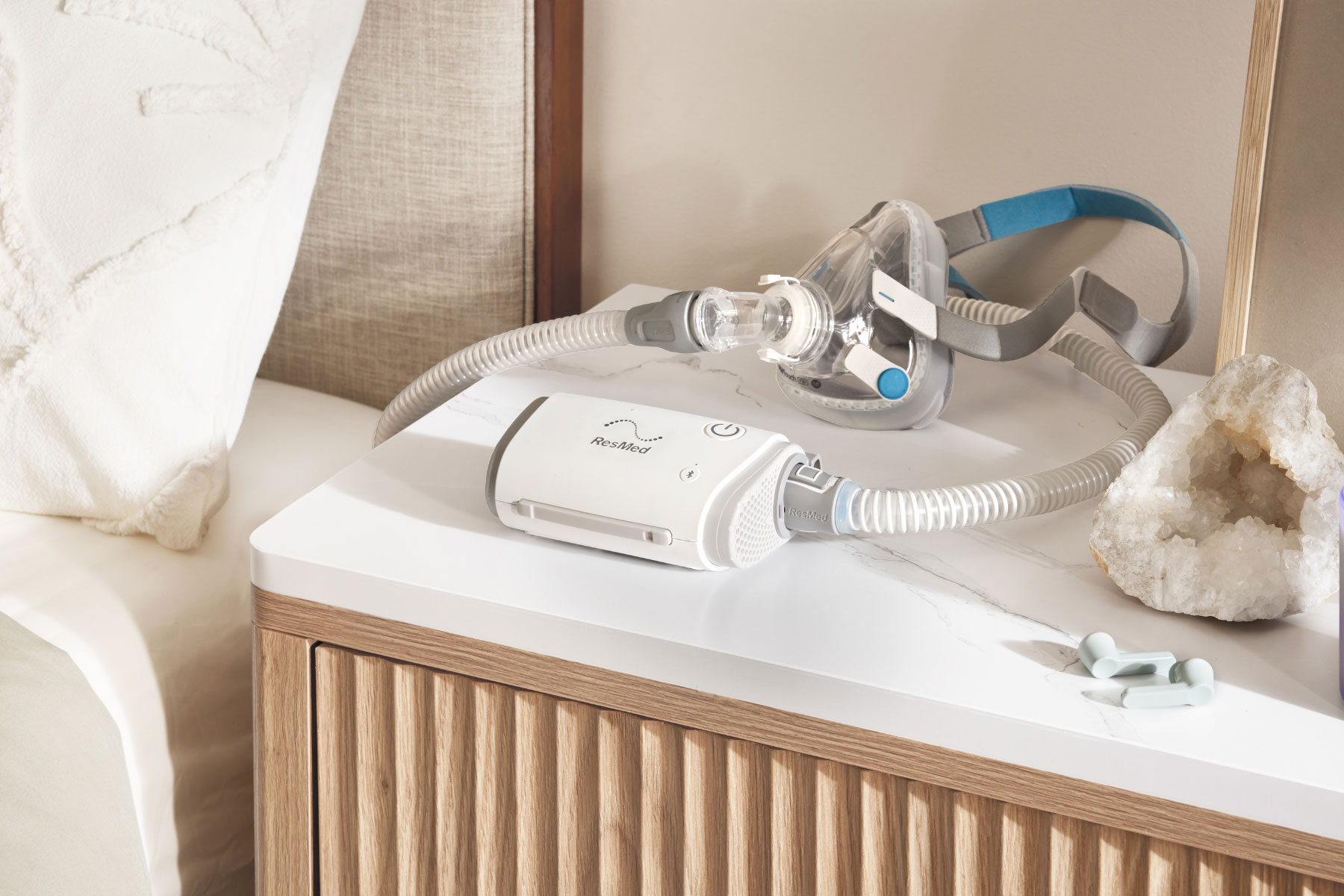
How does CPAP therapy work? Air is pushed from the flow generator through the tubing and mask. The air then passes through the nose and into the throat, where the slight pressure keeps the upper airway open.
The low air pressure does not interfere with breathing, though some people need a few nights to get used to the sensation of positive airflow. |
Beginning CPAP treatment
The proper treatment pressure, a comfortable system and good education often mean the difference between success and failure for CPAP users. Treatment success means sleeping better and getting more enjoyment out of waking hours. It can also mean lowering blood pressure and resolving OSA symptoms.
Successful CPAP users report improvements in:
- Vitality and motivation
- Job performance
- Mood
- Sexual drive and performance
- Alertness while driving
- Quality of life
- Quality of sleep
A failure to use CPAP therapy may increase your risk for conditions linked to untreated OSA:
- Hypertension (OSA increases your risk of hypertension by up to five times)
- Stroke
- Congestive heart failure (CHF)
What is titration?
Titration is the adjustment of your CPAP device so that it delivers the correct treatment pressure. Unlike pharmaceuticals that have fairly standard prescription dosages, CPAP therapy requires a patient-specific titration, which may need adjustment over time.
A "titration study" usually takes place in a sleep clinic and typically involves one night of monitoring and adjusting treatment settings. It's a detailed process involving a skilled technician. The reason it takes so long is that your pressure needs vary during the night, depending on sleep stage, body position and other factors.
The prescribed CPAP pressure setting that you go home with is the highest pressure needed over the course of a night. By prescribing the highest pressure, physicians hope to prevent as many apneas and hypopneas as possible. That's a good thing. The downside is the CPAP user must have that higher pressure at all timesl, even though it's only necessary for a fraction of the night.
CPAP equipment
- Device
A flow generator that pushes air through a filter and provides a set air pressure through a mask system to the patient
- Mask
Seals over the face to deliver the treatment pressure to the upper airway
A mask system (nasal pillows, nasal or full face) includes:- Mask or pillows
- Air tubing
- Humidifier
Moistens the delivered air to relieve nasal irritation and dryness that can result from constant airflow, especially at higher treatment pressures
CPAP therapy will work for many people with OSA, but sometimes a different type of treatment is prescribed. Automatic positive airway pressure (APAP) therapy automatically varies the pressure all through the night and from night to night. It actively responds to the continuous changes in your upper airway.
Helpful websites
American Sleep Apnea Association
American Academy of Sleep Medicine
National Sleep Foundation
Talk About Sleep