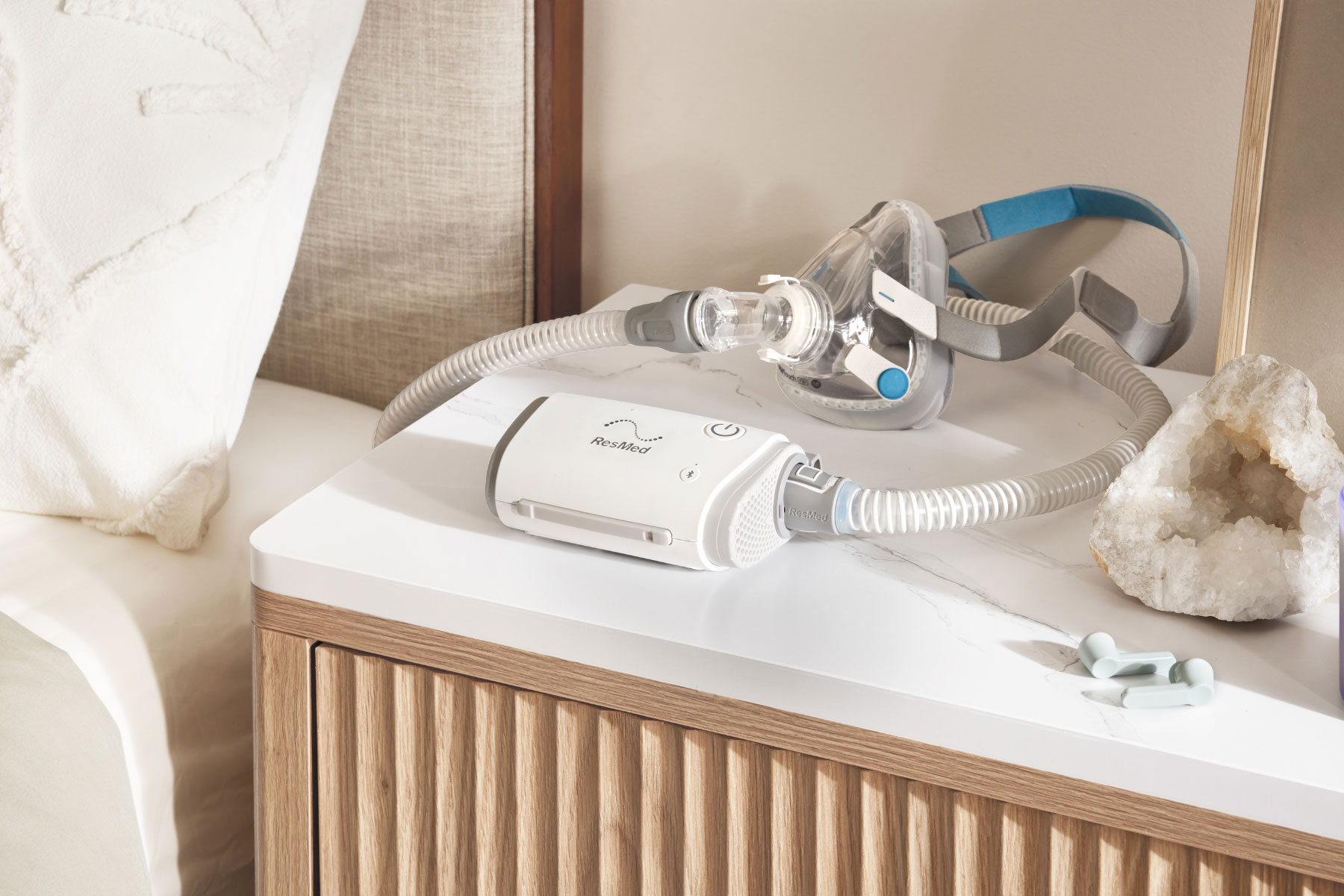
Mask Selection
Important factors to consider when selecting a mask are:
- Comfort
- Quality of air seal
- Ease of fit
- Quietness
- Convenience
- Air venting
All of these factors can affect patient compliance. A comfortable and convenient mask may be the most important element for a patient's success with positive airway pressure therapy. Here are some guidelines for ensuring that your patients have success.
Comfort
This seems obvious, but unfortunately, many patients stop using their positive airway pressure devices because they simply don't like the mask. The mask does not have to be uncomfortable, and it certainly should not hurt.
Patients should expect wearing a mask to feel strange at first, just as eyeglasses do. However, patients should be able to get used to the mask. Read the questions below and click on a question to expand and reveal a solution:
My patient feels claustrophobic wearing a mask. What can I recommend?
My patient feels increased pressure wearing a mask. What can I recommend?
My patient finds a mask uncomfortable. What can I recommend?
Ease of Fit
Even though patients will have their masks fit by a clinician the first time, they must take them apart for cleaning. Then they will have to reassemble and refit their masks themselves. For best results, provide your patients with masks that are easy to fit.
- Demonstrate to your patients how you fit the mask
- Locate mask-fitting guides for your patients. We have fitting instructions for most of our masks in the Product section of our website. We also have instructional videos that address fitting and cleaning
- Call the mask manufacturer if you have problems. They may have fitting guides or helpful hints
Quietness
Some people find the white noise of the flow generator and mask soothing, but others need complete quiet to sleep. For patients who prefer silence to white noise, a quiet system is extremely important. Look for masks with large or soft exhalation ports.
Our masks are designed to minimize noise. The Mirage®mask (nasal) and Mirage Full Face Mask Series 2 both feature soft silicone inserts for the exhalation ports. This insert absorbs noise. The Mirage VistaTM and Ultra MirageTM masks feature a large exhalation port with a cover. The cover directs the air away from the patient and partner while deadening noise.
Convenience
The mask may fit a patient perfectly, but if it's not convenient they won't use it. If they don't use it, it's not doing them any good. Try to find a mask with the following features.
- Reassembly is easy
- Fitting it on a nightly basis does not take long. When patients are tired, they are not likely to have the patience to fit a mask. Try to find a mask that has flexible headgear that can slip on and off without unfastening
Air Venting
Air venting impacts patient therapy in a couple significant ways. First, the direction that a mask vents air can affect the sleep of the patient and the patient's bed partner. Check the position of the exhalation port on the mask. Make sure the air flowing from the port won't disturb the patient or bed partner. For example, if the exhalation port is placed squarely in the middle of the mask and there's no cover to divert airflow, the air may blow straight into the bed partner's face.