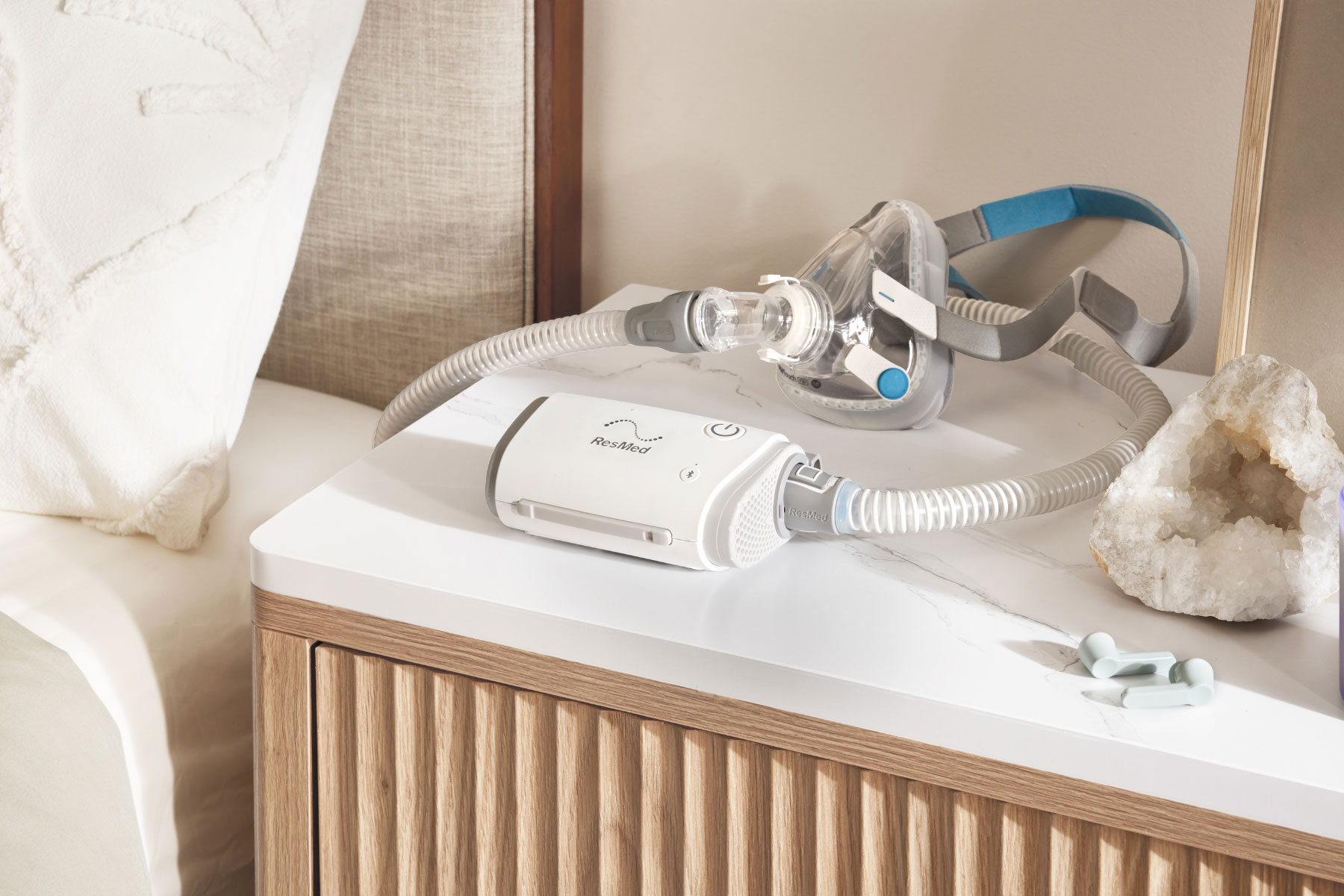
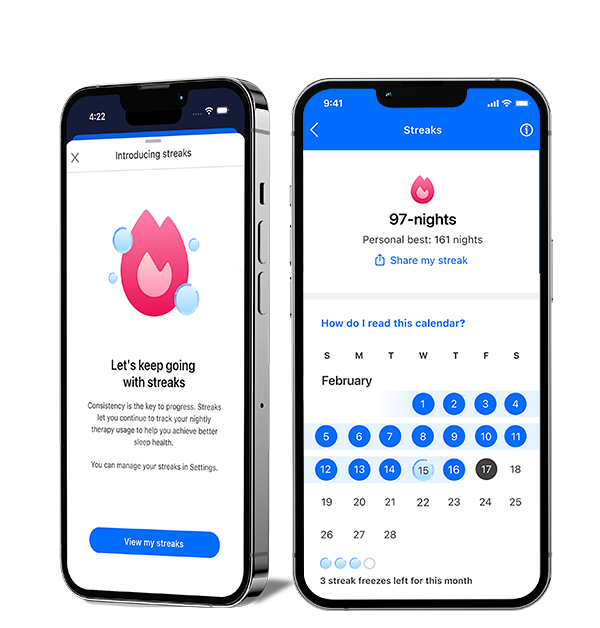
Automatic positive airway pressure (APAP) therapy is designed to provide the minimum necessary pressure at any given time and change that pressure as the needs of the patient change.
However, this goal is where many of the similarities among different APAP devices end. Each APAP device operates differently, relies on a different algorithm, and responds to different parameters. Because no two APAP devices are the same, we discuss only the therapy provided by our AutoSet® devices.
We support its claims with clinically validated studies; however, the same statements may not be true for other APAP devices.
Lower Mean Pressures Alleviate Side Effects
In addition to being both quiet and comfortable for the patient, AutoSet devices can improve therapy by reducing pressure-related side effects like dry nose, sinus congestion, sore throat, and sleep disturbances.1 They can also increase the amount of time patients use their positive airway therapy--thereby increasing compliance.
Researchers found that people who required pressure over 10 cm H2O used our AutoSet device more often and for longer durations than they used traditional CPAP devices.1 Our AutoSet devices provide treatment as good as or better than CPAP therapy, and they provide this treatment at pressures averaging 37% lower than standard CPAP.2
Breath-by-Breath Monitoring and Flow-Time Curve Analysis
AutoSet devices monitor breathing on a breath-by-breath basis and deliver only the pressure that patients need--when they need it.
AutoSet devices actually act preemptively by monitoring the patient's inspiratory flow-time curve. A flattening of the inspiratory flow-time curve typically precedes an upper airway obstruction, which will cause an apnea, hypopnea, or snoring.
By monitoring and responding to the flow-time curve, AutoSet devices reduce the number of respiratory events and arousals, enabling better sleep quality.
Studies suggest that using the flow-time curve is preferable to responding to apneas and hypopneas directly and that clinicians should use the flow-time curve to achieve optimal pressure during titration.3,4
Beyond Compliance: Efficacy Data
Combined with our AutoScan® software, the AutoSet Spirit enables clinicians to gather important compliance and efficacy data for monitoring the success of a patient's therapy.
AutoScan allows clinicians to view detailed nightly reports and statistical summary reports of longer time periods. These reports provide valuable information about AHI, AI, HI, pressure requirements, and leak. In many cases, the data provided allows clinicians to address therapy issues before those issues cause patients to give up on therapy.
Selecting an Effective APAP Device
If you have patients who have used CPAP but have had difficulty adjusting to the pressure, you may want to have them try an AutoSet Spirit. If you want to learn more about other APAP devices, here are some important questions for your investigation:
- What types of breathing events (flow limitation, snore, apnea, etc) does it respond to?
- Does it respond to the severity of events?
- Does it respond preemptively?
- Does it monitor and respond to leak?
- Does it monitor breathing constantly or only during specific test periods?
- Most importantly, is there any published clinical validation--preferably in a peer-reviewed medical journal--of the device's ability to provide efficacious treatment?
How do our AutoSet devices measure up?
- Our AutoSet devices actually find the pressure that the user needs. Other machines may require you to preprogram a pressure range in which the machine will operate. If a person needs more or less pressure than specified in the range, the machine will not be able to satisfy that requirement
- AutoSet devices respond to snoring, apneas, and flow limitation. They also compensate for mask and mouth leak
- AutoSet devices respond according to the severity of the event: the more severe the event, the greater the response. Most devices respond in an incremental fashion until the event is resolved
- AutoSet devices respond to leak
- AutoSet devices monitor breathing on a breath-by-breath basis. Most devices "spot-check" breathing
- AutoSet technology has been clinically validated in peer-reviewed journals
Automatic Positive Airway Pressure (APAP) FAQs