


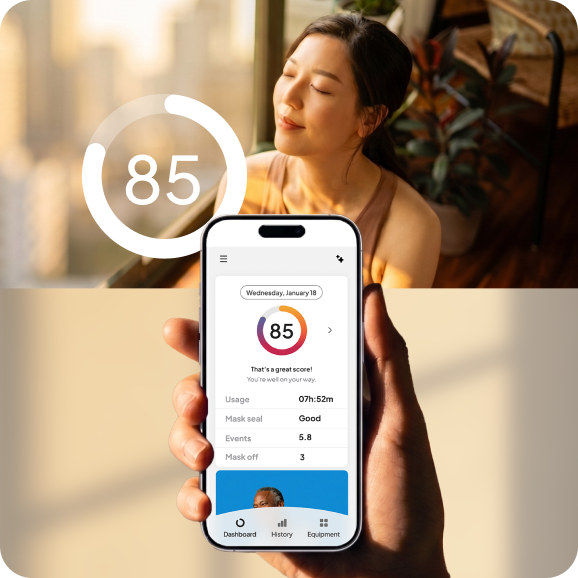
Designed to support therapy engagement, with insights patients can understand.
myAir, Resmed’s sleep therapy support app delivers personalized, intelligent therapy support designed for your patients and built around connected care.
Smart Comfort
Smart Comfort is the sleep health industry’s first AI-enabled medical device that recommends personalized comfort settings to support CPAP therapy onboarding and ongoing use.
myAir features
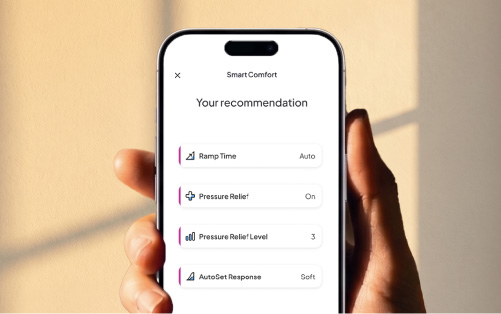
Smart Comfort
Smart Comfort is the sleep health industry’s first AI-enabled medical device that recommends personalized comfort settings to support CPAP therapy onboarding and ongoing use.
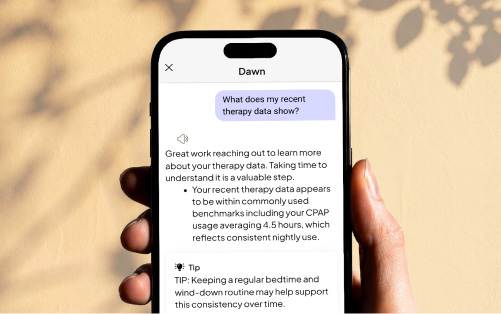
Dawn
Dawn supports patients through providing personalized therapy insights and tips when they’re not in the clinic. Helping patients stay informed, motivated, confident, and on track with their therapy 24/7.
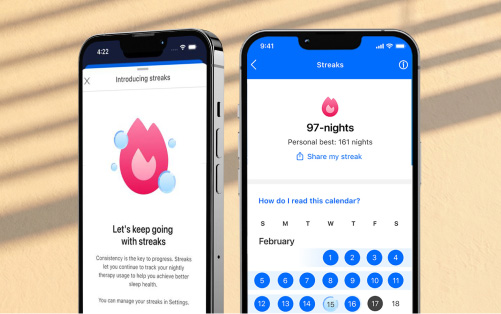
Streaks
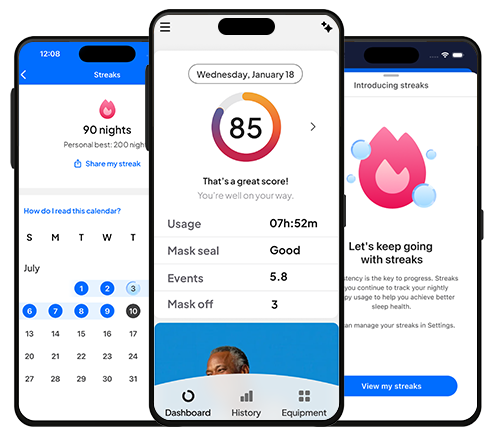
The Streaks feature in the myAir™ app helps motivate patients by tracking consecutive nights of CPAP therapy use and turning nightly wins into therapy progress.
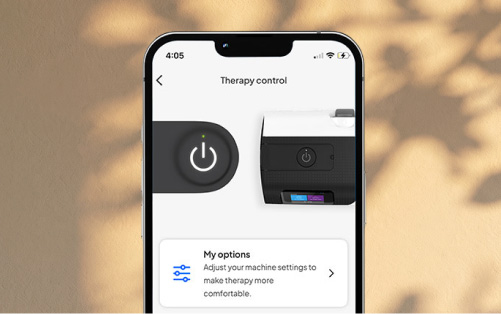
Therapy Control
The Therapy Control feature in the myAir™ app puts comfort in patients’ hands, helping them adjust settings like humidity, ramp time and tube temperature from their phone with simple in-app education and guidance.
Dawn
Dawn uses patient therapy data to deliver timely nudges and personalized insights that turn complex information into simplified feedback that they can understand.
Data-driven monitoring for healthcare providers
myAir helps patients self-monitor device usage, while AirView® gives providers access to comprehensive therapy data to track progress and support better outcomes.
Data access for better patient monitoring
myAir gives patients a daily score based on key therapy metrics, along with simple dashboards and badges to encourage ongoing use.
Monitoring with myAir and AirView
Patients who use myAir to self-monitor have shown 17%³ higher therapy adherence rates compared to patients managed through AirView® alone.
Getting started with myAir

Simple registration process
Patients can register quickly in the app or at myAir.Resmed.com
Available support and resources
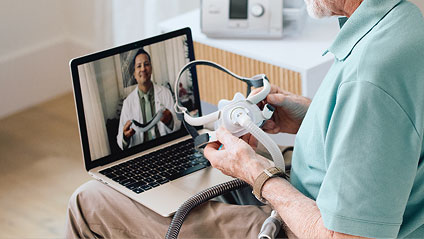
The app’s sleep library offers how-to guides, videos, and personalized support materials.
*Some features of myAir are only available in the myAir app and with Air11 devices.
†The myAir by Resmed app is available in English and Spanish in the US and in English and French in Canada.
**Health trends require patient to allow Apple Health or Health Connect integration. Health metrics may vary by patient based on available data per smart device.
Android, Google Chrome and Google Play are trademarks of Google Inc., registered in the U.S. and other countries. Apple, App Store, iPad, iPhone and Safari are trademarks of Apple Inc., registered in the U.S. or other countries. Microsoft and Microsoft Edge are trademarks of the Microsoft group of companies.
References
- Source: US Medicare adherence criteria: PAP use for ≥ 4 h per night on at least 70% of nights during a consecutive 30-day period during the first 90 days of initial usage
- Source: Drager L et al., “Adherence with positive airway pressure therapy for obstructive sleep apnea in developing versus developed countries: a big data study” (sponsored by Resmed), Journal of Cachexia, Sarcopenia and Muscle, (Nov. 18, 2020), doi: 10.5664/jcsm.9008. n= 4,181,490.
- Source: Malhotra et al, “Patient engagement using new technology to improve adherence to positive airway pressure therapy: A retrospective analysis,” CHEST 153, no. 4 (Apr 2018): 843–850.