
Compliance is often the primary obstacle to CPAP treatment efficacy.

In the early 1990s, many researchers agreed that treatment compliance rates were around 46%.1

The good news from more recent research is that, although patient compliance remains an ongoing challenge, modern technology and practices present a more optimistic picture.


Solutions

Most researchers agree that the best approach to improving compliance is multi-faceted:

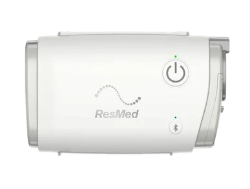
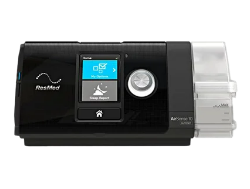
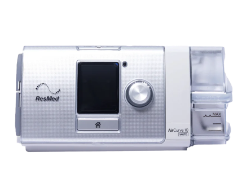
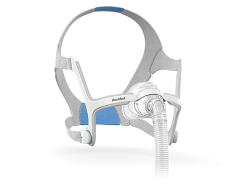
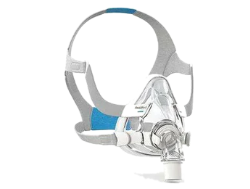
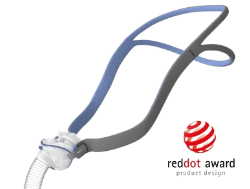
  • Comfortable, convenient, and reliable equipment
  • Education supplied by the healthcare team - a population-based CPAP program consisting of consistent follow-up, "troubleshooting," and regular feedback  to both patients and physicians. CPAP compliance rates of >85% over 6 months2
  • Active involvement of patient in their own treatment
  • Support network available for patient.


If appropriate support and education are provided, there are two interventions that may improve compliance:

  1. Humidification - "Our results demonstrate that heated humidification significantly improves the nCPAP daily rate of use and that its need may be predicted."3
  2. AutoSet® therapy - “We conclude that among patients requiring higher CPAP (10 cm H2O or more) there are improvements in CPAP use, OSAHS symptoms, and quality of life domains when using auto-titrating (AutoSet) as opposed to fixed pressure CPAP."4

References

1 Kribbs NB et al. Objective Measurement of Patterns of Nasal CPAP Use by Patients with Obstructive Sleep Apnea. Am Rev Respir Dis 1993; 147: 887-95.

2 Sin Don D et al. Long-term compliance rates to continuous positiveairway pressure in obstructive sleep apnea: a population-based study. Chest Feb 2002, 121(2) 430-435.

3 Rakotonanahary D et al. Heated Humidification significantly improves CPAP daily rate of use. Chest 2001: 460-465.

4 Massie Clifford A et al. Comparison between Automatic and Fixed Positive Airway Pressure Therapy in the Home. Am J Resp Crit Care Med 2003; 167:20-23.

©2000-2011 ResMed. All rights reserved.